


In Japan, the rules for light vehicles are very strict. Vehicles may not exceed 3.4 meters in length and 1.48 meters in width. In return, you get a huge tax break. It sells like hotcakes there. They flop in Europe. Honda doesn’t care about the flop. They want to sell the electric version here.
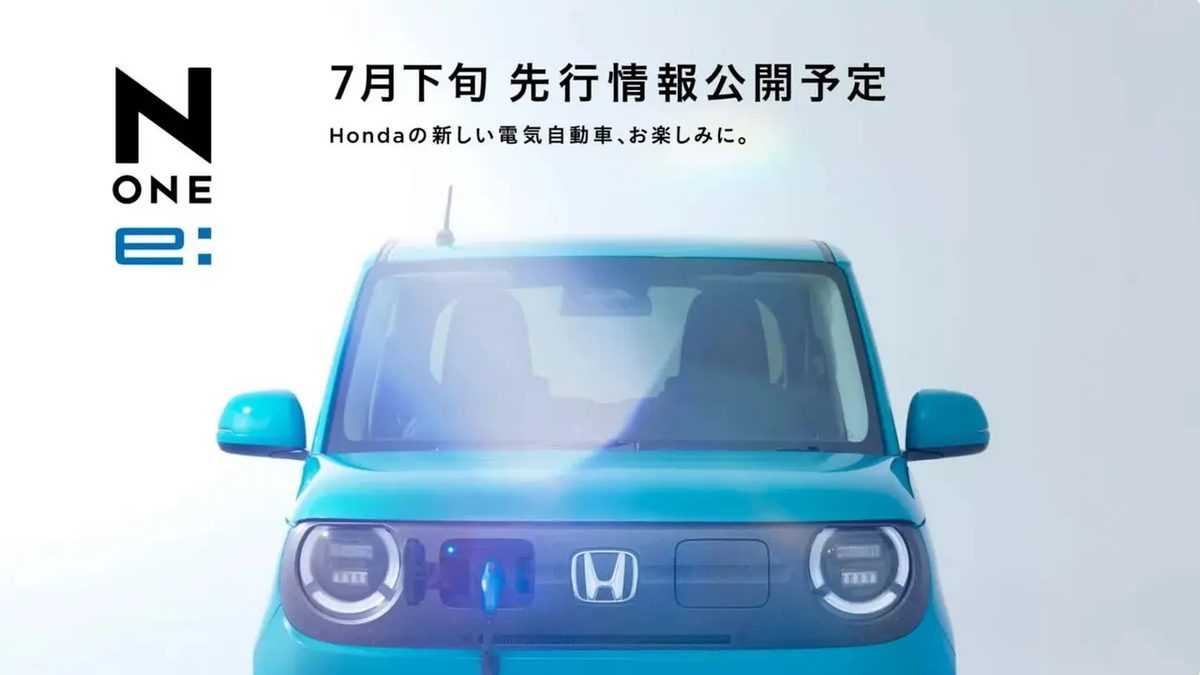
The name of the car is Honda N-One e. Specs are still under wraps. Full specifications will be released in the coming weeks. However, the edge is clearly visible. Two perfectly round headlights. Two charging ports are hidden next to it. The iconic Honda “H” badge sits in the middle of the pair.
Are there two charging ports? That’s the weird part. I still don’t know the reason for that. Probably one for AC and one for DC. Maybe it’s a quirk of the Japanese market that doesn’t translate well. The round LEDs contrast nicely with the rest of the frame. It looks like a box. There are 5 doors. Five. For a car that small. This is unusual.
The city’s micro-electric car
According to Japanese law, this is not a true light vehicle. It’s bigger. Heavier. More substantial. The European prototype is about 1.6 meters wide. 3.5 meters long. Just over the limit, but close enough to feel familiar.
Honda may be focusing on what works under the hood (or rather, under the floor). A 47 kW / 64 hp engine is expected. The nominal torque is 162 Nm. This is not F1. It’s moving a light, boxy EV around city streets. Efficiently.
battery? Less than 30 kWh. This limits the range. It can run about 250 kilometers on a single charge. Not a cross-country cruiser. city runner. A commuter.
Price is the last piece of the puzzle. Honda needs this to work. If the range is short, the price must be low. The goal is clear. Keep it under 20,000 euros. If they hit that number, the calculations start to make sense. If they miss out… well, the European market is unforgiving.
N-One e feels like a compromise. Bigger than a light car. Cheaper than regular electric cars. Can this gap be bridged? The design suggests yes. The charging ports suggest questions. We’ll have answers soon.


