
We’ve had automatic braking for a while. It slams the brakes before you do. Then came airbags to keep our heads from meeting the windshield at fifty miles per hour. Now we have a symphony of sensors. Beeps. Flashes. Blinking lights that multiply like rabbits in the dashboard. A modern cockpit looks like the control room of a spaceship that’s actively losing pressure.
You’re scanning the road. Listening for sirens. Steering. Braking.
What are you not using?
Your butt.
It turns out your glutes are sitting on a goldmine of data they’ve been ignoring. Cadillac figured this out. For the 2013 model year, the brand rolled out a safety system that doesn’t rely on your eyes or ears. It uses your rear end to warn you when you’re about to make a mistake. The 2013 Cadillac XTS sedan, the ATS sedan, and the SRX crossover are the first to get the Safety Alert Seat.
Your lazy posterior, which until now had bupkes to do in the car, is now your co-pilot. It will tell you when you’re about to do something stupid. It sounds absurd. It makes perfect sense.
The Science of the Wiggle
The mechanism is simple. There are two small motors embedded in the driver’s seat. One on the left. One on the right. Both are positioned toward the back. They connect directly to the car’s electronic safety brain. When a hazard is detected, the motors vibrate.
Ray Keifer is the General Motors active safety technical fellow who invented this thing. When asked where the driver would feel these pulses, he diplomatically said “the upper thigh.” Don’t buy it. You’re going to feel it on your butt. Everyone knows that.
This is haptic feedback. That’s the technical term. Haptic relates to touch. It can be the whole vehicle jerking or just a localized vibration. It bypasses your visual cortex and goes straight to your nervous system.
Think about lane departure warnings. You drift out of your lane. You didn’t signal. The system catches it. You feel three quick pulses on the left side of the seat. It feels like a rumble strip. It’s intuitive. Your brain connects the sensation to the action before you even think about it.
“Any type of vibration is a haptic alert.”
This isn’t just a novelty. It’s a way to keep your eyes on the road. If you’re looking at the GPS or adjusting the radio, your butt knows what’s happening. The seat shakes you awake. Literally.
The Logic of Distraction
Why do we need this? Because cars are faster now. The stakes are higher. We rely too much on visual cues. Visual cues can be missed. Auditory warnings are easy to tune out. A buzzing phone in your pocket is annoying. You mute it. A vibration in your seat? That’s harder to ignore. It’s part of your body.
Keifer explained that haptic feedback describes kinetic sensations. It’s physical. It’s immediate. It doesn’t require cognitive processing time. You don’t have to read a light. You don’t have to decode a beep. You feel it. You react.
The system is designed to be subtle enough not to startle you into a panic, but strong enough to register. It’s a nudge. A tap. A shake.
What Happens Next?
We’ve covered the hardware. The motors. The placement. The sensation. But how does it work in a crisis? What about blind spots? What about rear-collision warnings?
The seat doesn’t just warn you about lanes. It warns you about everything the car’s sensors see. It’s a comprehensive safety net made of flesh and vibration.
But how does the driver distinguish between a lane drift and a rear-end warning? Which side vibrates?
The answer lies in the direction of the threat. The seat is directional. It’s not just a generic buzz. It’s a map.
We’ll get into the specifics of the alerts in the next section. For now, just know that your butt is smarter than you give it credit for.
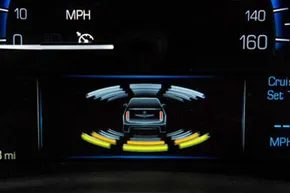

The haptic feedback goes way beyond just lane departure. That rumble strip feeling in your seat is now tied into the front and rear park assist sensors, the rear cross-traffic alert, and a new backing warning feature. This last one kicks in when you’re reversing at higher speeds. The system will shake your rump to tell you to look behind you. If you aren’t quick enough on the brake pedal, the car applies the brakes for you.
You’ve probably seen those commercials where someone is backing out of a tight spot. Huge SUVs flank them on both sides. The driver can’t see a thing. The Cadillac uses radar to scan up and down the aisle. It picks up another vehicle on the right. The right side of the seat vibrates. It also puts the info in the center console. Just in case your butt isn’t smart enough to pick up on the haptic warning. Haptic. It’s the word of the day.
Why Shake Your Rump?
What would possess a man to design a system to shake the rumps of Cadillac owners while they drive? Keifer said he was inspired by tactile warnings used by the visual and hearing impaired. “Some of our drivers are hearing impaired, or beeps can’t be heard because of background noise,” he said. “In the course of my research, I became aware that some companies were using vibration for navigation purposes to signal left vs. right. The idea came to me to use it for alerting the driver to potential crashes.”
Having a nearly silent alert serves another purpose. Most people turn off safety systems when they get annoying. If you’ve ever driven a car with a park assist system, you know that the beeping inside the car can get a bit shrill. You may find yourself screaming, “Shut up! Shut up! Shut up!” at the poor car. The car is really just trying to help you. A quick, quiet vibration is less likely to bug you, according to Keifer.
“It also provides privacy benefits,” said Keifer. “Do the passengers in the car really need to know every time you drift out of the lane?” No, they do not. Nor do they need to comment on one’s challenges with parallel parking. “Things like lane departure and park assist beeps happen daily,” Keifer added. “Annoyance is a big deal. We want to keep people from turning the safety systems off.”