BYD has announced an ambitious expansion of its charging infrastructure, confirming that its high-speed Flash Charging technology is heading to the European market. Over the next year, the company plans to deploy 6,000 stations globally, with 3,000 of those units specifically earmarked for Europe.
This move represents a significant leap in charging capabilities. While current rapid chargers are common, BYD’s new hardware is designed to deliver up to 1,500 kW —a power level that vastly outperforms most existing public charging infrastructure.
Breaking the “Charging Barrier”
The primary goal of this technology is to reduce the time spent at charging stations to a level comparable to a brief rest stop. According to BYD, compatible vehicles using this system can charge from 10% to 70% in just five minutes, and reach 97% in nine minutes.
To ensure this technology benefits the wider electric vehicle (EV) ecosystem rather than just BYD customers, the company has confirmed:
– Universal Compatibility: The stations will utilize the standard CCS2 connector, making them accessible to various EV brands.
– Strategic Integration: Rather than building entirely new networks from scratch, BYD intends to partner with existing charging locations to integrate its hardware.
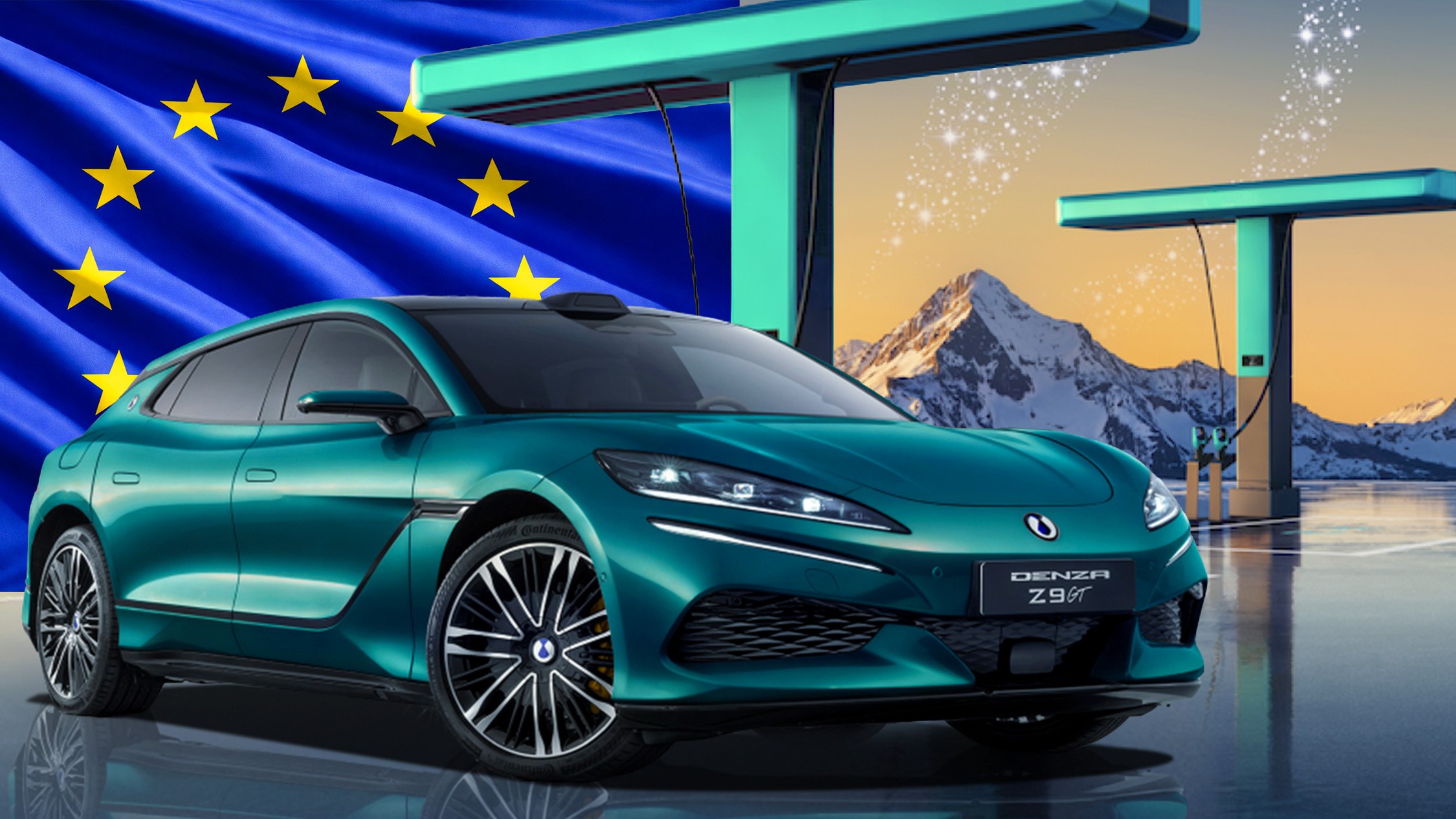
– Branding Tiers: While public sites will operate under the “Flash” name, specialized branded versions will be available for dealers selling BYD’s premium Denza line.
High-Performance Applications: Denza Z9GT and D9 DM-i
The first European models expected to leverage this extreme charging speed are from BYD’s premium sub-brand, Denza.
- Denza Z9GT: A high-performance, tri-motor electric shooting brake featuring a 123 kWh battery.
- Denza D9 DM-i: A plug-in hybrid (PHEV) minivan. Notably, the D9 DM-i can accept up to 559 kW, allowing it to utilize the same rapid charging windows as fully electric models. This is a significant advantage in the PHEV segment, where many competitors still lack efficient DC fast-charging capabilities.
The Industry Debate: Speed vs. Longevity
BYD’s announcement enters a highly competitive landscape. Recently, Geely claimed its “Golden Brick” battery technology could even surpass BYD’s speeds, signaling an industry-wide “arms race” centered on charging velocity.
However, not all manufacturers view the pursuit of extreme speed as an unalloyed win. BMW has voiced caution regarding the rapid escalation of charging power. Markus Fallböhmer, BMW’s head of battery production, warned that optimizing for a single metric—speed—often requires trade-offs.
“It is possible to optimize one single performance indicator, but you have to make compromises on other sides,” Fallböhmer noted, suggesting that ultra-fast charging could potentially impact battery longevity and overall reliability.
This tension highlights a critical challenge for the EV industry: finding the “sweet spot” between providing the convenience of rapid refueling and ensuring the long-term health and sustainability of the battery cells.
Conclusion
BYD’s rollout of 1,500 kW chargers marks a major attempt to eliminate “range anxiety” through sheer speed. While the technology promises to make EV charging as fast as a quick break, the industry must now determine if these extreme speeds can be sustained without compromising the lifespan of the batteries themselves.