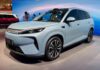
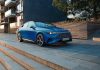
Chery’s premium sub-brand, Exeed, has begun mass production of the EX7 SUV, featuring a standout innovation: electronic-mechanical braking (EMB). This marks the first time this technology has appeared in a mass-produced vehicle, signaling a shift toward fully digital braking systems. The EX7 also boasts a high-tech interior and is positioned to compete directly with established players in the growing premium new-energy vehicle (NEV) segment.
Interior Design and Tech Integration
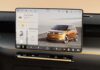
The EX7’s cabin is dominated by a minimalist aesthetic and a massive 30-inch suspended integrated display merging the central control and passenger screens. This central screen is paired with a floating LCD instrument cluster for the driver. Additional features include “zero-gravity” seats, a dual-spoke steering wheel, and a panoramic sunroof, all wrapped in a two-tone black-and-brown color scheme.
This focus on digital real estate reflects a broader trend in the automotive industry: consumers increasingly expect vehicle interiors to mirror the seamless connectivity of modern smartphones and tablets. The EX7’s design caters to this demand, pushing the boundaries of in-cabin technology.
Mechanical and Powertrain Details
The EX7 is built on Chery’s E0X platform, sharing its 3,000 mm wheelbase with the Exlantix ET (also known as the Sterra ET) which is already sold in over 20 markets. The SUV comes in both battery-electric (BEV) and range-extended (EREV) variants.
The BEV model combines a 123 kW front motor with a 230 kW rear motor, delivering a total output of 353 kW. The EREV version pairs a 115 kW 1.5T engine with an electric powertrain. Battery options include 39.816 kWh and 39.917 kWh packs for the EREV models (with ranges of 182 km and 203 km respectively), and a larger 97.682 kWh pack for the BEV, offering ranges up to 726 km.
The EMB system is the key differentiator. Traditional hydraulic brakes are replaced entirely by electronic actuators, promising improved responsiveness, reduced wear, and potential for future autonomous driving integration.
Market Positioning and Competitive Landscape
The EX7 enters a competitive market, facing rivals like Li Auto’s L7 (which sold over 26,000 units in February 2026). While February saw overall market contraction, with BYD reporting a 41% year-on-year decline, Exeed is pushing forward with new models. The smaller ET5 recently received a price increase of $720 USD for the Laser Radar version.
Chery’s parent group is navigating a period of fluctuating demand, with some domestic peers experiencing double-digit sales drops, although NIO saw a 58% increase. The EX7’s EMB system is a strategic play to capture attention in a crowded field. The inclusion of standard LiDAR suggests a commitment to advanced driver-assistance features.
Production and Outlook
The EX7 is produced at Chery’s Wuhu facility in Anhui province. By introducing EMB and a highly digitized cabin, Exeed is positioning itself as a premium NEV brand focused on innovation. The success of the EX7 will depend on its ability to appeal to consumers prioritizing cutting-edge technology and competitive range.
The EX7’s launch underscores a broader trend: Chinese automakers are increasingly leading the way in adopting advanced automotive technologies, pushing the industry toward a future of fully electric and digitally integrated vehicles. The model’s global availability will determine if this innovation can disrupt established markets.