Cupra is poised for significant growth, with two new electric hatchbacks planned for 2026, following a record-breaking year of 328,800 unit sales—a 32% increase. The company, just eight years old, is now aggressively expanding its EV lineup while navigating complex geopolitical and market realities.
Navigating Growth and Production
New CEO Markus Haupt emphasizes the importance of localized production, highlighted by the recent opening of Cupra’s battery assembly plant in Barcelona. This facility will produce 1,200 battery packs daily, destined for both Volkswagen and Cupra vehicles, including the highly anticipated Raval hatchback. The strategic positioning of this facility addresses a critical need for affordable, Europe-made EVs, particularly in markets like Spain and Italy, which lag behind in electrification adoption.
The shift towards electric vehicles is not without challenges. Haupt acknowledges that current EV margins are lower than those of combustion engines, necessitating cost reduction efforts and policy support. He explicitly states that the Raval hatchback is critical for meeting CO2 objectives and passing stringent mandates like the UK’s ZEV target in 2026.
The Raval Hatchback: A Game Changer?
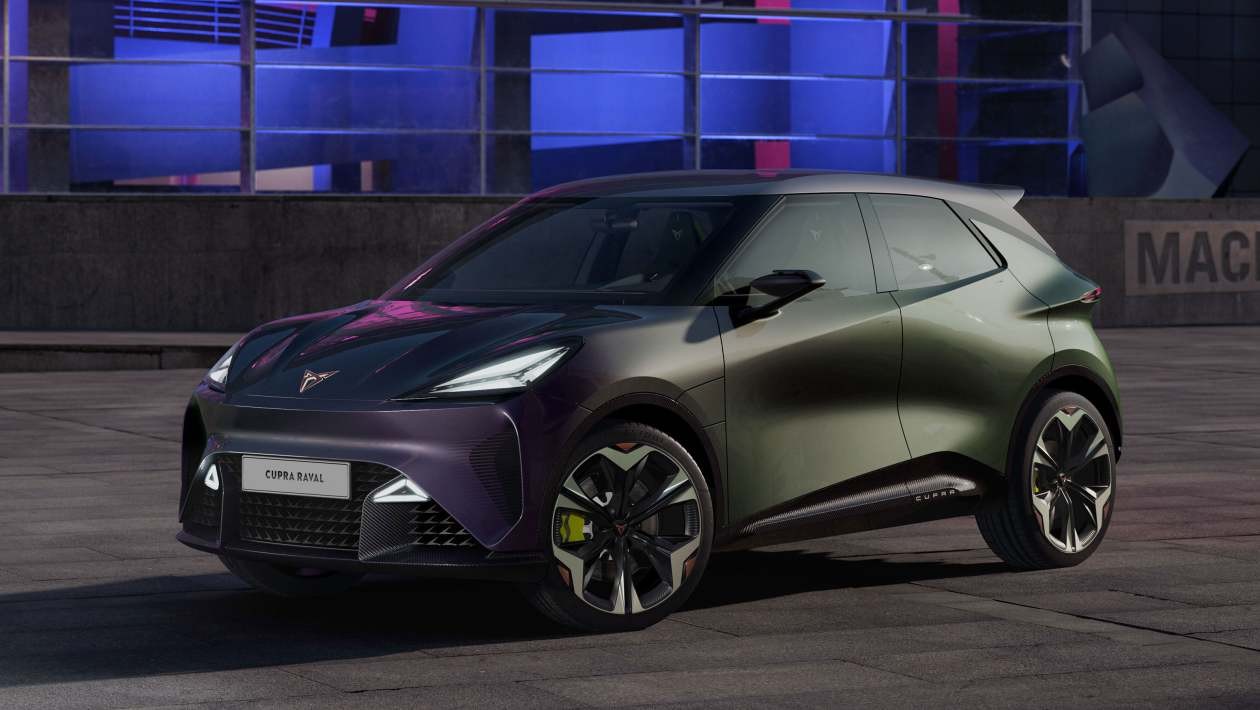
The Cupra Raval, a supermini designed to compete in the affordable EV segment, is expected to start around £25,000, significantly cheaper than the existing Born model. This price point will be achieved through the use of lower-cost LFP batteries, aligning with Cupra’s strategy to increase competitiveness against aggressive pricing from Chinese EV manufacturers. The Raval is positioned as a sporty urban EV with high performance versions offering up to 280 miles of range.
This launch ahead of Volkswagen demonstrates Cupra’s ambition to lead in the compact EV space, leveraging shared components within the Volkswagen Group to minimize development costs by hundreds of millions of euros.
Policy and Market Realities
Cupra’s success hinges on supportive government policies. Haupt praises the UK for its proactive EV incentives and quotas, calling it a “strong market” for the brand. However, he also criticizes broader European inconsistencies, citing fluctuating subsidies and unstable electricity prices as undermining consumer confidence in EVs.
The company is actively lobbying for stable decarbonization policies, exemplified by Spain’s Auto 2030 initiative, which combines subsidies, charging infrastructure support, and awareness campaigns. The need for consistent policy is paramount, as geopolitical shifts—such as potential US tariffs—have already forced Cupra to postpone expansion plans into North America.
Future Models and Long-Term Vision
Alongside the Raval, Cupra will also refresh the Born model with updated styling and LFP battery options. However, the ambitious Tindaya SUV remains a longer-term project, potentially launching around 2030, contingent on the Volkswagen Group’s next-generation SSP platform. The show car concept features a hybrid powertrain with a range extender option, allowing for powertrain flexibility as the automotive landscape evolves.
Cupra’s strategy extends beyond just vehicles. The brand fosters a lifestyle ecosystem through collaborations with sports teams (FC Barcelona), musicians, and cultural events, targeting a demographic with an average age of 43 and minimal overlap with Audi buyers.
Ultimately, Cupra’s rapid growth is driven by bold design, shared platform efficiency, and a deliberate focus on cultivating a distinct brand identity. The company’s future hinges on navigating geopolitical challenges and maintaining momentum through consistent policy support and strategic product development.