

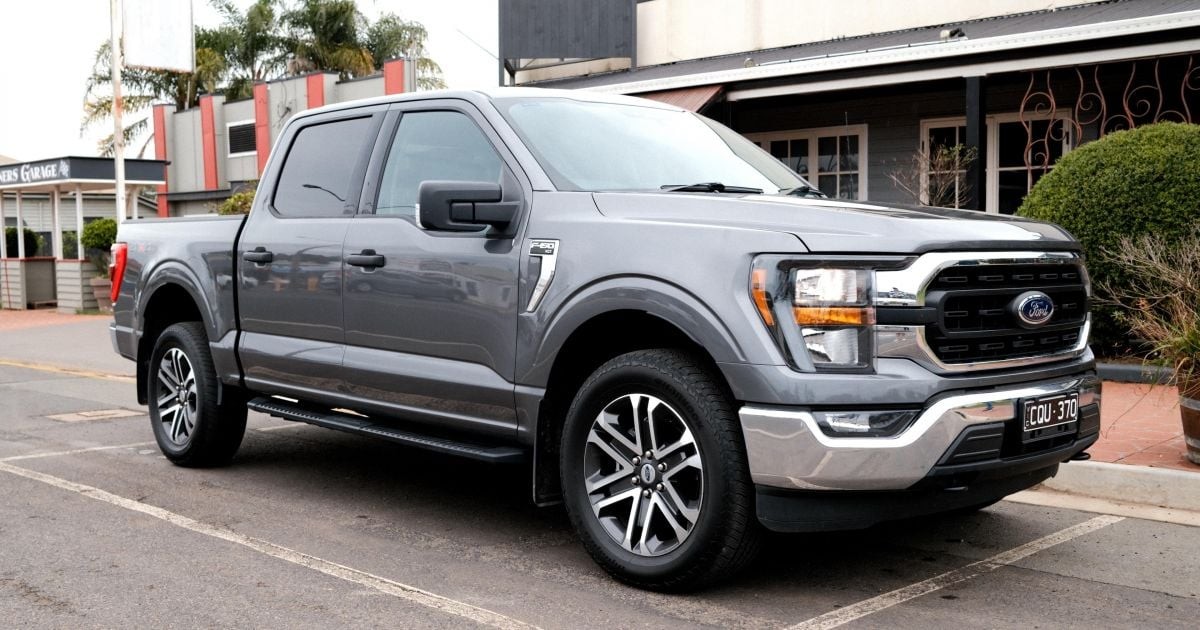
Ford has issued another recall for the F-150 pickup truck, this time addressing a critical fire hazard. A manufacturing defect could allow the fuel vapor line to contact the coolant hose, leading to damage, leaks, and potentially engine compartment fires. The issue affects 3,166 vehicles produced in 2023.
The Problem: The defect creates a risk of fuel leaks or coolant spills, increasing the likelihood of a fire. Ford’s recall notice states that such a fire could cause serious injuries, death, or property damage. Affected owners will receive free repairs at Ford dealerships.
Beyond the Fire Risk: The defect may also cause excessive coolant consumption, reduced engine performance, and heater malfunctions. Owners should expect a warning light if coolant levels drop abnormally.
Recurring Issues Plague the F-150
This recall is not an isolated incident. Since its official Australian launch in 2023, the F-150 has been subject to a series of recalls and sales suspensions due to quality control problems. The truck is built in the US and remanufactured for right-hand drive by RMA Automotive in Melbourne, Australia.
Timeline of Recalls (2024-2025):
- Jan 2024: Turbocharger issues halt sales.
- Jan 2024: Steering shaft defects recalled (443 vehicles).
- Jan 2024: Steering wheel clock spring weld issues (9 vehicles).
- Mar 2024: Lighting fails Australian standards (2,020 vehicles).
- Apr 2024: Deliveries paused.
- May 2024: Sales halted, compensation offered.
- May 2024: Non-compliant lighting (4,630 vehicles).
- Jun 2024: Further compensation for lighting issues.
- Jul 2024: Lighting and autonomous braking defects (2,070 vehicles).
- Jun 2025: Reversing camera software flaw (shared with other Ford models).
- Jul 2025: Sales paused, then resumed in October.
- Aug 2025: Rear wheel hub bolt defects (6,413 vehicles – every F-150 sold in Australia ).
The Bigger Picture: The recurring issues with the Australian-market F-150 highlight the challenges of remanufacturing vehicles. The rear axle hub bolt problem also triggered a recall in the US, indicating that some defects are not exclusive to the Australian conversion process.
The constant recalls raise questions about quality control and whether the remanufacturing process is introducing unforeseen vulnerabilities. Affected owners should check the VIN list provided by Ford to determine if their vehicle is included in the recall.