Great Wall Motors (GWM), a major Chinese automaker, is making waves by showcasing two distinct eight-cylinder engines at CES 2026, signaling a deliberate departure from the industry’s shift toward smaller, more efficient powertrains. While many Western manufacturers are phasing out V-8s, GWM is doubling down, potentially for a new premium brand with export ambitions.
Flat-Eight for Motorcycles and Beyond
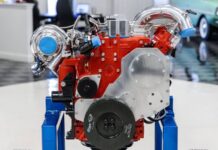
The company revealed a 2.0-liter flat-eight engine producing 154 horsepower and 140 pound-feet of torque, currently powering the Souo S2000 motorcycle – a high-end touring bike rivaling models like the Honda Gold Wing. However, GWM representatives confirmed the engine’s adaptability: “We can put this V-8 engine in other vehicles in the future… it’s not just for motorcycles.” The S2000 itself features advanced tech, including Qualcomm Snapdragon 8155P computing, Brembo brakes, and heated seats, highlighting GWM’s focus on integrating luxury with performance.
Twin-Turbo V-8 Hints at Future Luxury Models
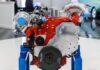
GWM also exhibited a 4.0-liter twin-turbo V-8, previously shown in Shanghai, though specific power figures remain undisclosed. This engine is paired with GWM’s in-house hybrid system, though the company hasn’t confirmed which vehicle will receive it first; the rugged Tank 300 SUV is a likely candidate. While GWM powertrain chief engineer Yvan Le Neindre cautioned these engines are currently for display only, the company’s messaging suggests otherwise.
China’s Contrarian Approach
The move is notably contrarian, especially given China’s dominance in EV manufacturing and its historically protectionist policies. While GWM has found success with its Hi-4 hybrid system (employed in over 410,000 vehicles), the company is now spotlighting high-displacement engines, potentially as a statement of engineering capability and market differentiation.
U.S. Market Ambitions Face Hurdles
Despite interest in the U.S. market, GWM faces significant challenges, primarily due to tariffs. A spokesperson cited the “200 percent tax” (a reference to Trump-era tariffs) as a major barrier to entry. However, the development of these engines suggests GWM is positioning itself for a premium brand launch, possibly with an eye toward exports once trade conditions improve.
The decision to invest in high-displacement engines while competitors downsize underscores GWM’s unique strategy: a blend of efficiency-focused hybrids and high-performance alternatives. Whether these engines will find their way into production vehicles remains to be seen, but the display at CES signals a bold commitment to traditional power alongside future innovation.