Buying a Harley-Davidson bagger is often an emotional decision, but keeping one on the road is a mathematical one. While many riders focus on the initial purchase price or the latest tech specs, the true cost of ownership is revealed through long-term maintenance patterns.
Real-world maintenance isn’t just about the price of oil; it is about how often the bike requires attention, how complex the repairs are, and whether a single component can trigger an unexpected, four-figure repair bill.
The Hidden Drivers of Maintenance Costs
To understand why some baggers are more expensive to own than others, we must look at three critical factors that dictate long-term expenses:
- Service Simplicity: How much labor time is required for routine tasks? If a simple inspection requires stripping the bodywork or dismantling major components, labor costs skyrocket.
- Known Failure Points: Does the engine have a “ticking time bomb”? Certain designs include components that require expensive preventative replacements to avoid catastrophic failure.
- The Parts Ecosystem: How standardized are the components? A platform with decades of production offers cheaper, more widely available parts compared to newer, more specialized systems.
The “Trap” of Modern and Transitional Models
Several popular Harley-Davidson models often appear affordable but carry hidden financial liabilities:
- Twin Cam Models (e.g., Road Glide): While they offer great performance and aftermarket support, they are notorious for cam chain tensioner wear. Addressing this issue proactively or reactively can cost between $800 and $1,500.
- Milwaukee-Eight Models (e.g., Street Glide): These are much more refined and smooth, but they introduce higher complexity. Increased electronics and more sophisticated systems lead to higher parts pricing and more intensive diagnostic labor.
In short, these bikes often provide stretches of low-cost riding, only to be interrupted by “spike” events—expensive service visits that wipe out any perceived savings.
The Winner: The Evolution (EVO) Engine Road King
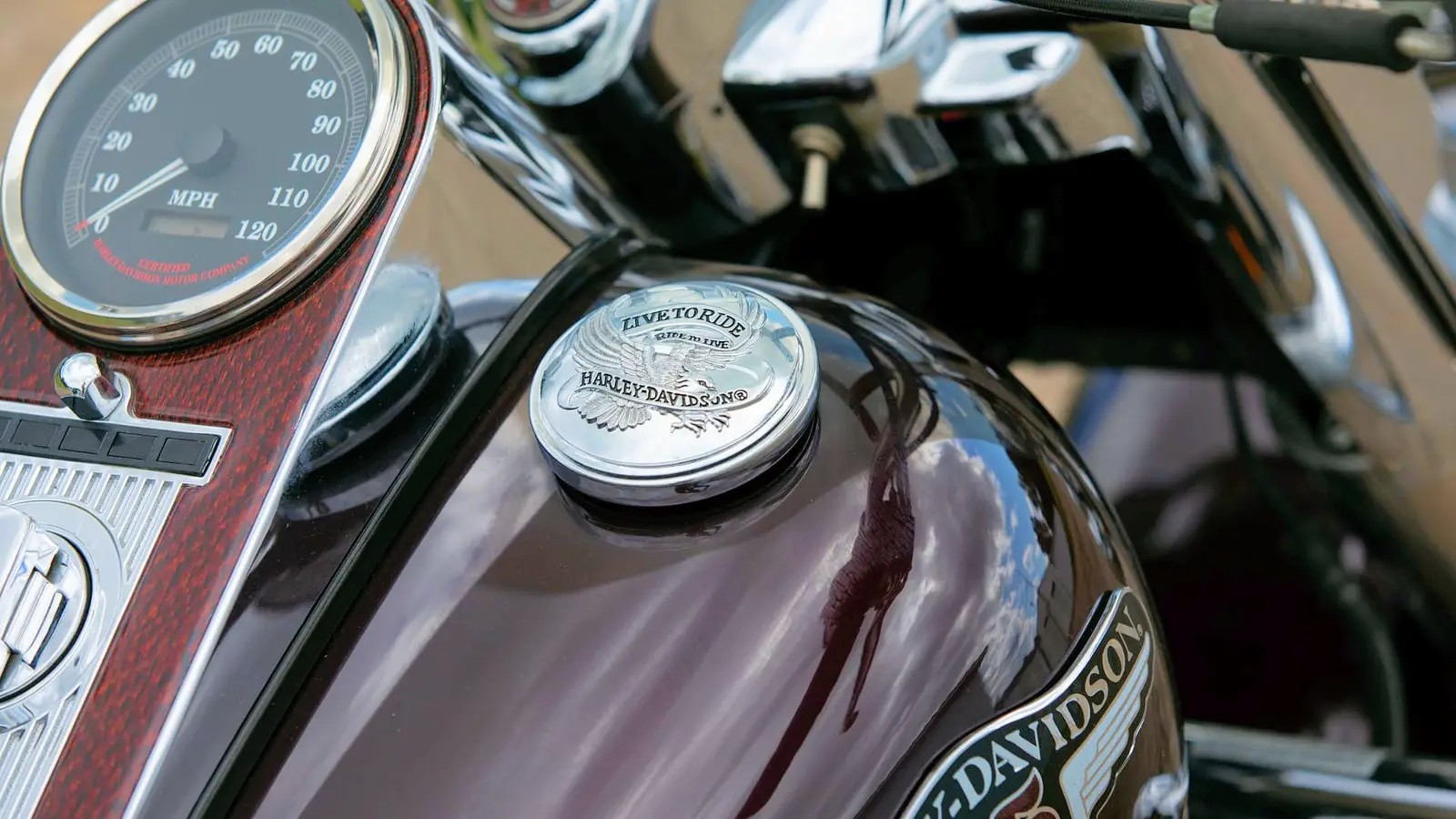
When evaluating maintenance through the lens of predictability and cost-efficiency, the Harley-Davidson Road King equipped with the Evolution (EVO) engine —specifically late-1990s models—stands alone.
The EVO engine wins not because it is the most advanced, but because it is the most uncomplicated.
Why the EVO Engine is Mathematically Superior
The EVO platform avoids almost every major cost driver found in later engines:
* Hydraulic Lifters: These eliminate the need for frequent, labor-intensive valve adjustments.
* No Cam-Chain Tensioner Issues: Unlike the Twin Cam, the EVO lacks the specific tensioner vulnerabilities that necessitate expensive preventative teardowns.
* Minimalist Electronics: With fewer sensors and no complex software layers, troubleshooting is mechanical rather than digital. You don’t need a specialized scan tool to find a problem; you just need your ears and basic tools.
* Mechanical Simplicity: The carbureted setup and straightforward oiling system mean that when the bike runs poorly, the fix is usually immediate and inexpensive.
Reliability Through Accessibility
Beyond the engine itself, the physical design of the EVO Road King facilitates lower costs. The layout is open and accessible, meaning routine tasks like battery swaps, fluid changes, and belt inspections can be performed quickly.
On many modern Touring models, tight packaging means a “simple” job can turn into a multi-hour labor bill just to reach the part in question. On an EVO Road King, a standard 5,000-mile service is often a quick, one-hour affair.
The Bottom Line: The EVO Road King is the choice for riders who prioritize “ownership math” over “spec sheet math.” It is a machine designed to be ridden, not to spend time in a service bay.
Conclusion
The Evolution-powered Road King offers the lowest real-world maintenance costs because it avoids the complexity and known mechanical pitfalls of later platforms. By prioritizing simplicity and ease of access, it provides a predictable, low-stress ownership experience that keeps you on the road rather than in the shop.