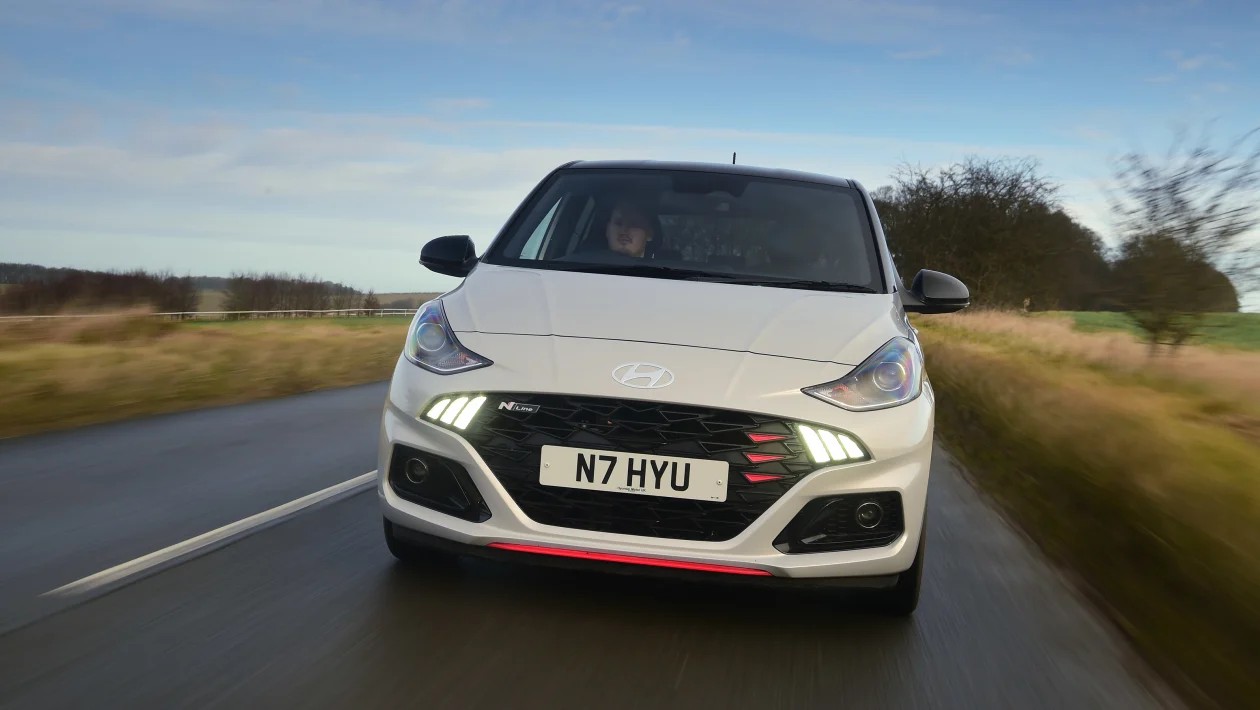
The Hyundai i10, a long-standing staple in the budget-friendly car market, has been quietly discontinued for European buyers. Hyundai has stopped taking factory orders for the model, signaling a shift away from small, petrol-powered vehicles as regulatory pressures and consumer demand evolve. While existing stock remains available through UK dealerships, the i10’s future is now firmly in the past.
A Successful Run Cut Short
The i10 has been a significant success for Hyundai since its UK launch in 2008, with over 370,000 units sold. Despite this strong performance, the company has no immediate plans to replace the petrol model with a direct successor. Instead, Hyundai is steering customers towards the electric Inster as its new entry-level option. This is significant because the Inster is nearly £5,500 more expensive, effectively pricing out many of the i10’s original target buyers.
The base-level i10, priced from £18,350, was already becoming less of a bargain than in its earlier years. However, it remained one of the most accessible new cars on the market, backed by a strong warranty and low running costs. The discontinuation of the i10 means fewer options for consumers seeking a low-cost, purely petrol-powered vehicle.
The Trend Towards Electrification
The i10’s demise is part of a broader trend squeezing affordable petrol cars. The Kia Picanto is now one of the few remaining petrol city cars in the UK. Other options, like the Fiat 500 and Toyota Aygo X, are now exclusively hybrid or significantly more expensive. Purely internal combustion engine (ICE) city cars remain popular in overseas markets, but their future in Europe and the UK is uncertain due to increasingly strict emissions regulations.
The shift towards electric vehicles (EVs) is reshaping the small car segment. While EVs initially carry a higher price tag, they often simplify compliance with safety standards and offer technological advantages. Hyundai hasn’t officially confirmed a direct replacement for the ICE i10, but a new A-segment EV is almost certainly in development. European rivals, including Renault and Volkswagen, are also preparing all-new electric models in this space.
The end of the Hyundai i10 marks another step in the automotive industry’s transition away from traditional petrol cars towards a more electrified future. The move raises questions about affordability and accessibility for budget-conscious buyers, as the gap between entry-level EVs and discontinued petrol models widens.