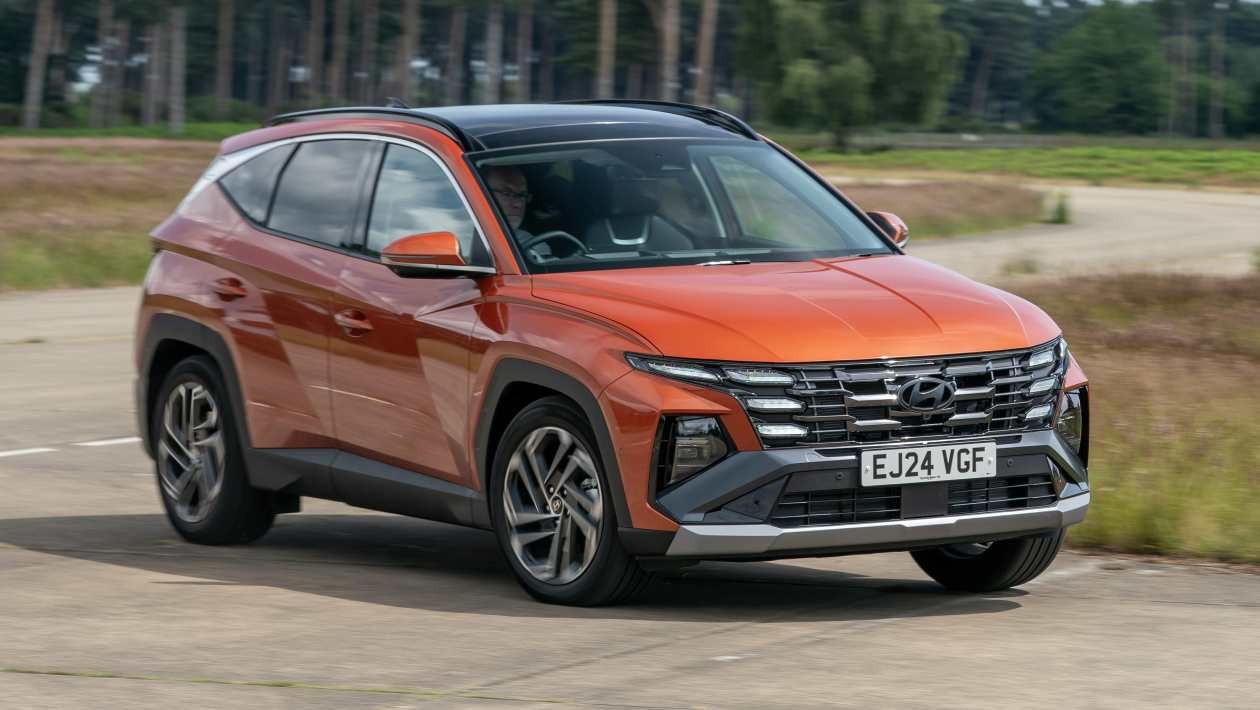
Hyundai has restructured its Tucson SUV lineup with a revised trim system, introducing new Element and Black Line models alongside the existing N-Line Edition, N-Line S, and Ultimate trims. The changes focus on branding and feature packaging rather than mechanical upgrades, meaning the Tucson continues to offer familiar petrol, hybrid, and plug-in hybrid powertrains with manual and automatic transmission options.
New Trim Levels Explained
The Advance and Premium trims have been replaced by Element and Black Line variants, providing a refreshed selection for buyers. The N-Line is now branded as N-Line Edition. The high-end N-Line S and Ultimate trims remain unchanged, forming the flagship options in the lineup.
Pricing and Availability
Prices for the updated Tucson begin at £30,935 for the base Element model with a 148bhp 1.6-litre turbocharged engine and a six-speed manual transmission. The hybrid version of the same trim starts at £34,860. While these prices represent a slight increase over the previous generation, the Tucson remains notably cheaper than key rivals such as the Volkswagen Tiguan—by as much as £8,000. Plug-in hybrid models will be available for order starting in April.
Equipment Highlights by Trim
- Element: Standard features include dual-zone climate control, wireless phone charging, a 12.3-inch touchscreen with Apple CarPlay and Android Auto, 17-inch alloy wheels, and front/rear parking sensors.
- Black Line: Adds 19-inch alloy wheels, black exterior accents, rear privacy glass, a digital driver display, heated seats, and a heated steering wheel.
- N-Line Edition: Features sportier bumpers, unique upholstery, a premium audio system, three-zone climate control, heated rear seats, a powered tailgate, a head-up display, and matrix LED headlights.
The N-Line S and Ultimate trims retain their premium amenities, including leather upholstery, a panoramic sunroof, and electric seats.
Context and Impact
Hyundai’s move to adjust pricing and trim levels comes as the Tucson prepares for a full model redesign in the next year. This update keeps the vehicle competitive in the crowded SUV market, particularly by maintaining a substantial price advantage over rivals like the VW Tiguan. The focus on trim-level changes rather than mechanical updates suggests Hyundai is maximizing the appeal of the current generation before launching the next one.
This refresh ensures the Tucson remains an attractive option for budget-conscious buyers who want a well-equipped SUV without paying a premium. Hyundai is clearly positioning the Tucson as a value leader in its segment.