Jaguar is undergoing a radical transformation, aiming to become a luxury brand rivaling Bentley in sales. The company’s new “Copy Nothing” ethos, unveiled with the Type 00 concept, isn’t about pure originality—it’s about rediscovering what made Jaguars iconic in the first place. Rather than benchmarking competitors, Jaguar engineers have spent time driving classic models to capture the feeling of a true Jaguar experience.
The Core Principle: “What Does It Feel Like?”
The approach is surprisingly analog in a world obsessed with data. Jaguar’s engineering chief, Jon Darlington, explains the team didn’t measure old cars; they drove them. The goal wasn’t to replicate specs, but to internalize the subjective qualities that defined past Jaguars: the handling, the power delivery, and the overall connection between driver and machine.
The Classics as Benchmarks
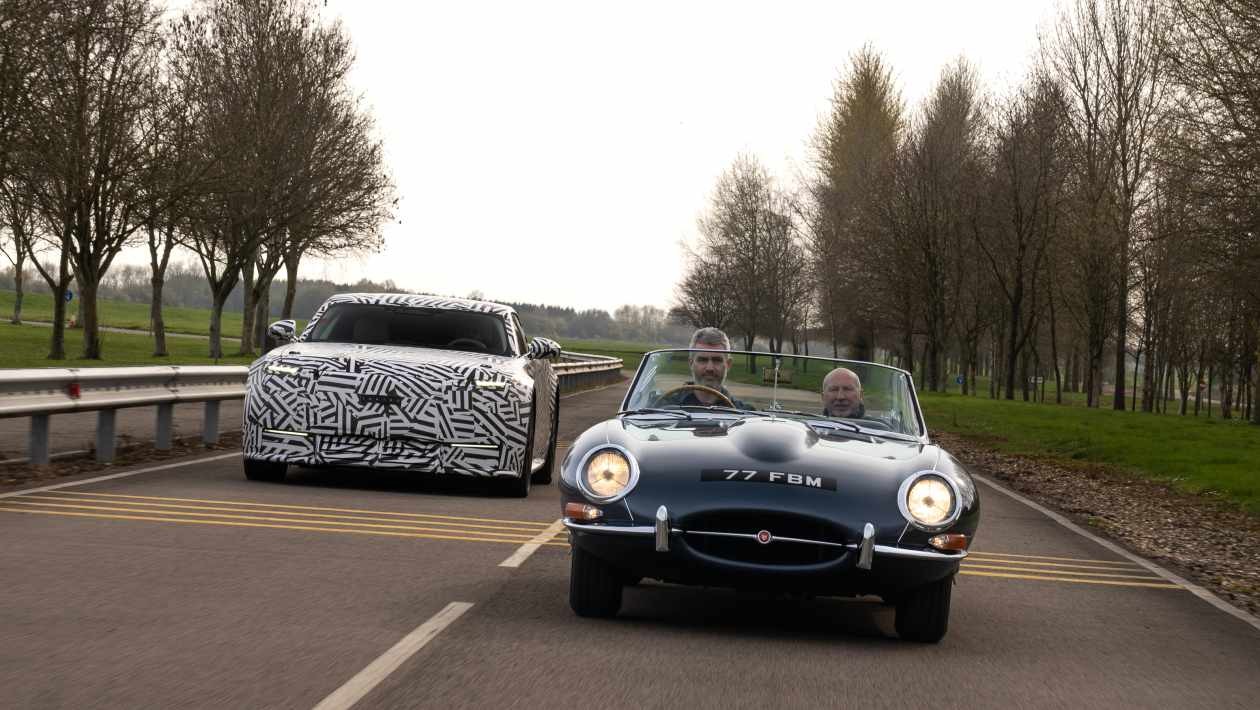
The development process centered around iconic models. A beautifully maintained E-Type Series I, with its challenging gearbox and raw engine, served as a baseline. Later, a refined Series III V12 E-Type demonstrated how Jaguar evolved into a grand tourer without losing its character. The 1973 XJ and 1978 XJC—particularly the latter—were considered crucial, with the XJC embodying the balance of comfort and control that Jaguar seeks in its new GT.
Why These Cars Matter
The selection wasn’t arbitrary. These models represent key eras in Jaguar’s history. The E-Type’s visceral connection, the XJ’s blend of luxury and poise, and the XJC’s confident handling all provide touchstones for the modern EV. Darlington emphasizes that the goal isn’t to perfectly mimic these cars, but to distill their essence into a contemporary package.
The Electric GT: A Modern Interpretation
Jaguar’s upcoming four-door electric GT is designed to capture this spirit. The long bonnet and swept-back silhouette deliberately echo the E-Type’s proportions, immediately signaling its heritage. The emphasis is on comfort, composure, and a sense of “breathing with the road”—qualities that Jaguar believes have been lost in many modern performance EVs.
Avoiding Extremes
While models like the XJ220 and F-Type were considered, they were deemed less relevant to the new GT’s core mission. The XJ220, while iconic, is too extreme for everyday use, while the F-Type’s low posture and aggressive focus don’t translate directly to a four-door grand tourer. Jaguar is focused on a more balanced experience.
A Calculated Risk
The rebrand and product overhaul are ambitious. Product marketing director Tom Bury expresses confidence that the new approach will succeed, despite the challenges of the EV market. The goal is not just to build an electric car, but to create a true Jaguar—one that embodies the brand’s legacy while embracing the future.
Ultimately, Jaguar is betting that by looking back, it can accelerate forward. The strategy relies on recapturing the intangible qualities that once defined the marque, and delivering them in a modern package.