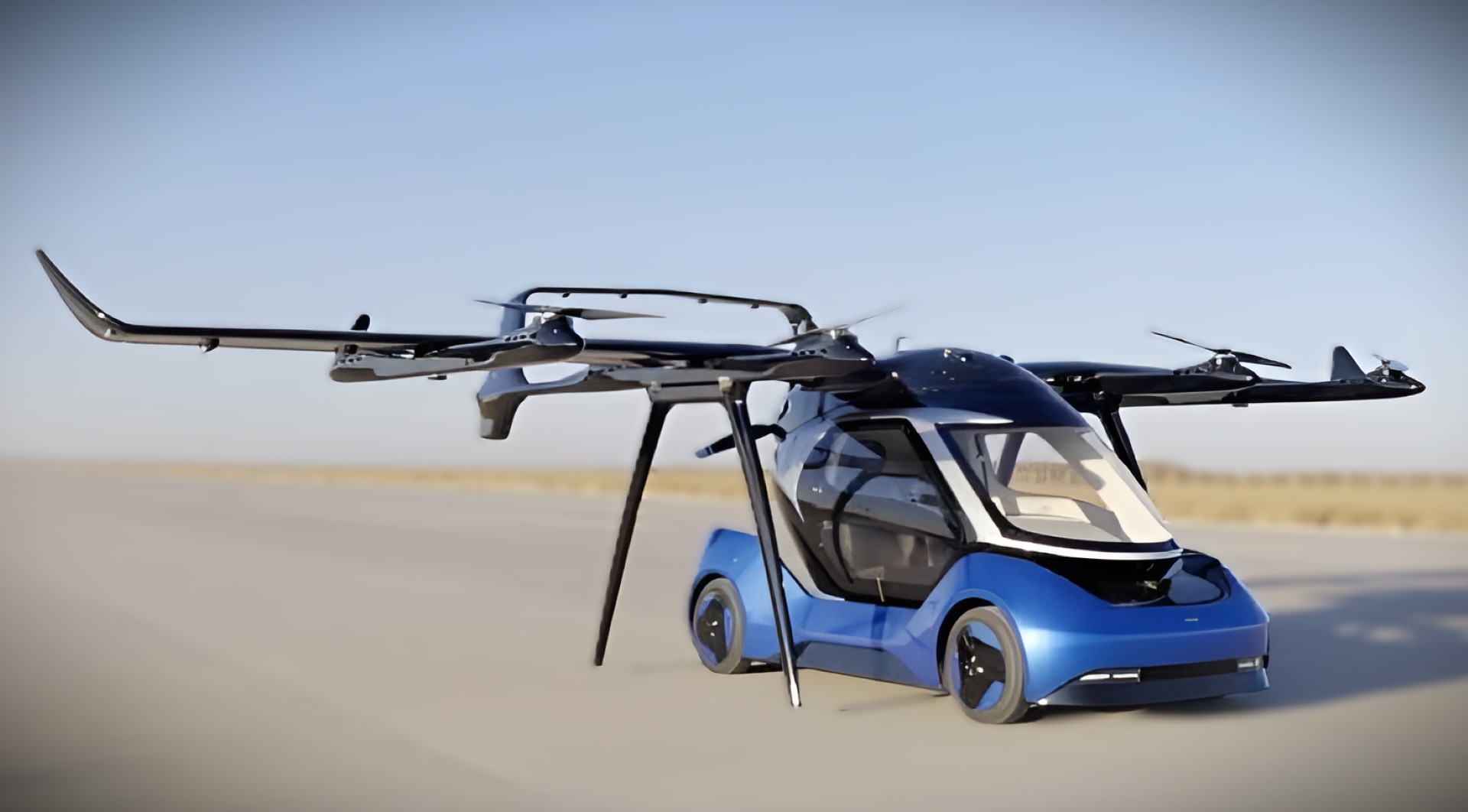
China’s state aerospace industry has successfully tested a unique electric vertical takeoff and landing (eVTOL) vehicle capable of both flying and driving, marking a significant step in the country’s push toward urban air mobility. The aircraft, developed by the Ninth Academy of China Aerospace Science and Technology Corporation (CASC), completed its first crewed flight on February 6th at an airport in Chongqing.
Key Capabilities: Flight and Road Modes
The eVTOL distinguishes itself through its modular design, splitting into airborne and road-going modules. During testing, the flying component carried two passengers at speeds up to 150 km/h (93 mph) and altitudes under 3,000 meters. When detached, the ground module operates as a fully electric vehicle with a range exceeding 300 kilometers (186 miles).
The design relies on an automated system for connecting and separating the modules, allowing for customization in cabin types, chassis, and wing configurations. This flexibility could streamline applications in urban transport, emergency services, and logistics.
Why This Matters: The Growing Flying Car Race
This development is part of a broader trend in China where both state-backed and private companies are rapidly pursuing flying car technology. This is not merely about convenience; it’s about reshaping urban infrastructure and logistics by bypassing congested roads. China’s approach differs from Western counterparts, which often prioritize regulatory hurdles first.
The CASC project resembles, but diverges from, initiatives like Xpeng’s flying car efforts. While Xpeng embeds the eVTOL within a larger EV chassis, the CASC vehicle physically separates into two distinct units. Both approaches aim to integrate electric flight with ground mobility, but CASC’s is state-driven and currently in the demonstration phase, while Xpeng’s is commercially focused.
Next Steps: Testing and Regulation
The initial flight verified basic performance metrics, including vertical takeoff, stability, and transitions between air and ground modes. However, further testing and regulatory approvals are needed before the vehicle can be deployed operationally. The project aligns with China’s broader strategy to develop a robust low-altitude aviation sector, but questions remain regarding scalability, safety standards, and public acceptance.
The successful test flight demonstrates China’s ambition to lead in this emerging transportation field, but widespread adoption will depend on overcoming significant technical and regulatory hurdles.