China’s automotive market is rapidly adopting advanced driver-assistance systems (ADAS), with a clear hierarchy forming among chip suppliers. According to data from the Gaogong Industry Institute (GGII), a leading Chinese AI and robotics research firm, Horizon Robotics and Nvidia held the largest market share in 2025 for key ADAS components. This concentration of power highlights the high barriers to entry and the speed at which China’s automotive tech is evolving.
Front-View Camera ADAS: Horizon Robotics Leads
In the front-view integrated camera ADAS segment, Horizon Robotics captured 47.66% of the market share in 2025. This segment is crucial for basic safety features like automatic emergency braking and lane-keeping assist. The total number of vehicles equipped with these front-facing cameras reached 8.9245 million units, representing a 38.83% penetration rate across the Chinese market (excluding imports/exports).
Horizon Robotics, alongside Mobileye, controls a combined 75% of this market, while smaller players struggle to gain traction. This dominance is likely due to established relationships with automakers, early investment in local manufacturing, and the difficulty of competing on cost and performance.
Urban NOA: Nvidia Takes the Lead
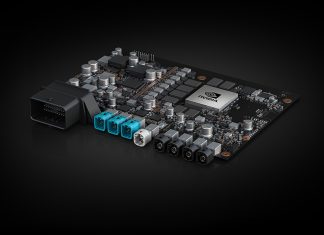
The more advanced urban Navigation-Oriented ADAS (NOA) segment, which includes features like highway and city autopilot, is dominated by Nvidia with a 49.36% market share. The adoption of urban NOA is exploding: in 2025, 2.0709 million vehicles shipped with pre-installed systems, a 155.83% year-over-year increase, corresponding to a 15.18% penetration rate.
Nvidia, Huawei, and Horizon Robotics together control 90% of the urban NOA chip market. This reinforces the fact that Chinese automakers are still heavily reliant on external suppliers for cutting-edge autonomous driving capabilities.
Self-Development Remains Limited
Despite some automakers attempting to build their own platforms, less than 5% of mass-produced vehicles in 2025 used self-developed ADAS solutions. The high cost and technical complexity of these systems make partnering with established suppliers the faster, more reliable route to market. BYD’s recent introduction of entry-level camera-based ADAS demonstrates this trend, as even leading Chinese EV manufacturers prioritize rapid deployment over complete in-house development.
The dominance of Horizon Robotics and Nvidia reflects the challenges facing new entrants in China’s ADAS market, where economies of scale and technological expertise are paramount. The reliance on external suppliers will likely continue until domestic capabilities mature further.
This data suggests that despite China’s ambition for self-sufficiency in technology, the automotive sector remains dependent on foreign and domestic leaders like Nvidia and Horizon Robotics for advanced driving features. The rapid growth of ADAS adoption indicates a strong consumer demand for safer and more convenient vehicles, driving further investment and competition in this critical market.