In the modern automotive landscape, the definition of “luxury” is undergoing a quiet transformation. For much of the last decade, the luxury sedan segment has moved toward a singular goal: isolation. Manufacturers have poured resources into larger infotainment screens, whisper-quiet cabin insulation, and advanced driver-assistance systems designed to take the work out of driving.
While these advancements have made daily commutes more comfortable, they have come at a cost. As steering becomes lighter and suspensions grow softer, the visceral “connection” between the driver and the road is fading. This shift has created a growing gap in the market—a void for drivers who want a premium experience that doesn’t feel like they are driving a computer on wheels.
The Erosion of Driving Engagement
The trend toward “sanitized” driving is not accidental; it is driven by shifting consumer demographics and market pressures. Data from industry analysts like J.D. Power and McKinsey suggest that modern luxury buyers increasingly prioritize technological convenience and ride smoothness over mechanical feedback.
This evolution has fundamentally changed how flagship sedans are engineered:
– Electronic Intervention: Electric power steering is tuned for ease of use rather than tactile feedback.
– Softened Dynamics: Suspensions are optimized to absorb bumps, often filtering out the road’s character.
– Semi-Autonomy: Advanced driver-assistance systems (ADAS) encourage a more passive driving style, shifting the focus from engagement to convenience.
Even traditional performance benchmarks, such as the BMW 5 Series and Mercedes-Benz E-Class, have leaned further into refinement. While they remain incredibly polished, they have become noticeably more detached from the road than their predecessors, catering to a buyer who views the car as a mobile sanctuary rather than a performance tool.
The Acura TLX: A Different Philosophy
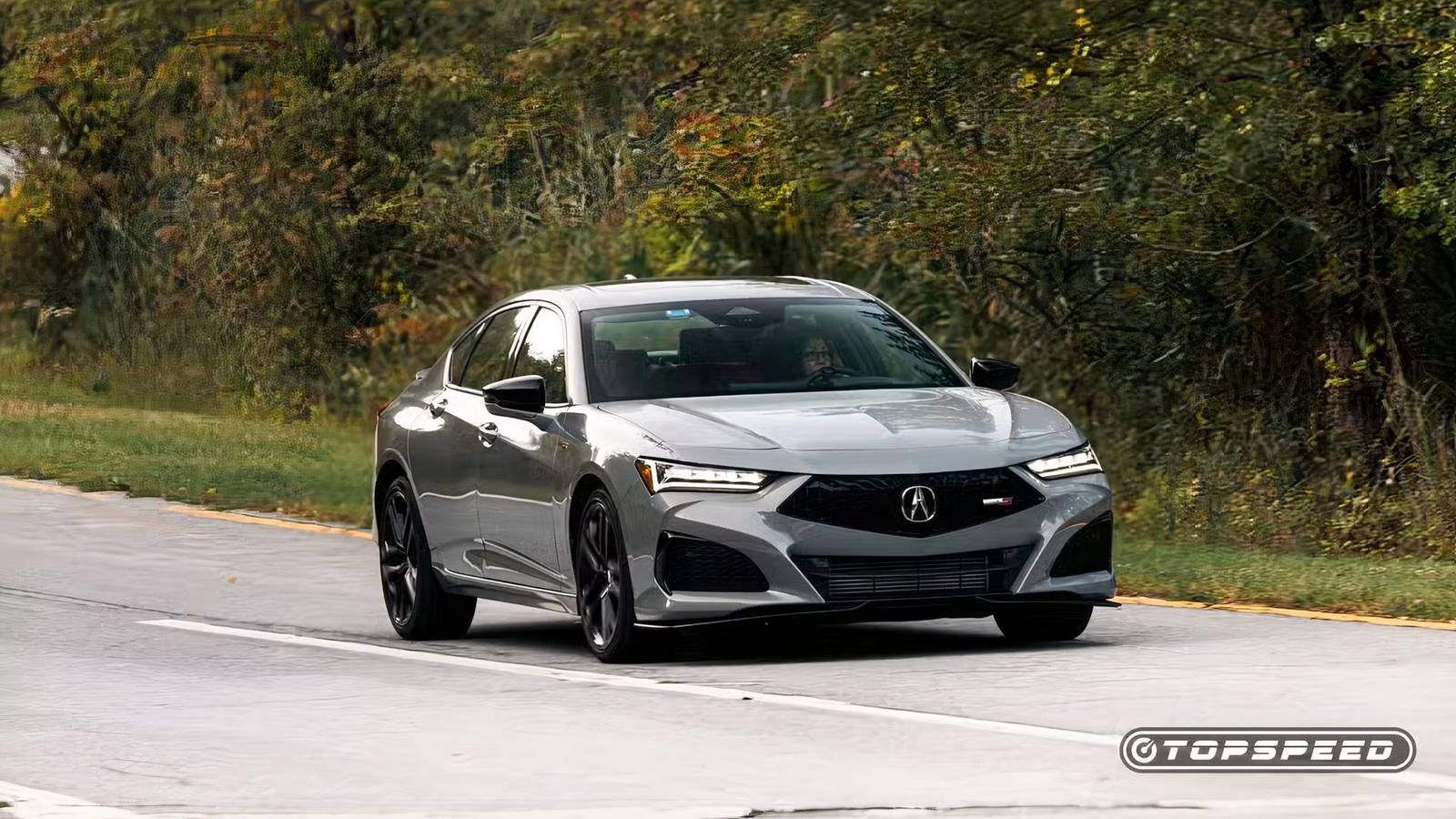
While its competitors are doubling down on isolation, the 2024 Acura TLX is taking a contrarian approach. Rather than trying to out-luxury the German giants, Acura has engineered the TLX to out-drive them in everyday conditions.
Engineering for Connection
The TLX distinguishes itself through mechanical choices that favor driver input:
– Precision Suspension: Unlike many competitors, the TLX utilizes a double-wishbone front suspension, a setup prized for its ability to maintain better tire contact and steering precision.
– SH-AWD Technology: Acura’s Super Handling All-Wheel Drive doesn’t just provide traction; it actively manages torque distribution across the rear axle to help the car rotate more naturally through corners.
– Driver-Centric Ergonomics: The interior layout prioritizes ease of use, retaining physical controls for key functions to ensure the driver can stay focused on the road rather than navigating complex digital menus.
Performance at the Core
The standout Type S model exemplifies this mission. Equipped with a 3.0-liter turbocharged V6 producing 355 horsepower, the Type S is designed to feel planted and purposeful. Its wide, low stance isn’t just an aesthetic choice; it is a functional one, intended to provide a more athletic and responsive driving character.
Market Positioning: Value vs. Prestige
When placed alongside its primary rivals, the TLX reveals a distinct strategic identity.
| Feature | Acura TLX | BMW 5 Series | Audi A5 |
|---|---|---|---|
| Primary Focus | Driver Engagement | Technology & Refinement | Design & Digital Integration |
| Starting Price (Approx.) | ~$45,000 | ~$57,000 | ~$41,000 |
| Key Strength | Mechanical Feedback | Brand Prestige/Tech | Interior Quality/Virtual Cockpit |
The BMW 5 Series remains the gold standard for balanced luxury, but its recent iterations favor a more filtered, tech-forward experience. The Audi A5 offers a highly polished, digitally sophisticated cabin, but it prioritizes composure over raw engagement.
The Acura TLX occupies a unique middle ground. It does not match the BMW in sheer prestige or the Audi in digital seamlessness, nor does it offer the same level of rear-seat luxury. However, it offers a significantly more communicative driving experience at a more accessible price point.
“The TLX doesn’t try to be the most advanced or the most luxurious option; it focuses on delivering an experience that is increasingly rare: a car that understands what it means to be driven.”
Conclusion
The 2024 Acura TLX serves as a vital alternative in a segment that is increasingly prioritizing isolation over interaction. While it makes concessions in terms of cabin space and high-end digital integration, it wins back the drivers who believe that luxury should be felt through the steering wheel, not just seen on a touchscreen.