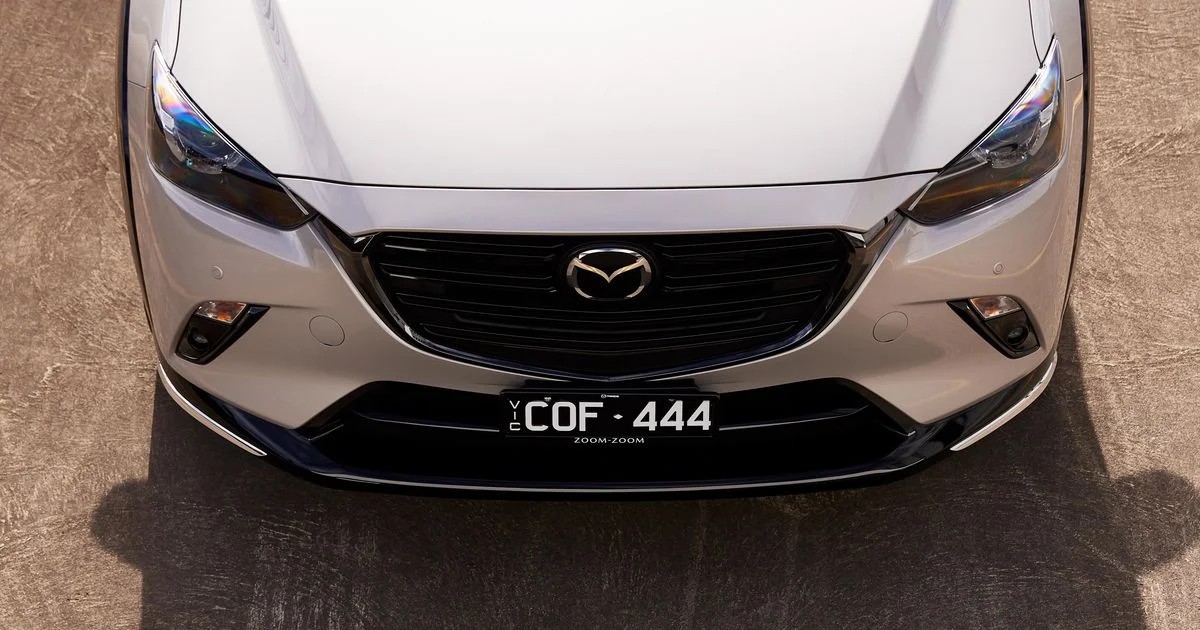
Mazda has reaffirmed its dedication to maintaining affordable compact vehicles in the Australian market, despite speculation about the future of the aging Mazda 2 and CX-3. The Japanese automaker’s local branch assures customers that these entry-level models will remain available for at least the next two years.
Ongoing Production and Market Demand
Vinesh Bhindi, Mazda Australia’s managing director, clarified that the Mazda 2 and CX-3 are not being discontinued anytime soon. These vehicles continue to meet Australian Design Rules and will be sourced from Mazda’s Thailand manufacturing facility, ensuring ongoing supply.
Despite declining sales figures in 2025 – with 15,429 CX-3s and 4,346 Mazda 2s sold – the models remain popular. The CX-3 was the top-selling light SUV, and the Mazda 2 held the second-highest market share in the light car segment after the MG 3. As of February 2026, the CX-3 holds over 30% market share, while the Mazda 2 retains nearly 20%.
Future Generations Under Consideration
While current models will remain available, Mazda is actively exploring next-generation compact car designs. The Vision X-Compact Concept, unveiled at the Tokyo motor show, represents this forward-thinking approach. Manabu Osuga, Mazda’s general manager for global marketing and sales, emphasized that the concept is a design study to evolve Mazda’s design philosophy.
The company is carefully analyzing global market demands, including customer preferences for price and size. Mazda recognizes that entry-level vehicles cater to both young drivers and empty-nesters, requiring a balance between affordability and practicality. The decision of whether to develop direct successors to the Mazda 2 and CX-3 hinges on satisfying these diverse customer needs.
Pricing and Age of Current Models
The current generation of both models, which have been on sale since 2014, are now over a decade old. Prices have increased, with the Mazda 2 starting at $27,290 and the CX-3 at $30,670 (excluding on-road costs) – a notable jump from their sub-$20,000 original price points.
Despite their age and rising costs, Mazda’s commitment to these models ensures continued access to affordable vehicles for Australian consumers while the company assesses long-term design and market strategies.
Mazda’s strategy is centered on meeting customer needs across their life stages, indicating that the company values maintaining an entry-level presence in the market.