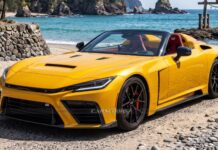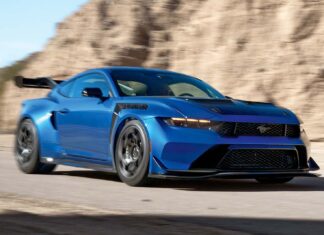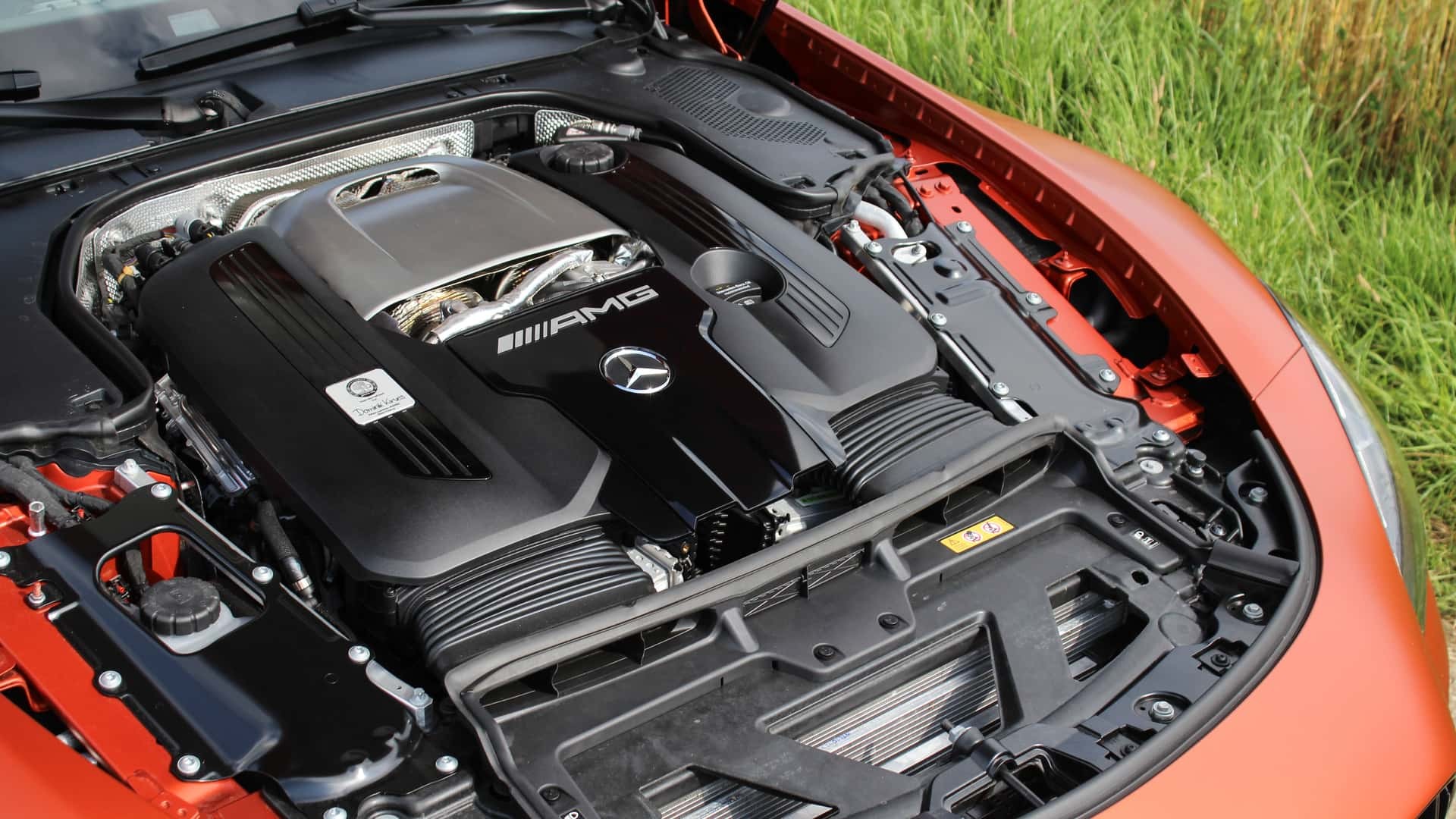
Mercedes-AMG has officially signaled a strategic pivot away from its recent heavy reliance on four-cylinder plug-in hybrids. In a move that caters directly to enthusiast demand, the performance division is “doubling down on combustion engines,” confirming that a new wave of high-output V8 models will arrive by the end of 2026.
This decision marks a significant correction for Affalterbach. Earlier in the decade, the brand pushed complex, electrified four-cylinder powertrains—most notably in the C63—as the future of performance. However, market response was tepid; buyers resisted the trade-off of reduced engine character for hybrid efficiency. Now, AMG is restoring the visceral appeal of larger displacement engines, though not without caveats regarding which models will receive them.
The V8 Returns, But With Limits
The new V8 engine will not be a blanket replacement across the lineup. Instead, it will be reserved for higher-tier models, effectively ending the era of the affordable V8 C-Class. According to AMG CEO Michael Scheibe, the eight-cylinder powertrain will debut in SUVs later this year before expanding to sedans and coupes.
The CLE Coupe, particularly special editions within the “Mythos” series, is a primary candidate for this upgrade. Rumors suggest these models could boast 646 horsepower derived entirely from the combustion engine, offering a raw performance profile that hybrid systems often dilute. Additionally, the upcoming GT Black Series is expected to receive the V8 treatment, ensuring the brand’s halo track-focused vehicles maintain their mechanical credibility.
If AMG intends to compete directly with rivals like the BMW M5 and the upcoming Audi RS6, an E-Class model equipped with a V8 will be essential. While specific technical details remain under wraps, industry analysis points to an evolution of the 4.0-liter flat-plane crank V8 (M177 Evo). Currently producing 530 hp in standard luxury models like the S-Class, AMG’s tuned version will likely push output significantly higher, leveraging the engine’s inherent high-revving capabilities.
Why Weight Matters More Than Complexity
The shift back to pure internal combustion is driven by more than just nostalgia; it is a practical engineering decision focused on vehicle dynamics. Hybrid systems, while beneficial for emissions, introduce substantial weight through batteries, electric motors, and cooling infrastructure.
“If you want a lightweight car, sometimes it’s best to have a V8-only car,” noted Michael Scheibe.
For performance driving, unsprung mass and overall weight are critical factors. A pure V8 setup allows for better handling characteristics and a more direct power delivery, addressing the primary complaint against the previous four-cylinder hybrid generation.
The Fate of Hybrids and the Rise of the Inline-Six
Despite the V8 revival, electrification is not disappearing entirely. AMG has not ruled out the continued use of four-cylinder plug-in hybrids (PHEVs) in specific contexts. Models like the GLE 53 and E53 will likely remain in production, serving as a strategic compromise for markets with stringent emissions regulations, such as Europe.
Meanwhile, the inline-six cylinder engine is becoming the new standard for mid-tier performance. The upcoming AMG C53 is confirmed to feature a “free-revving” six-cylinder engine, mirroring the success of the GLC 53. Powered by the M256M unit, this engine delivers 443 hp and 443 lb-ft of torque, with an overboost function providing an extra 29 lb-ft for short bursts. This configuration offers a balance of smoothness, performance, and efficiency that appeals to a broader audience than the niche four-cylinder hybrid.
The Road Ahead: Combustion in a Low-Carbon World
Mercedes-AMG’s strategy is a delicate balancing act between enthusiast desires and regulatory realities. While the EU mandates a 90% reduction in fleet emissions by 2035, AMG plans to sustain internal combustion engine (ICE) sales outside of Europe well into the 2030s.
The lineup will feature a diverse mix of powertrains:
– V8s for flagship and high-performance models.
– Inline-sixes for the core performance range (C-Class, GLC).
– V12s for the ultra-luxury Maybach S-Class (limited to regions with relaxed CO₂ rules).
Conclusion
Mercedes-AMG’s return to the V8 is a clear acknowledgment that performance cannot be measured in battery kilowatt-hours alone. By prioritizing weight savings and engine character in its top-tier models, AMG aims to reclaim the emotional connection with drivers that was lost during the early hybrid experiments. While regulations will eventually force a transition, the next few years will see a golden era for combustion-engine performance, with the V8 and inline-six leading the charge.