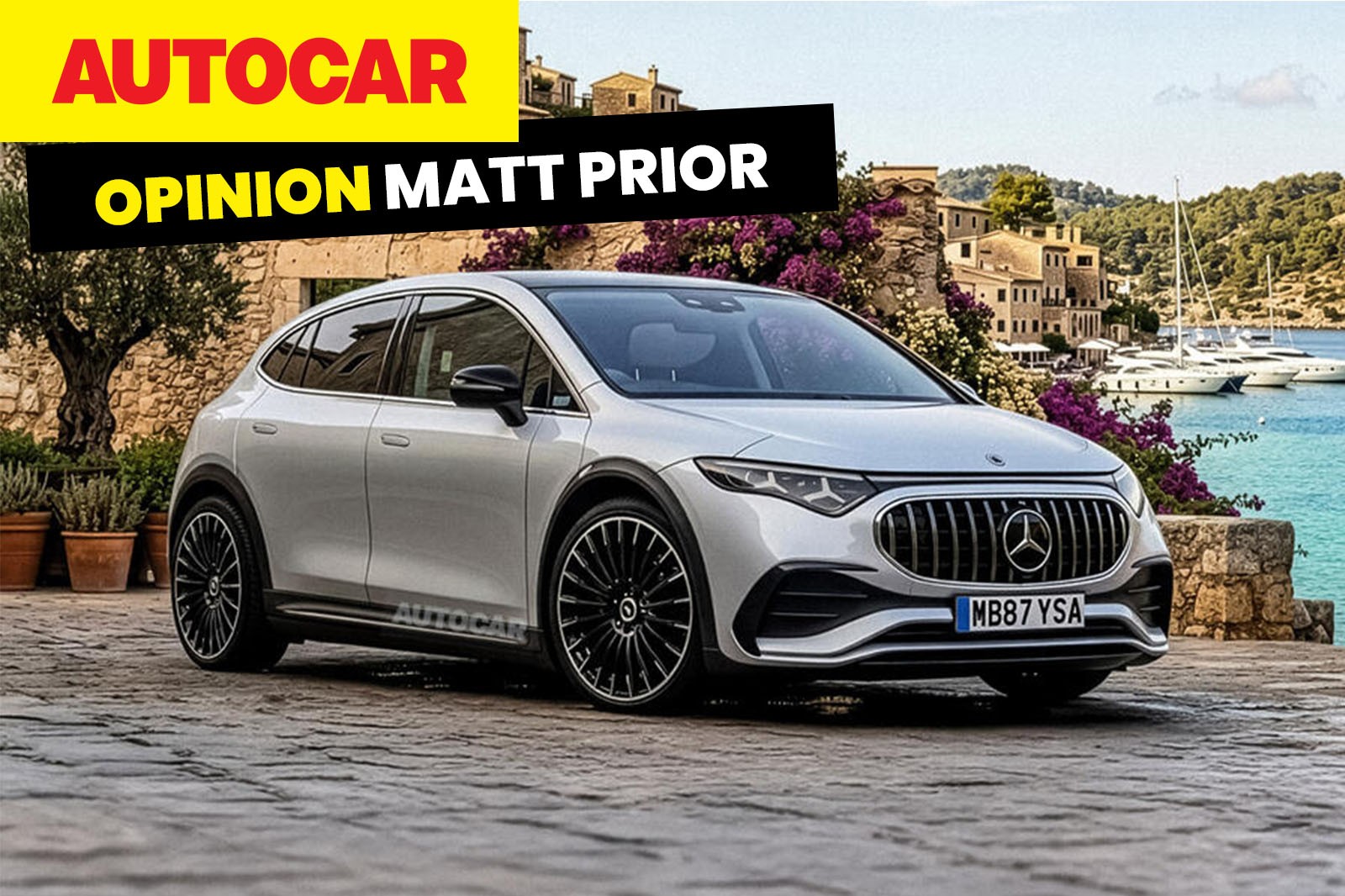
The upcoming Mercedes-Benz A-Class is set to abandon the conventional hatchback form of recent generations, instead embracing a taller, more upright design reminiscent of the original 1996 model. This shift isn’t a nostalgic throwback alone; it’s a consequence of evolving automotive engineering and consumer preferences. The original A-Class was notable for its compact packaging and high seating position, which, despite not revolutionizing the industry at the time, now finds itself aligned with modern trends.
The Rise of the High H-Point
The key to this revival is the “H-point” – the distance from a driver’s seat to the ground. The original A-Class pioneered a raised H-point, allowing for an unusually spacious interior despite its small footprint. This feature didn’t become a widespread design principle in the 1990s, but has since gained traction thanks to two major trends: the popularity of SUVs and crossovers, and the integration of underfloor battery packs in electric vehicles (EVs).
SUVs naturally offer higher seating positions, while EV batteries necessitate a raised cabin floor to accommodate the pack beneath. This means more vehicles are now built with the same “complex sandwich platform” design as the first A-Class, featuring a flat cabin floor over a lower chassis.
Why This Matters
This trend has implications beyond comfort. The sandwich platform allowed the original A-Class to absorb frontal impacts by forcing the engine downward between the two floor layers in the event of a crash. With EVs, the battery pack already occupies this space, making such designs more practical.
The challenge now is breaking the perception that shorter cars are necessarily cramped. The original A-Class proved that compact dimensions don’t have to equal limited space. By leveraging the sandwich platform and optimizing interior packaging, Mercedes could create a new A-Class that’s both innovative and practical.
The next A-Class is poised to be a symbol of how legacy designs can find new relevance through technological advancements, demonstrating that sometimes, the past holds the key to the future.