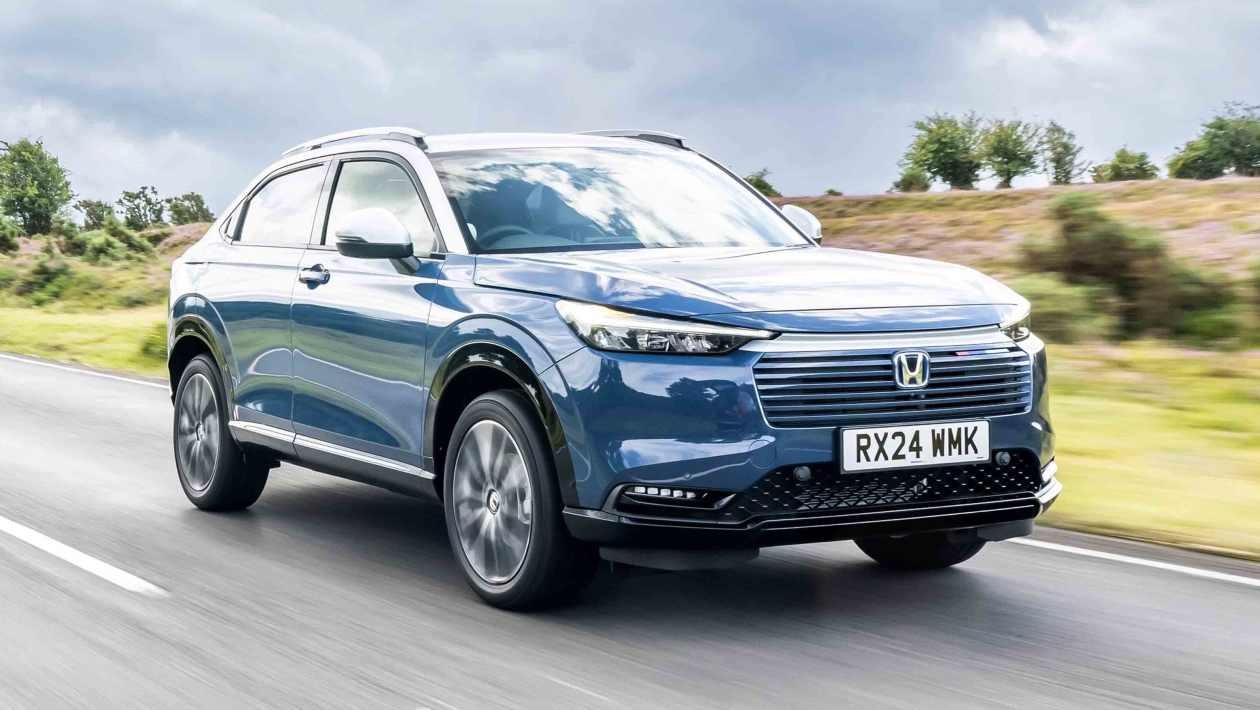
The third-generation Honda HR-V attempts to shed the “anonymous” reputation of its predecessor, trading pure utility for a more sophisticated, coupe-like aesthetic. While it succeeds in delivering a refined driving experience and impressive fuel economy, it faces a difficult challenge: competing in a crowded small SUV market where rivals often offer more space, better technology, or lower price points.
The Hybrid Approach: Efficiency Without the Plug
Unlike many competitors moving toward Plug-in Hybrids (PHEV) or full Electric Vehicles (EV), Honda has doubled down on its e:HEV self-charging hybrid technology.
The system utilizes a 1.5-litre i-MMD (Intelligent Multi-Mode Drive) setup, which intelligently toggles between electric, hybrid, and petrol modes to optimize efficiency. For drivers who want the benefits of electrification without the “range anxiety” or the hassle of finding a charging point, this is a significant advantage.
Performance at a Glance:
* Power: 129bhp / 253Nm torque
* Acceleration: 0-62mph in approximately 10.6 seconds
* Top Speed: 106mph
* Transmission: e-CVT (smooth but can be noisy under heavy acceleration)
Driving Dynamics: Sharp Handling vs. Refinement Hurdles
On the road, the HR-V feels more “planted” than many in its class. Thanks to a 15% increase in torsional rigidity, the car feels sturdy and responds sharply to steering inputs, making it surprisingly engaging on winding country roads.
However, there are trade-offs regarding comfort:
* The “Drone” Effect: Under hard acceleration or at motorway speeds, the e-CVT transmission can produce a noticeable engine drone.
* Road Noise: While the suspension handles potholes well, wind and road noise can intrude into the cabin on rougher surfaces.
* Intrusive Safety Tech: The Road Departure Mitigation system can be overly sensitive, occasionally nudging the steering wheel unexpectedly. This can be distracting, and resetting the system requires navigating somewhat cumbersome menus.
Interior & Tech: Quality Meets Complexity
The cabin is a step up in terms of perceived quality. Honda has prioritized tactile usability by retaining physical dials for climate control—a welcome relief in an era where many manufacturers have moved to frustratingly complex touchscreen-only interfaces.
The Good
- Build Quality: The interior feels solid, well-assembled, and built to last.
- Standard Equipment: Even base models come well-equipped with 18-inch alloys, parking sensors, and adaptive cruise control.
- Ergonomics: Physical buttons for essential functions make driving less distracting.
The Bad
- Digital Interface: While improved, the infotainment system lacks the speed and intuitive flow of rivals like the Hyundai Kona.
- Material Mix: Despite the premium price, some hard plastics remain visible on the dashboard.
- Limited Customization: Wireless charging and more advanced tech are reserved for the higher, more expensive trim levels.
The Bottom Line: Value and Running Costs
The HR-V is a highly efficient machine, easily exceeding its 52.3mpg rating in real-world testing (averaging over 55mpg in motorway conditions). However, the “total cost of ownership” requires careful consideration:
- Purchase Price: Starting at nearly £31,500, it is one of the more expensive options in the small SUV segment.
- Insurance: With insurance groups in the 32–33 range, it is notably more expensive to insure than many competitors (e.g., the SEAT Arona or Ford Puma).
- Depreciation: The HR-V tends to lose value faster than some rivals, retaining roughly 43–47% of its value after three years.
Verdict: The Honda HR-V is a stylish, well-built, and highly efficient choice for drivers who prioritize smooth hybrid technology and sharp handling. However, its higher entry price, intrusive safety interventions, and higher insurance costs mean buyers should weigh these factors against more budget-friendly or spacious alternatives.