

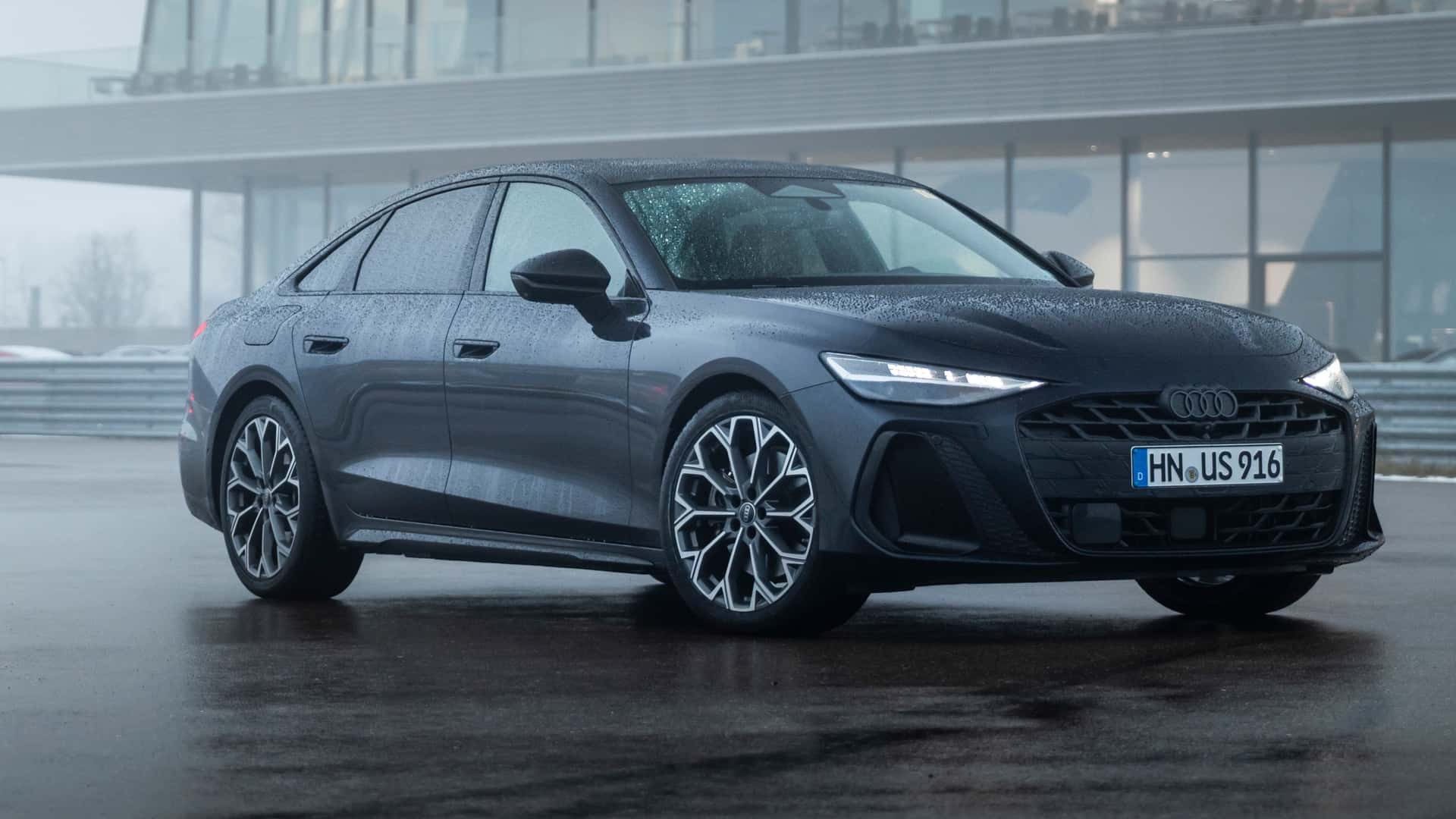
Despite the rapid decline of diesel in Europe – now outsold by plug-in hybrids – Audi is doubling down with a new 3.0-liter V-6 diesel designed to deliver electric-car-like responsiveness. This move comes as diesel’s market share has plummeted from over 50% before the “Dieselgate” scandal to just 8% today.
The Problem with Diesel, and Audi’s Solution
Traditionally, diesel engines suffer from turbo lag – a delay between pressing the accelerator and feeling power. Audi claims to have solved this with a unique combination of mild-hybrid technology and an electrically powered compressor. The new system forces air into the engine even when the turbocharger is spooling up, resulting in instant torque and eliminating the typical diesel delay.
The electrically powered compressor is mounted directly behind the turbocharger and intercooler in the intake path. When you accelerate, this compressor kicks in before the turbo reaches full speed, ensuring immediate boost. This results in more torque at low RPM and virtually no lag.
Performance Gains and Real-World Impact
The updated engine delivers 295 hp and 428 lb-ft of torque – an improvement over the previous generation. Boost pressure builds nearly a full second faster, and the compressor wheel spins up to 90,000 RPM in just 250 milliseconds.
This translates into real-world gains: an A6 sedan with the new diesel reaches 62 mph in 5.2 seconds, while the Q5 SUV does it in 5.0 seconds flat. Audi claims this is comparable to the acceleration of a similarly powered electric vehicle.
A Legacy Engine with a Modern Twist
The engine itself is not entirely new. It’s the latest iteration of the Volkswagen Group’s EA897evo4 diesel, first introduced in 2010 and even used in Porsche models before the Dieselgate scandal. Audi insists this version is cleaner and more durable, and can even run on hydrotreated vegetable oil (HVO) to reduce CO₂ emissions by up to 95%.
“Despite matching the A6 Sedan’s weight, the Q5 is actually quicker.”
The Future of Diesel at Audi
Despite the engine’s improvements, it remains a niche offering in a rapidly shifting automotive landscape. Audi is likely to continue offering the V-6 diesel in models like the Q7 and upcoming Q9, but its long-term viability is uncertain. The A7 Sportback is unlikely to receive the updated engine, and the future of the A8 flagship remains unclear.
Audi’s decision to refine diesel rather than abandon it entirely highlights the company’s commitment to offering diverse powertrain options, even as the industry moves towards electrification. This new engine may be a last hurrah for diesel enthusiasts, but it proves Audi is determined to extract every last drop of performance from the technology.