When enthusiasts think of “fast cars,” a predictable shortlist usually emerges. You might think of Japanese legends like the Toyota Supra or Nissan Skyline, classic American muscle, or even the high-tech electric surge of Tesla. Recently, even Korean manufacturers like Hyundai have broken into the conversation with their high-performance N division.
Yet, in the middle of this crowded landscape sits a German sports sedan that many have seemingly forgotten: the Volkswagen Jetta GLI.
Despite offering a compelling blend of speed and refinement, the GLI remains one of the most underrated performance vehicles on the market today.
The Shadow of Greatness: Why It’s Underrated
The Jetta GLI doesn’t suffer from a lack of capability, but rather from a lack of identity and visibility. Its struggle to gain traction can be attributed to two main factors:
1. The “Golf” Problem
Within the Volkswagen lineup, the Jetta GLI faces an uphill battle against its more famous siblings: the Golf GTI and the Golf R. In the world of enthusiast cars, heritage is everything. The Golf GTI is a global icon with decades of prestige. When the price gap between a Jetta GLI and a Golf GTI is as narrow as $2,000, most buyers naturally gravitate toward the legendary nameplate.
2. A Different Kind of “Sporty”
While competitors like the Honda Civic Si or the Hyundai Elantra N lean into a “juvenile” persona—characterized by loud exhausts, aggressive styling, and tire-shredding antics—the Jetta GLI takes a different path. It behaves more like a Grand Tourer. It is mature, composed, and refined. While this makes it a superior cruiser, it lacks the “edge” and raw attitude that many younger drivers seek in a first performance car.
Performance and Driving Dynamics
The Jetta GLI is far from slow. Built on the reliable MQB A1 platform, it delivers a solid, planted driving experience typical of German engineering.
- Speed: It can sprint from 0-60 mph in approximately 5.8 to 6.0 seconds, depending on whether you choose the seven-speed dual-clutch automatic or the six-speed manual transmission.
- Handling: The inclusion of an electronic limited-slip differential helps manage power delivery to the front wheels, making the most of its front-wheel-drive layout and ensuring the car remains engaging through corners.
- Balance: Thanks to adaptive dampers, the GLI offers a sophisticated balance between comfortable daily commuting and sharp handling.
Design and Interior: Subtlety vs. Tech
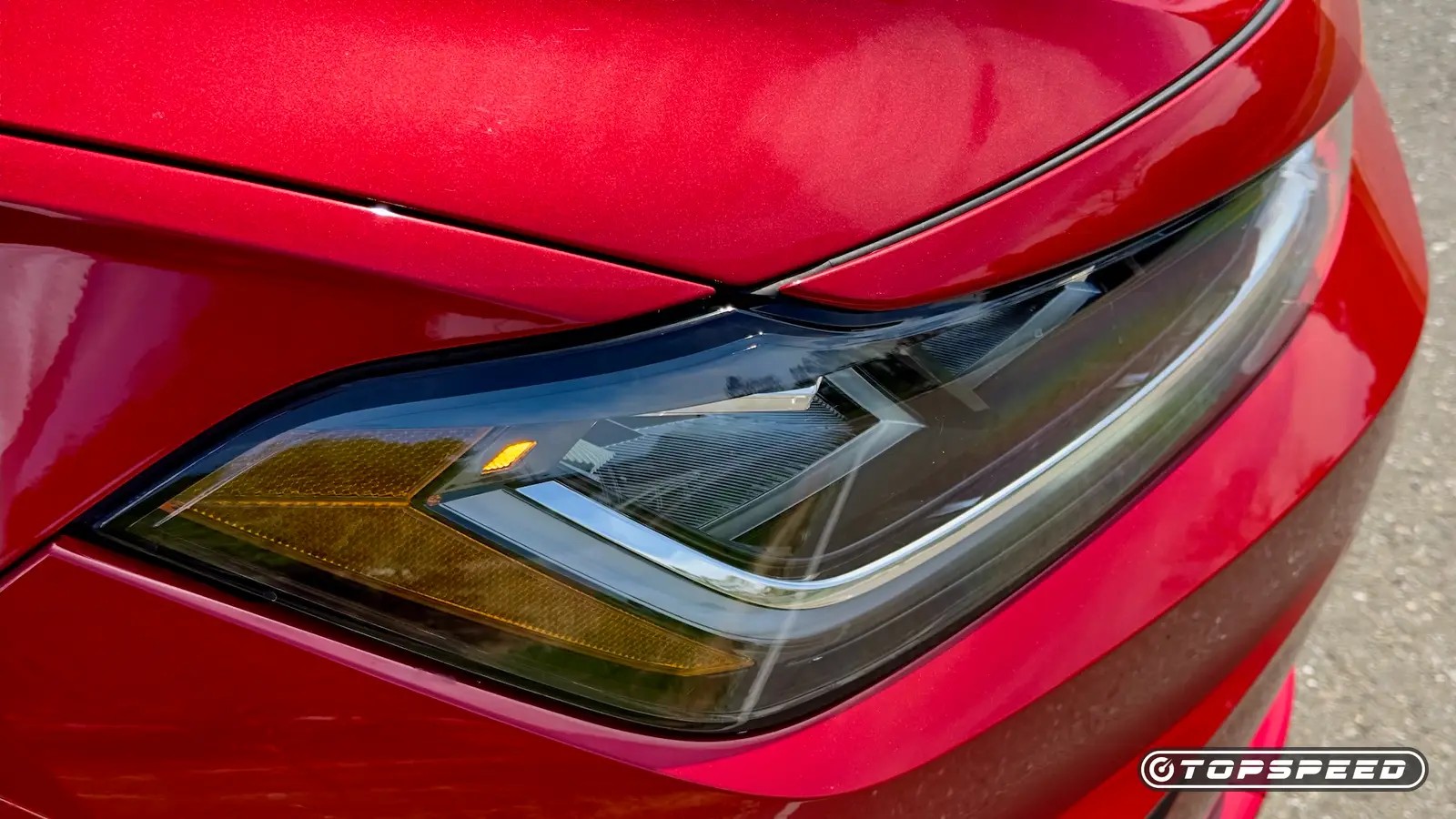
Visually, the GLI follows a philosophy of understated sportiness. Unlike the bold, bright aesthetics of the Hyundai Elantra N, the Jetta GLI uses subtle cues: red trim accents, a unique front bumper, dual exhausts, and 18-inch wheels. It is a car designed for those who want performance without shouting about it.
Inside, the cabin reflects Volkswagen’s modern—and sometimes controversial—approach to technology:
- The Good: The interior is well-laid-out, featuring digital gauges and an 8-inch touchscreen that provides a premium feel for its price point.
- The Bad: In line with recent VW trends, the car utilizes haptic-based touch controls. While they look sleek, they can be frustrating to use compared to the tactile, physical knobs found in competitors like the Honda Civic Si.
- The Compromise: As Volkswagen’s more affordable American offering, the interior materials lack the high-end luxury of a BMW M3 or Audi S5, though they remain functional and modern.
The Jetta GLI is a “mature” sports sedan. It trades raw, aggressive theater for refinement and composure, making it a perfect choice for the driver who wants speed without the drama.
Conclusion
The Volkswagen Jetta GLI is a highly capable, well-rounded sports sedan that is frequently overlooked due to the massive shadow cast by the Golf GTI. For drivers seeking a refined, quick, and subtle daily driver rather than a loud track toy, it remains one of the best values in the performance segment.