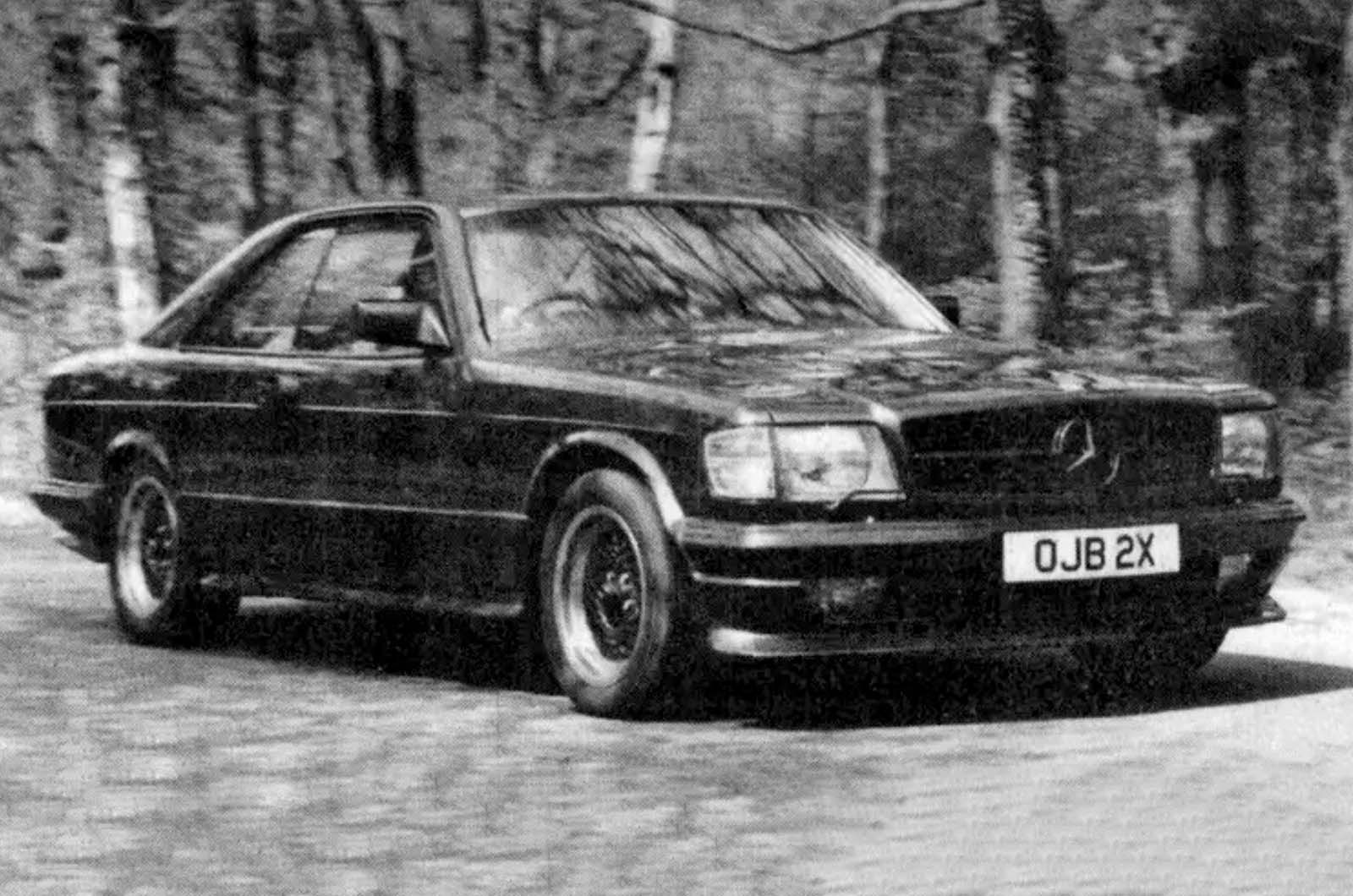
In the autumn of 1982, AMG quietly entered the UK market through Strattons of Wilmslow, Cheshire. The initial introduction was far from a splashy launch; Autocar briefly noted the German firm as a specialist in customizing Mercedes-Benz vehicles. This early phase was defined by modifications – body kits, lowered suspension, and performance tweaks – sold through independent dealers like Duncan Hamilton & Co.
The first AMG-enhanced vehicle seen in the UK was a 500 SEC, showcasing aftermarket parts from Rial (wheels) and Koni (suspension) alongside AMG components. These early conversions focused on visual aggression (body-colored alloys, spoilers) and handling improvements, delivering a noticeably sharper driving experience. Road tests confirmed that the modified coupé felt “low, mean and purposeful”, exhibiting reduced body roll and tighter cornering without sacrificing ride comfort.
However, the real shift came in 1989 with the AMG 300 CE coupé from Strattons. By then, AMG had evolved from a tuner to a tightly integrated partner with Mercedes-Benz, gaining access to technical data and expanding its facilities to include CNC machining, wind tunnels, and dynamometer testing. Despite this progress, UK conversions were still handled by Strattons, with AMG supplying engines while the dealer executed bodywork and suspension upgrades.
The modifications to the 300 CE’s M103 six-cylinder engine were extensive: a longer-throw crankshaft increased displacement to 3.2 liters, high-compression pistons raised the compression ratio, and custom camshafts optimized valve timing. The result was a power increase from 188 bhp to 245 bhp, slashing 0-100 mph times by nearly 5 seconds. The suspension was also upgraded with stiffer springs, Bilstein dampers, and low-profile Dunlop tires.
The AMG 300 CE’s handling was described as “poised and balanced”, although it demanded respect, as sudden tail slides could occur on cold tires or wet roads. Despite these risks, the car felt secure at high speeds, inspiring confidence with its rock-steady stability.
The price tag for this performance upgrade was steep at £70,000 (equivalent to £186,000 today), and the car wasn’t without flaws: poorly fitted spoilers, lacquer imperfections, and brake fade were noted. Still, the transformation was undeniable, hinting at the future potential of AMG’s most ambitious projects, like the rumored W124 saloon with a 400 bhp V8.
AMG’s initial UK presence was marked by subtlety, but it laid the groundwork for a legacy of high-performance engineering that would eventually redefine the Mercedes-Benz brand.