General Motors (GM) is facing a critical juncture in its China operations. Sales through its joint venture with SAIC have plummeted by 75% since 2017, dropping from 2 million vehicles to just 562,000 in 2025. With the partnership agreement expiring in June 2027, GM is now aggressively pursuing electrification and technological upgrades to secure its future in the world’s largest automotive market. The situation is urgent: unlike Volkswagen, which secured an early extension of its SAIC partnership, GM’s renewal remains uncertain, leaving dealers and industry observers anxious.
The Three-Year Turnaround Plan
GM-SAIC President Lu Xiao recently unveiled a three-year plan centered on revitalizing Buick and Cadillac with new electric vehicles (EVs), enhancing in-car technology, and expanding exports. The company is committing over 10 billion yuan ($1.4 billion USD) to overhaul existing Buick models and develop next-generation EVs. This push is not merely about catching up; it’s about regaining consumer trust in a market where domestic brands are rapidly innovating.
Buick and Cadillac Lead the Charge
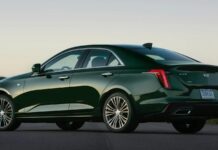
The focus is heavily on Buick, leveraging its strength in the multipurpose vehicle segment, and Cadillac, with a commitment to electrification. The Buick Electra L7, an all-electric crossover, is set to launch soon, alongside an electric Encasa MPV and a plug-in hybrid version featuring faster charging capabilities. Cadillac will introduce the fully electric Vistiq SUV, equipped with advanced driver-assistance systems developed in partnership with Momenta. Key traditional ICE models like the Buick LaCrosse, Envision, and Cadillac XT5 will also be electrified to stay competitive.
Tech Deficit: The Root of the Problem
A major driver behind GM’s struggles in China is the technological gap compared to domestic brands. Chinese consumers now expect cutting-edge features, and GM is scrambling to catch up. The company’s Xiaoyao platform will support next-generation battery systems with 1,000V fast charging, ranges of up to 1,000 kilometers, and power outputs of up to 850 kilowatts. This includes advances in active suspension, steer-by-wire, and rear-wheel steering controlled by proprietary software.
Software and Connectivity: A New Priority
Inside the vehicle, GM-SAIC will adopt smart cockpit systems this year, improving smartphone connectivity and digital interfaces. Future upgrades will integrate technology from ByteDance (TikTok’s parent company) to refine the user experience. Driver-assistance systems will move from Level 2 to Level 3 by 2027, further closing the gap with competitors.
The clock is ticking for GM in China. The company’s aggressive investment in electrification and tech upgrades is a clear signal of its determination to remain relevant. However, securing a partnership extension with SAIC will depend on proving that these efforts translate into tangible market gains. Failure to do so could mean a significant withdrawal from one of the world’s most critical automotive markets.