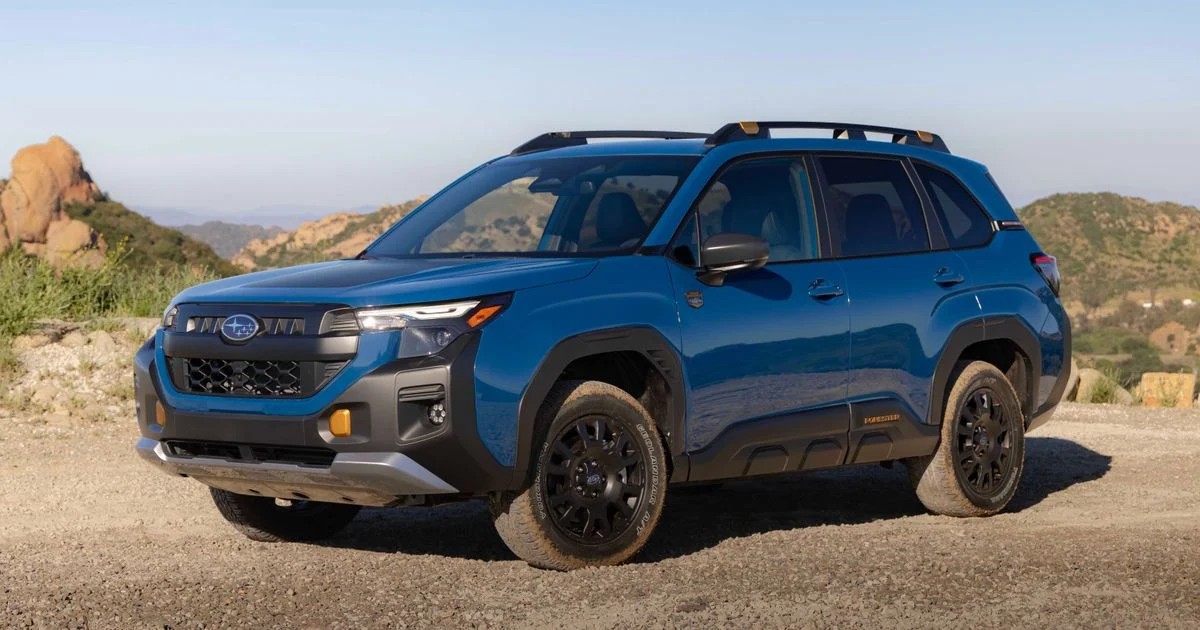
Subaru has expanded its “Wilderness” sub-brand—focused on enhanced off-road capability—to include a hybrid version of the popular Forester. This marks the first time Subaru has paired its more rugged styling and suspension upgrades with a hybrid powertrain. The move underscores a growing trend among automakers to blend off-road readiness with fuel efficiency, responding to consumer demand for adventure-capable vehicles that don’t compromise on practicality.
Enhanced Off-Road Performance
The Forester Wilderness Hybrid boasts 236mm of ground clearance, a significant increase from the standard Forester Hybrid’s 221mm. This is achieved through revised suspension featuring longer coil springs and tuned dampers. The result is improved approach (23.5 degrees), breakover (20.6 degrees), and departure (25.5 degrees) angles, making it more capable on challenging terrain.
Unlike some competitors that rely on software tricks to simulate off-road prowess, the Wilderness Hybrid maintains a mechanical connection between the front and rear axles for true all-wheel-drive performance. It also comes equipped with 17-inch matte-black wheels wrapped in all-terrain Yokohama Geolandar tires, as well as Subaru’s X-Mode system, which includes hill descent control and selectable settings for various conditions (Snow/Dirt and Deep Snow/Mud).
Hybrid Powertrain Upgrade
The hybrid model swaps the standard Forester Wilderness’ 2.5-liter flat-four engine for Subaru’s hybrid setup: a 2.5-liter Atkinson/Miller-cycle flat-four paired with a series-parallel hybrid system, lithium-ion battery, and dual electric motors. This combination delivers a modest power increase, boosting output from 134kW to 145kW. While not a dramatic leap in performance, it offers a more efficient alternative for off-road adventures.
Styling and Interior Touches
Visually, the Wilderness Hybrid is nearly identical to its gasoline-powered sibling, with the addition of orange accents, blackout trim, and raised roof rails capable of supporting up to 363kg of static load. The interior features durable, weather-resistant StarTex synthetic upholstery, along with standard all-weather floor mats and a cargo area protector.
Technology upgrades include a 12.3-inch digital instrument cluster with navigation, an 11.6-inch touchscreen infotainment system, and an 11-speaker, 576W Harman Kardon sound system.
Market Trends and Availability
Subaru first introduced the Wilderness trim in the US in 2021. Since then, other brands have followed suit, including Ford (Explorer Timberline), Hyundai (XRT editions), Nissan (Rogue Rock Creek), and Honda (Passport and Pilot TrailSport). This indicates a growing consumer appetite for vehicles that can handle both daily commutes and weekend explorations.
As of now, Subaru has only confirmed the Outback Wilderness for the Australian market, but hints at further expansion of the Wilderness sub-brand in the future. Whether the Forester Wilderness Hybrid will make its way to Down Under remains uncertain, but the demand for capable, hybrid off-roaders suggests it could be a viable option.
The Subaru Forester Wilderness Hybrid represents a strategic move by the automaker to meet the evolving demands of adventure-seeking consumers. By combining rugged capability with hybrid efficiency, Subaru positions itself competitively in a rapidly expanding segment of the automotive market.