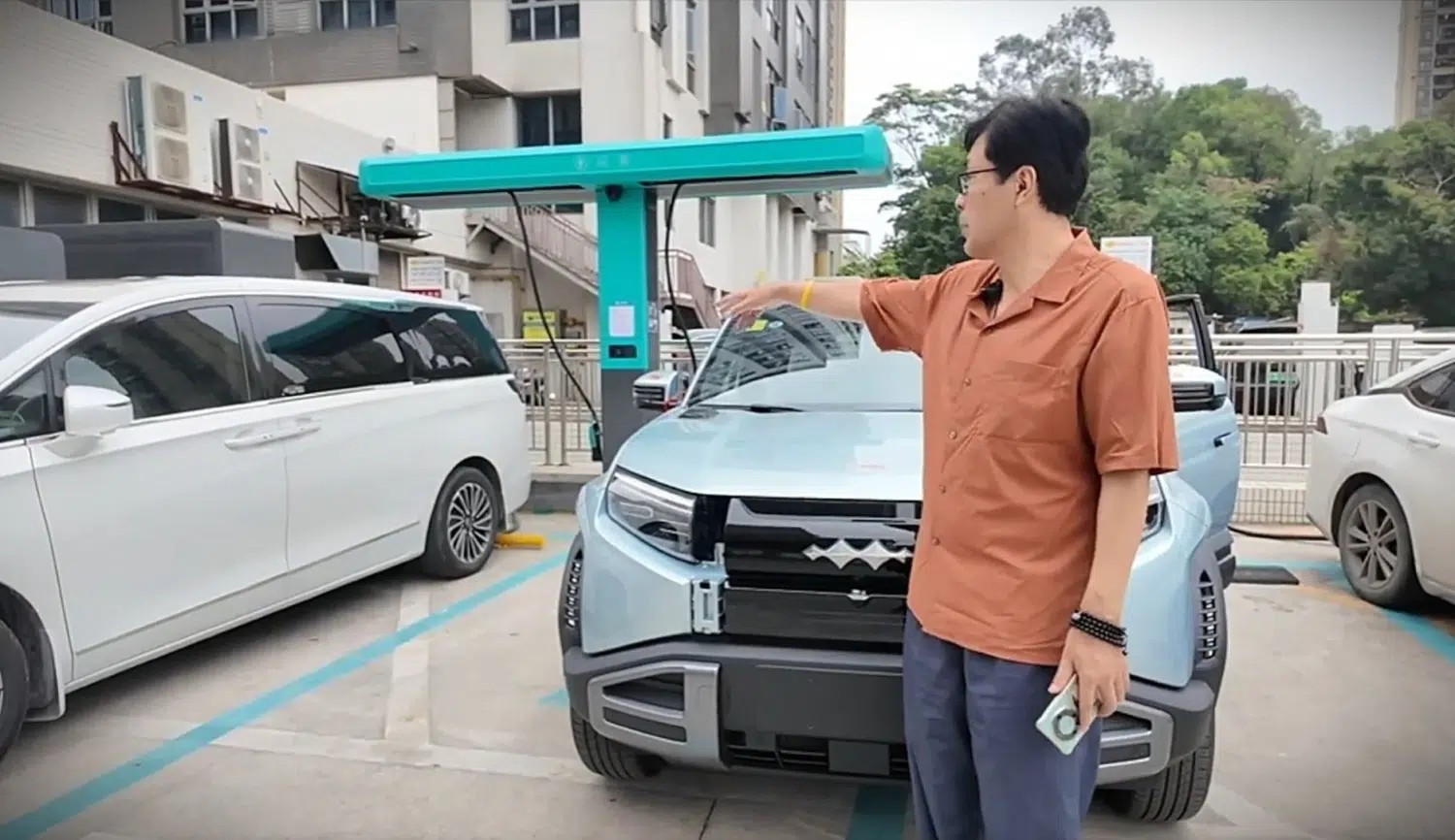
An independent livestreamed test of BYD’s new megawatt flash-charging system has ignited a technical debate across Chinese social media, focusing on whether extreme heat during ultra-fast charging compromises battery longevity and safety.
The controversy centers on a live demonstration conducted by automotive influencer James Yu (known online as “Caishendao”), which recorded battery surface temperatures exceeding 76°C while charging a FCB Tai 3 vehicle. While BYD has not altered its charging specifications in response, the incident raises critical questions about thermal management in next-generation electric vehicles.
The Test: Methodology and Measurements
The test involved charging a legally purchased, unregistered FCB Tai 3 from 8% to 97% state of charge (SOC). To capture accurate data, the testing team employed a dual-measurement approach:
- Vehicle Diagnostics: Data pulled directly from the car’s maintenance interface.
- External Sensors: Five temperature sensors attached to the surface of the battery pack, positioned near the bottom center, away from liquid-cooling pipes.
Key findings from the livestream included:
- Peak Surface Temperature: An external sensor recorded a maximum of 76.42°C.
- Internal Pole Temperature: Vehicle diagnostic data showed a peak pole temperature of approximately 71°C.
- Thermal Gradient: The difference between the hottest and coolest sensor locations reached 6.5°C during charging.
- Divergence Point: External sensor readings began to diverge noticeably from vehicle-reported temperatures once the battery exceeded roughly 70% SOC.
Following the broadcast, Caishendao issued clarifications to address online speculation. He confirmed that the vehicle had not been structurally modified or drilled. The sensors were merely attached to the exterior, and the liquid-cooling system remained fully operational throughout the test. Charging would automatically halt if the cooling system failed.
Why Temperature Matters: Safety vs. Standards
The core of the online debate revolves around the implications of these high temperatures for lithium-ion battery health.
Context: China’s GB/T 44500-2024 standard includes a recommended threshold of 65°C for lithium iron phosphate (LFP) battery temperatures. However, this standard is currently advisory and not yet mandatory.
Critics argue that repeated exposure to temperatures above this threshold could accelerate battery degradation or increase long-term safety risks. Conversely, technical analysts point out the distinction between surface temperature and internal cell temperature.
- Surface vs. Core: The recorded 76°C reflected the battery pack’s exterior. Internal core temperatures are typically higher, but no independently verified internal data was published for this specific test.
- Chemical Stability: Academic studies suggest that significant decomposition of the Solid Electrolyte Interphase (SEI) layer—a key factor in battery degradation—generally occurs between 80°C and 120°C, depending on chemistry.
Caishendao emphasized that no final conclusion has been drawn regarding safety or degradation impacts. Further cell-level testing is planned to provide a more comprehensive analysis.
BYD’s Flash-Charging Push
This controversy emerges as BYD aggressively expands its high-speed charging infrastructure. The company recently demonstrated its megawatt charging technology at a remote desert test site and announced that its domestic network has surpassed 5,715 stations.
This infrastructure supports the rollout of BYD’s second-generation Blade Battery, which promises faster charging times and improved range. The incident highlights the growing tension between marketing advanced charging capabilities and ensuring transparent, verifiable data on thermal performance.
Conclusion
While BYD’s flash-charging technology represents a significant leap in EV convenience, the recent livestream test underscores the importance of rigorous, independent verification. As adoption of ultra-fast charging grows, consumers and regulators alike will be watching closely to ensure that speed does not come at the cost of battery longevity or safety.