

The automotive market is competitive, but some vehicles consistently underperform. While slow sales don’t equate to poor quality, they reveal shifts in consumer preferences and broader industry trends. Recent data from Car Edge, analyzing inventory turnover nationwide, highlights ten models struggling to move off dealership lots. These range from luxury coupes to SUVs, with reasons varying from pricing to changing market demands.
Market Day Supply (MDS) is the key metric here: it represents how long vehicles sit unsold. Higher MDS means slower turnover, reflecting a disconnect between supply and buyer interest. Understanding this metric helps explain why certain cars lag behind competitors.
Mini Hardtop 2-Door: The Niche Coupe
The two-door Mini Hardtop consistently ranks among the slowest sellers. Americans overwhelmingly favor larger vehicles with four doors and ample space, making the tiny, three-door Mini a hard sell. While popular in markets like Europe, its practicality in the U.S. is limited, especially for families.
The Mini retains its sporty spirit, appealing to a shrinking segment of drivers. Nostalgia and heritage aren’t enough to drive sales when practicality dominates purchasing decisions.
Jeep Compass: Lost in the Crowd
The Jeep Compass faces stiff competition in the crowded compact SUV segment. Despite the Jeep brand’s rugged appeal, refined alternatives offer better value and features. Upcoming models (like the 2026 Jeep Compass) face tariff-related delays, further hindering sales.
The Compass’s struggle underscores the importance of staying competitive in a market where consumers have numerous options.
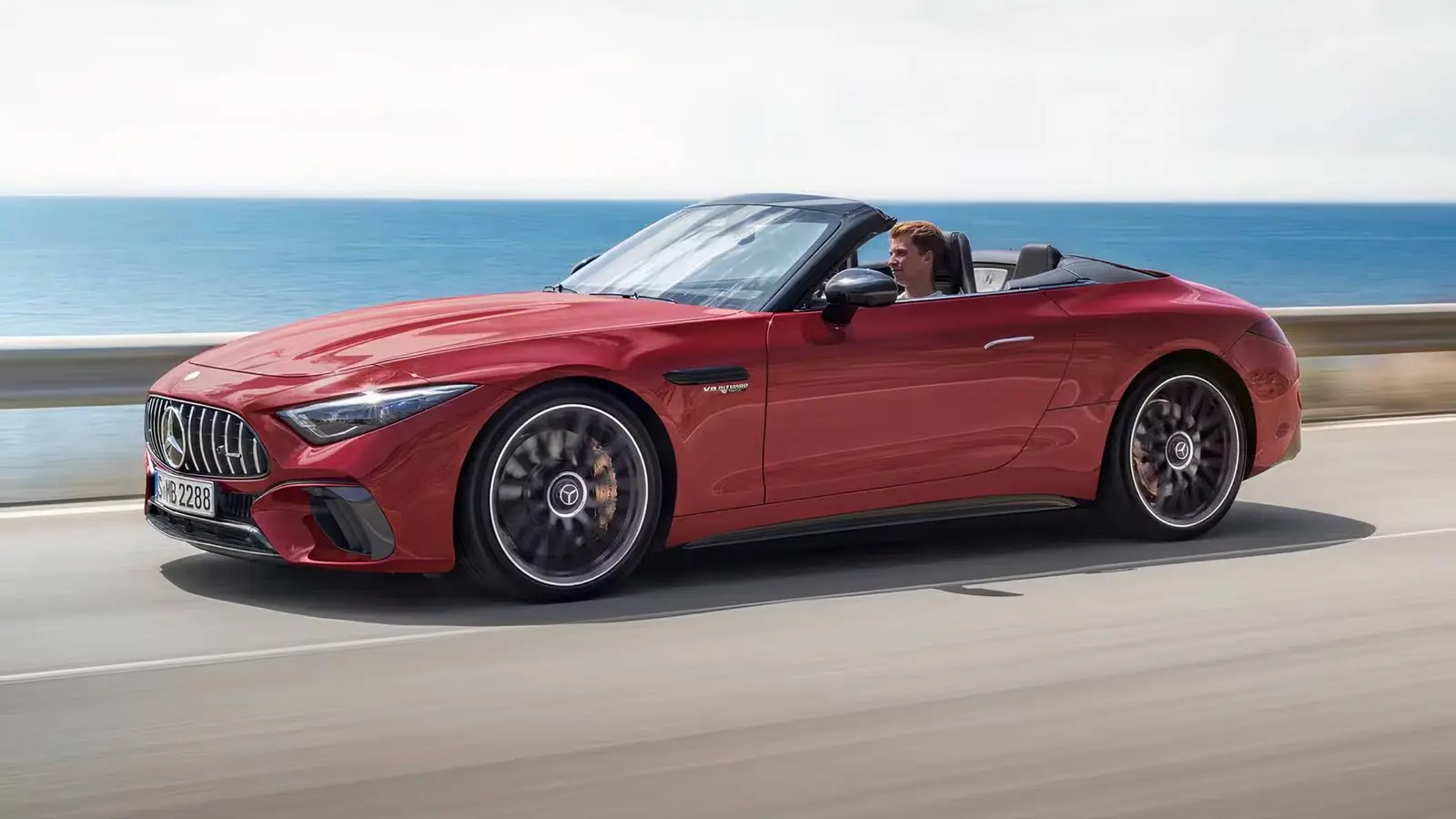
Mercedes-Benz SL: A Pricey Proposition
Mercedes-Benz’s SL is a luxury icon but moves slowly due to its high price tag. While it’s arguably the sleekest iteration of the model to date, its cost puts it out of reach for many buyers. Competitors offer similar performance and features at lower prices.
Despite its heritage, the SL’s slow sales demonstrate that even prestigious brands aren’t immune to market realities.
Nissan Versa Sedan: An Exit Strategy
Nissan is phasing out the Versa Sedan by the end of 2025, making it a poor investment for buyers concerned about long-term parts availability. As the list of new cars under $20,000 shrinks, the Versa struggles to attract buyers who can afford slightly more expensive, better-equipped alternatives.
The Versa’s demise highlights the challenge of selling basic cars in a market that increasingly demands features and reliability.
Ford Mustang: A Price Sensitivity Issue
The Ford Mustang, once the “working man’s” sports car, has seen sales decline due to price increases. Even small price hikes significantly impact demand in the value-conscious sports car segment. While the Mustang remains a performance bargain, its affordability has eroded, hurting sales.
This demonstrates that even iconic models must remain accessible to maintain popularity.
Volvo XC90: Premium Struggle
The Volvo XC90, despite its safety innovations and Scandinavian minimalism, struggles against established luxury competitors like BMW, Lexus, and Lincoln. Tariffs have temporarily inflated prices, making it less competitive.
However, as Volvo shifts production to South Carolina, the XC90 may gain traction as buyers recognize the brand’s value proposition.
Audi A6: The Sedan’s Decline
The Audi A6 embodies the broader decline of luxury sedans. Consumers are flocking to SUVs, leaving the A6 with a market-day supply of 224 days—far exceeding the Toyota Camry’s 34 days. Audi is repositioning its brand, but the A6’s fate remains uncertain.
The A6’s struggle highlights the shifting preferences of luxury car buyers.
Audi A4: Reliability Concerns
The Audi A4 has seen sales dip due to reliability issues and competition from BMW and Mercedes-Benz. While it once held a strong position, recurring problems have damaged its reputation.
Despite remaining a decent value, the A4 faces an uphill battle regaining consumer trust.
Maserati Grecale: Late to the SUV Party
Maserati’s Grecale enters a crowded SUV market where competitors have already secured their share. While the Grecale offers Italian flair and performance, it lacks the brand recognition and established presence of rivals.
The Grecale’s late entry underscores the importance of timing in a rapidly evolving market.
Jaguar F-PACE: Depreciation and Rebranding Woes
The Jaguar F-PACE suffers from high depreciation costs and recent rebranding efforts that have alienated some customers. Despite offering a powerful V8 option, its resale value and shifting brand identity deter potential buyers.
The F-PACE’s struggles illustrate the impact of financial factors and brand perception on sales.
In conclusion, these ten vehicles highlight the complex factors influencing automotive sales. Price, practicality, reliability, and brand perception all play a critical role. As consumer preferences continue to evolve, manufacturers must adapt or risk seeing their models linger unsold.