For most North American commuters, the choice of a reliable daily driver usually boils down to two names: the Toyota Corolla or the Honda Civic. However, there is a hidden variable in this equation that many buyers overlook: the body style. While hatchbacks are staples in Europe and Japan, North American consumers remain deeply loyal to the traditional sedan.
This preference has created a massive sales gap. While manufacturers like Honda and Toyota don’t release specific breakdowns, data suggests a stark reality. During the launch of the 10th-generation Civic, Honda noted that hatchbacks accounted for only 20% of sales. Anecdotal evidence for the Corolla suggests an even slimmer margin, with some reports placing the hatchback at just 2% of total Corolla sales.
Despite these low numbers, the Corolla Hatchback remains one of the most undervalued vehicles in its class.
The Great Divide: Why Americans Choose Sedans
The disparity between sedan and hatchback sales isn’t accidental; it is rooted in consumer priorities regarding privacy, space, and refinement.
- Privacy and Security: A sedan’s trunk is a separate, enclosed compartment. In a hatchback, the cargo area is part of the passenger cabin. If you load your car with gear, it is often visible through the rear windshield, whereas a sedan keeps valuables tucked out of sight.
- Cargo Volume vs. Flexibility: While hatchbacks offer better access to cargo via a large tailgate, sedans often provide a longer, deeper cargo area.
- Cabin Refinement: Because the trunk is isolated, sedans tend to be quieter. Passengers in a sedan are less likely to hear the rattles of loose items shifting in the back, and opening the trunk doesn’t disrupt the cabin’s climate or acoustics.
The Hatchback Advantage: Style and Versatility
If sedans win on privacy, hatchbacks win on utility and character. For many, the hatchback is a deliberate lifestyle choice rather than a compromise.
- Unmatched Versatility: By folding the rear seats, a hatchback effectively transforms into a compact cargo van. This allows for the transport of bulky, long items that simply would not fit through the narrow opening of a sedan’s trunk.
- Urban Maneuverability: The shorter rear overhang of a hatchback makes it easier to park and navigate through tight city streets—a major benefit in dense urban environments.
- Sportier Identity: Automakers often use the hatchback body style to signal a “sportier” trim level. In the case of both the Civic and the Corolla, the hatchback is positioned as the more energetic, enthusiast-oriented sibling.
Analyzing the Toyota Corolla Hatchback
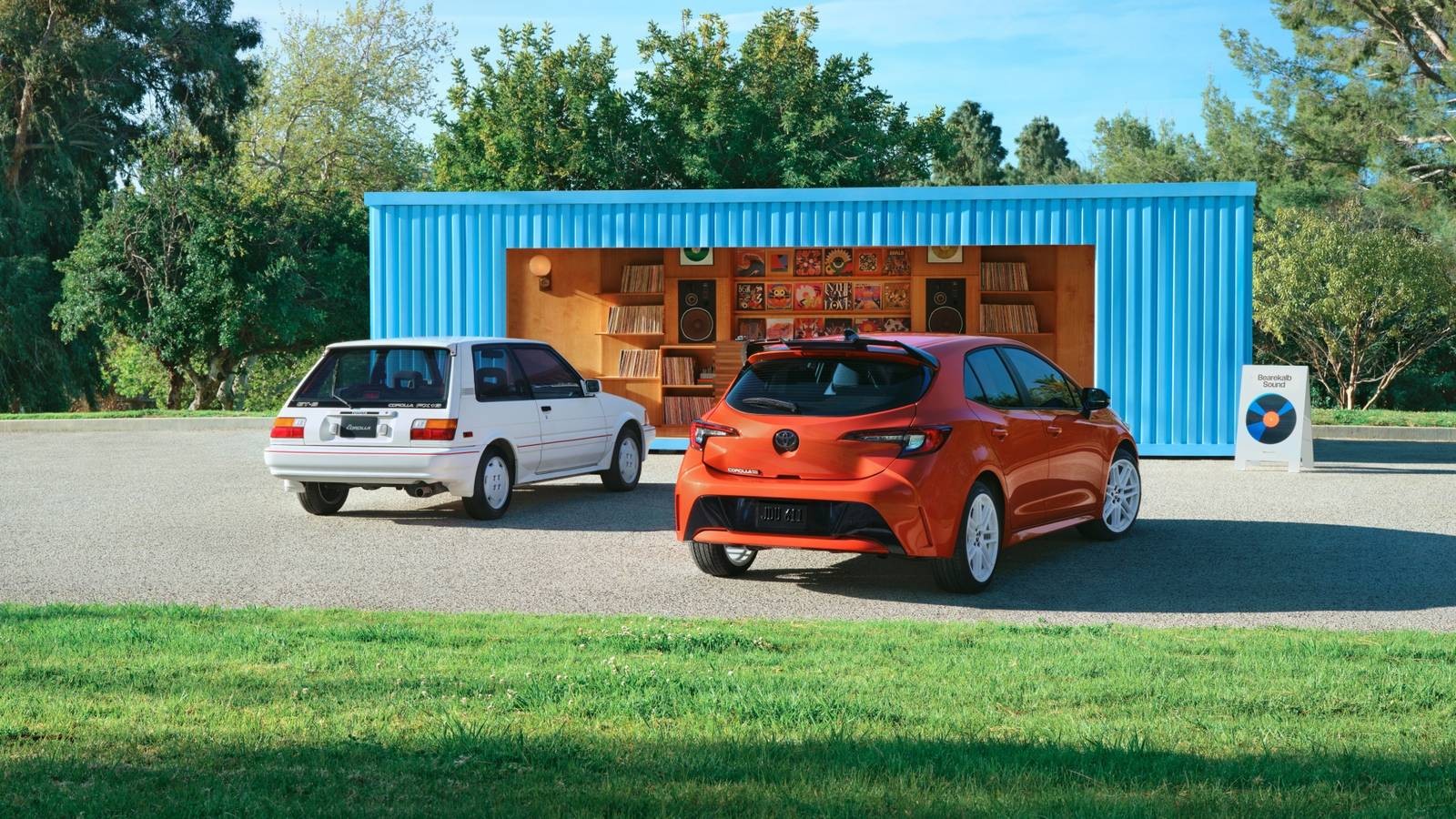
The Corolla Hatchback is positioned as a driver-focused alternative to its more utilitarian sedan counterpart. In the U.S., it is offered in three variants: SE, FX, and XSE.
Performance and Engineering
Unlike the base Corolla sedan, which uses a simpler torsion beam rear suspension, the Corolla Hatchback SE comes standard with a multi-link rear suspension. This setup, combined with a sportier suspension tune, provides a more engaging driving experience.
Despite its sporty leanings, it doesn’t sacrifice the Corolla’s hallmark efficiency. Equipped with a 2.0-liter four-cylinder engine and a Dynamic-Shift CVT, the SE variant achieves a combined 35 MPG, while the larger-wheeled FX and XSE models manage a respectable 33 MPG.
The Drawbacks: Space and Efficiency
The vehicle is not without its flaws. The most significant compromise is rear passenger space. The Corolla Hatchback offers one of the smallest rear cabins in its segment, trailing significantly behind the Honda Civic Hatchback.
Furthermore, while Honda has introduced a hybrid powertrain for the Civic Hatchback, Toyota has yet to offer a hybrid option for the Corolla Hatchback. This leaves a gap for eco-conscious buyers who want a sporty feel without sacrificing maximum fuel economy.
The “Internal” Competition: Hatchback vs. Crossover
Perhaps the Corolla Hatchback’s greatest rival isn’t another brand, but another Toyota.
In a market obsessed with utility, the Toyota Corolla Cross (a compact SUV) poses a massive threat. At a price difference of only about $455, the Corolla Cross offers more height, more perceived space, and the “commanding” driving position that modern American buyers crave.
The Verdict: If you prioritize pure practicality and easy transport from A to B, the Corolla Cross is the logical winner. However, if you value design, driving dynamics, and a sense of character, the Corolla Hatchback offers an emotional reward that a crossover simply cannot match.
Conclusion: The Toyota Corolla Hatchback is a specialized tool—ideal for those who want a compact, sporty, and maneuverable daily driver, even if it means sacrificing rear-seat room and hybrid efficiency.