For nearly two decades, the minivan has struggled against a significant cultural hurdle: the perception that choosing one is a “surrender” to domesticity. Image-conscious buyers have largely migrated to three-row SUVs, trading practical utility for a more rugged aesthetic. However, the 2025 Toyota Sienna is attempting to flip this narrative. Rather than trying to mimic an SUV, Toyota has leaned into the minivan’s inherent strengths—efficiency, space, and smart packaging—while addressing the traditional pain points of the segment.
A Hybrid-First Philosophy
Toyota has taken a decisive step by making the Sienna hybrid-only. By eliminating gas-only engines, the brand has streamlined the ownership experience and prioritized fuel economy across the entire lineup.
The powertrain features a 2.5-liter Atkinson-cycle four-cylinder engine paired with electric motors, producing a combined 245 horsepower. This setup is engineered for smoothness rather than raw speed, utilizing an eCVT to ensure the engine operates in its most efficient range. The results are significant:
– Fuel Efficiency: The Sienna delivers an EPA-estimated 35–36 mpg combined, nearly doubling the efficiency of older V6 minivans and significantly outperforming most three-row SUVs that struggle to reach 25 mpg.
– Refined Delivery: The hybrid system provides instant electric torque for responsive low-speed acceleration, making urban driving effortless.
– Simplicity: Buyers no longer have to choose between different engine types; every model is optimized for maximum efficiency from the factory.
Outpacing the Competition
While the Kia Carnival is a formidable rival with bold styling and modern tech, the Sienna distinguishes itself through long-term value and mechanical versatility.
| Feature | Toyota Sienna | Kia Carnival Hybrid |
|---|---|---|
| Combined MPG | ~35–36 mpg | ~33 mpg |
| Drivetrain | Available All-Wheel Drive (AWD) | Front-Wheel Drive focus |
| Hybrid Warranty | Up to 150,000 miles | Up to 100,000 miles |
The availability of an electronic all-wheel-drive system is a critical advantage for families in regions with heavy rain or snow. Furthermore, Toyota’s extensive experience in hybrid technology provides a level of reliability and a superior battery warranty that offers greater peace of mind over years of ownership.
Redefining the “Van” Aesthetic
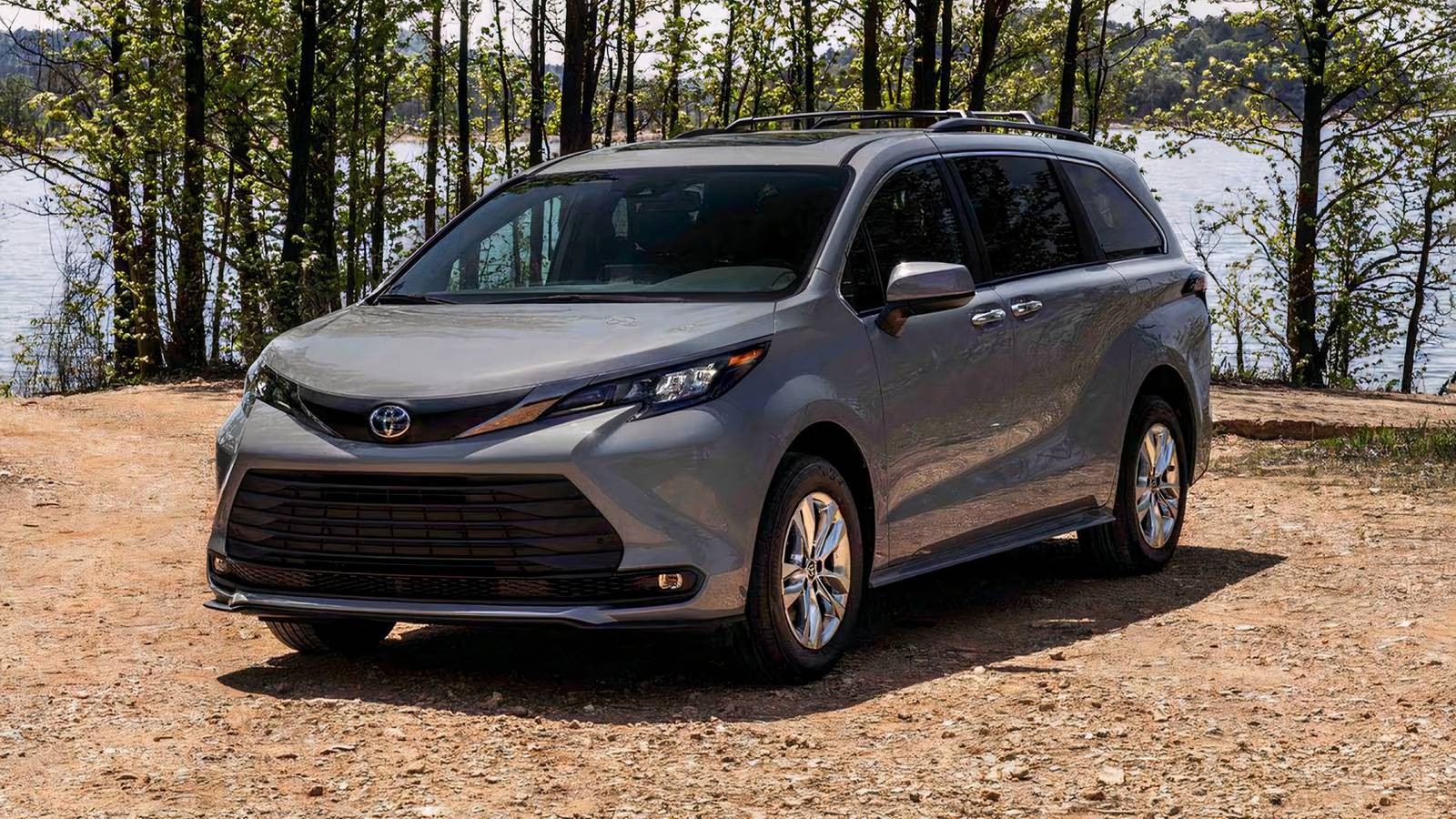
One of the primary reasons for the decline of the minivan was design. Toyota has addressed this by adopting a more aggressive, crossover-inspired visual language. The 2025 model features a wider stance, sculpted body lines, and a prominent grille that gives it a commanding road presence.
Despite the modernized exterior, Toyota has not abandoned the features that make a minivan functional. The sliding doors remain a central feature, offering superior ease of access in tight parking spots—a practical advantage that traditional SUV doors cannot match.
Superior Interior Utility
While many modern SUVs sacrifice cargo space for sleek silhouettes, the Sienna is engineered around the realities of family life. The interior provides a level of flexibility that most crossovers simply cannot replicate:
- Cargo Capacity: It offers 33.5 cubic feet of space behind the third row, expanding to 101 cubic feet with the rear seats folded.
- Ease of Use: A low load floor and a wide rear hatch make loading heavy or bulky items much simpler than in many SUV models.
- Passenger Comfort: Unlike many “compact” three-row SUVs where the back row feels like a “penalty box,” the Sienna provides genuine comfort for up to eight passengers.
- Thoughtful Storage: The cabin is peppered with practical touches, including overhead compartments, multiple cupholders, and dedicated charging points.
Conclusion
The 2025 Toyota Sienna succeeds by refusing to compete on the terms of the SUV market. Instead, it focuses on being the most efficient, practical, and reliable tool for family logistics.
By combining high-end hybrid efficiency with unmatched interior versatility, the Sienna proves that functionality doesn’t have to be a compromise.