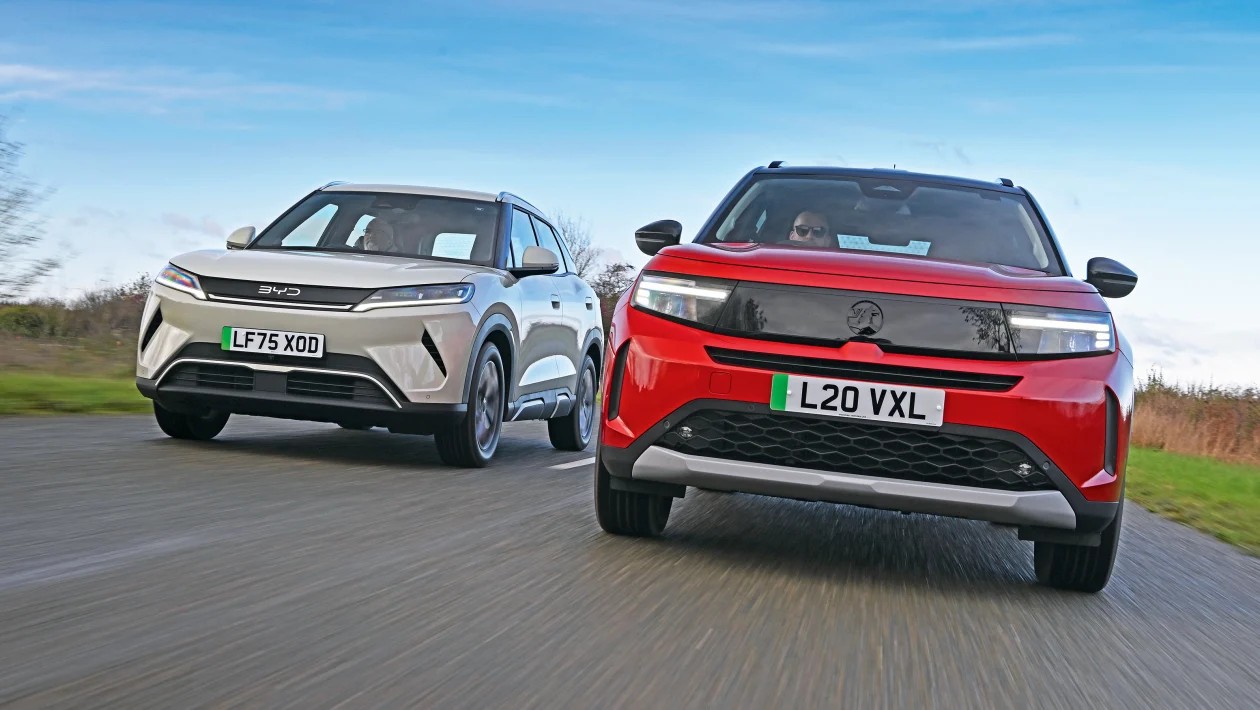
The automotive market is shifting, with established brands reviving classic names alongside the influx of Chinese automakers. This competition is driving innovation and, crucially, lower prices. The latest example? Vauxhall’s resurrected Frontera, now an electric SUV aimed at budget-conscious buyers, pitted against the BYD Atto 2 – a newcomer offering a compelling mix of features and value. Both cars represent a strategic move by their manufacturers: Vauxhall leveraging nostalgia and BYD capitalizing on a rapidly growing market share.
The Revival Strategy: Familiar Names in a New Era
Car manufacturers like Vauxhall and Ford are increasingly turning to familiar badges – Puma, Explorer, Capri, Frontera – to stand out in an increasingly crowded market. This isn’t just branding; it’s about connecting with buyers who remember these names fondly. However, this strategy is particularly important now, as a wave of Chinese brands enters Europe, where brand recognition matters. The Frontera, in particular, aims to undercut competitors with competitive pricing while tapping into a sense of familiarity.
Head-to-Head: Frontera Electric vs. BYD Atto 2
The Frontera Electric starts at a remarkably low £25,495 (after the government grant), making it one of the most affordable family EVs. However, its 44kWh battery offers a modest 186-mile range, which is far from ideal for long journeys. Upgrading to the 54kWh pack adds £3,500 but doesn’t significantly improve performance. The Atto 2, priced at £30,850, offers a larger 51.1kWh battery with a slightly better official range of 214 miles and a more powerful 175bhp motor. The Atto 2’s powertrain delivers stronger acceleration, reaching 62mph in 7.9 seconds, compared to the Frontera’s sluggish 12.8 seconds.
Performance and Driving Experience
The Atto 2 is noticeably quicker, but the driving experience is somewhat detached. Steering feedback is minimal, and the ride can be unsettled on rough roads. The Frontera, while underpowered, offers a more comfortable ride, though it lacks the Atto 2’s outright responsiveness. One notable frustration in the Atto 2 is its overly sensitive driver-monitoring system, which beeps incessantly if you glance away from the road for even a moment.
Interior and Technology
Both cars share components with other models within their respective groups – the Frontera with Citroen, the Atto 2 with BYD’s other offerings. The Frontera benefits from a more intuitive dashboard layout, avoiding the awkward head-up display found in some Citroen models. The Atto 2’s climate controls are also frustratingly buried within the touchscreen menu, instead of having physical buttons.
Ownership and Reliability
Vauxhall’s ownership surveys have been mixed, but the brand now offers eight years of roadside assistance with finance deals. BYD has yet to appear in these surveys, but its long warranty (six years) is a significant draw. Both cars come standard with safety features like lane assist and road-sign recognition, though the Atto 2 edges ahead with adaptive cruise control and blind-spot detection.
The Verdict: BYD Atto 2 Takes the Lead
For those seeking a compact electric SUV, the BYD Atto 2 offers a clear advantage. Its stronger performance, better range, and more efficient powertrain make it the more practical choice. While the Atto 2’s safety systems can be intrusive and its driving experience lacks engagement, the standard kit and overall value are hard to ignore. The Vauxhall Frontera Electric is still a competitive option, particularly for buyers prioritizing price and cabin space, but its compromises in range and performance hold it back. Ultimately, the Atto 2 is better suited for urban driving where range anxiety is minimal and comfort isn’t paramount.