


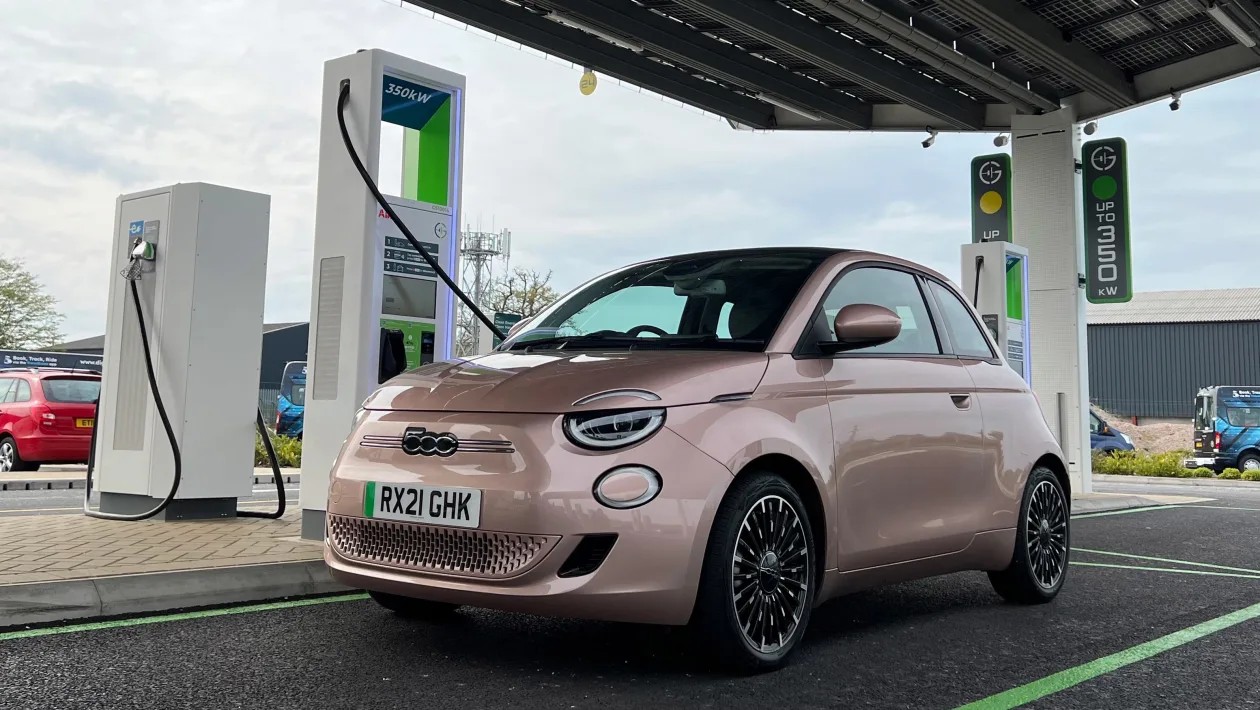
The cost of charging electric vehicles (EVs) at ultra-rapid public chargers has fallen by 10% at the end of 2025, offering drivers savings of up to £3 per full charge for models like the Tesla Model Y Standard. This price drop, equivalent to 5 pence per kilowatt-hour, is most noticeable during off-peak hours, though peak times also saw a smaller reduction of 1 pence per kWh.
The Shifting Landscape of EV Charging Costs
The decline in ultra-rapid charging prices mirrors a broader trend: faster charging options are becoming more affordable while slower methods remain relatively stable or even increase in cost. According to Jack Cousens, head of roads policy at the AA, operators with flexible peak-and-off-peak pricing are offering the best deals. “Flat rate providers have seen steady increases over the same period,” Cousens explained, highlighting the financial benefits of dynamic pricing for consumers.
This shift is critical because EVs now commonly feature larger batteries exceeding 100 kWh. While a 1-pence drop per kWh may seem small, it adds up significantly for high-capacity vehicles. This means that EVs are becoming cheaper to charge as the technology scales up, something that hasn’t been true for many other automotive costs.
Government Review and Potential VAT Cuts
The UK Department for Transport (DfT) is currently reviewing public EV charging costs, considering energy prices, broader cost factors, and options for lowering expenses. A key proposal under consideration is cutting the Value Added Tax (VAT) on public charging from the standard 20% to the 5% rate applied to home electricity.
Asif Ghafoor, CEO of Be.EV, argues this is a matter of fairness: “If you rely on public chargers, your EV is simply more expensive to run than it should be…we shouldn’t be doing it with electricity either.” A VAT cut could save drivers up to 13 pence per kWh on flat-rate ultra-rapid chargers, translating to roughly £7.80 for a full Tesla Model Y Standard charge.
Balancing Costs: The eVED Tax and Future Savings
The potential VAT reduction is seen as an “easy win” and a necessary step to encourage EV adoption. However, it must be considered alongside the impending eVED pay-per-mile tax, which could cost electric car drivers between £200-300 annually. The government is essentially weighing how to offset new revenue streams with lower charging costs.
Cheaper charging away from home will help give more confidence to those drivers considering making the switch to an EV.
Ultimately, these pricing dynamics are essential for the future of EV adoption. Making public charging more competitive is critical as the industry transitions towards wider electric vehicle usage.
The UK government’s ongoing review suggests a commitment to addressing affordability challenges, but the ultimate outcome will depend on balancing revenue needs with consumer costs.


