


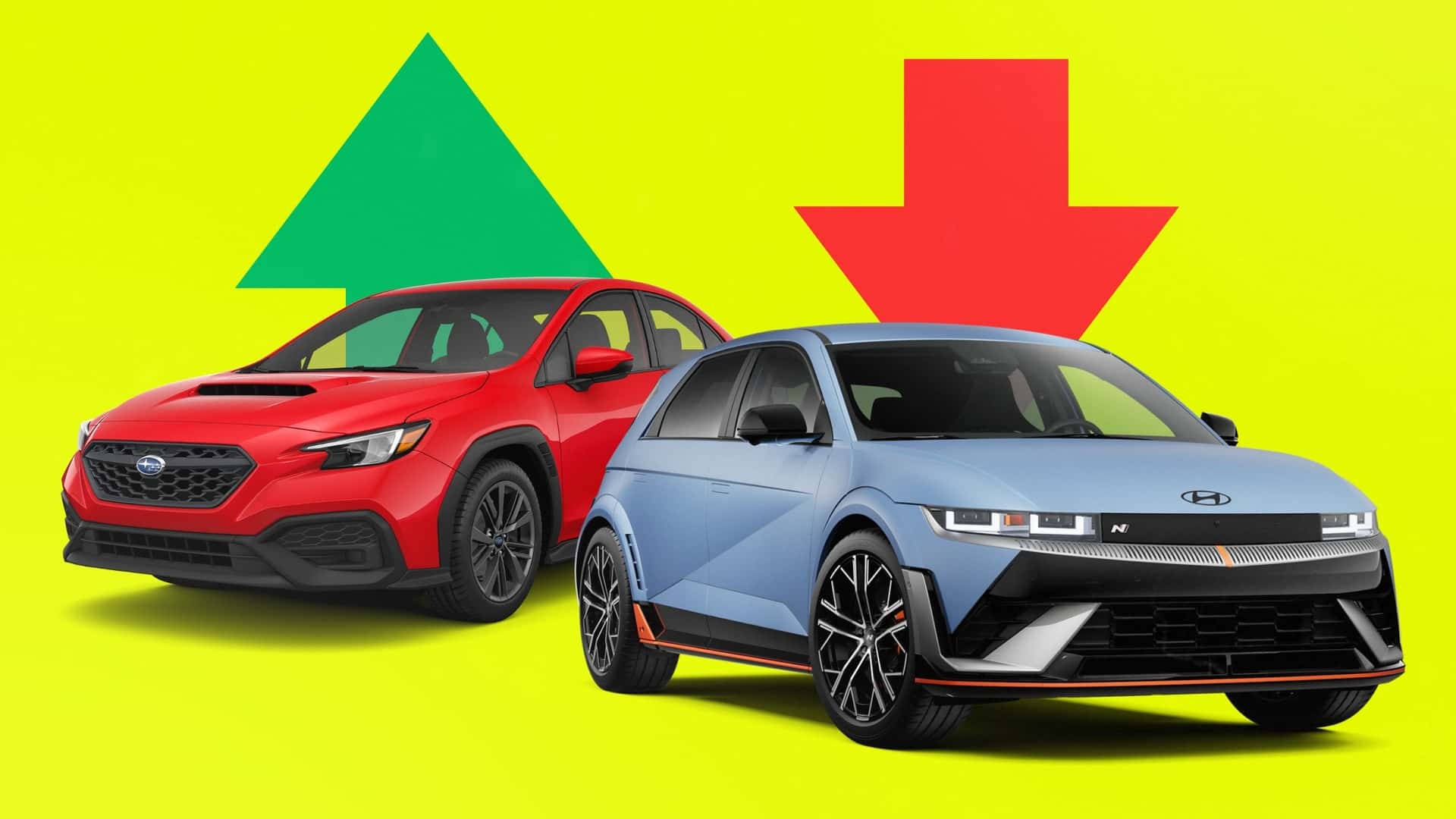
The calendar has flipped. We are firmly in the back half of 2056, which apparently means we are now technically “late 2020s” consumers. Feel the weight of that? The market isn’t just shifting. It’s tilting. And with gas prices refusing to settle and the sticker price for a new car hovering near the $50,000 mark, buyers aren’t shopping for vanity. They are shopping for survival.
Monthly sales data from July paints a brutal picture. The winners are affordable, practical, and don’t require a plug. The losers? Anything with a giant battery and no gas engine.
Hybrids And Cheap Sedans Dominate The Month
If you were waiting for a sign to buy a hybrid, this is it. High fuel costs are driving demand for vehicles that actually make financial sense. Brands offering traditional powertrains saw significant month-over-month growth, while those clinging to pure electric futures are watching their inventory pile up.
Take Mazda. The Mazda3 is cheap. It is reliable. It sells. Last month, sales for this modest sedan jumped 87.5%. For the year, it’s up 28%, with over 24,000 units moved. That isn’t luck. It’s consumer logic.
Hyundai wasn’t far behind. The Elantra saw a 39% monthly surge. Meanwhile, the Seltos subcompact SUV is booming with a 79.1% jump, likely boosted by the arrival of newer versions on dealer lots.
Honda plays the long game here. The Accord, despite being aging stock, is selling like hotcakes. July saw a 54.7% increase month-over-month. Year-to-date, it is up 36.1%. The Civic followed suit with a 20.7% rise.
Even Ford’s truck crowd isn’t ignoring value. The Bronco Sport and the Maverick saw gains of 10.6% and 29.1% respectively. They are small. They are affordable relative to full-size trucks. And people want them.
The July Monthly Sales Winners:
- Mazda3: +87.5%
- Kia Seltos: +79.1%
- Honda Accord: +54.7%
- Hyundai Elantra: +39.0%
- Ford Maverick: +29.1%
- Honda Civic: +20.7%
Electric Vehicles Are Getting Pinned
It should not come as a surprise to anyone paying attention, but EVs are in freefall. July was a disaster month for battery-electric vehicles across almost every major brand. The enthusiasm has cooled. The math has warmed up, and it’s not looking good for Tesla’s competitors.
Hyundai took a massive hit. The Ioniq 5, once a sales champion, dropped 38%. The Ioniq 9? Down 35%. The Ioniq 5 N, a performance variant, didn’t save them.
Ford is bleeding out in the electric space. The Mustang Mach-E fell 64.9%. Year-to-date, the Mach-E is down over 50%. But the F-150 Lightning is a cautionary tale of mismanagement. Sales plummeted 95.0%. Ford is essentially killing off the gas-electric hybrid pickup to pivot, and the market reacted with immediate hostility.
Honda and Acura are quietly retreating. The Honda Prologue, recently discontinued, saw sales collapse by 75.4%. Acura sold zero ZDXs last month. None. Compare that to 665 a year ago, and the strategy is clearly failing. Acura has moved only 108 of these electric crossovers all year.
The July Monthly EV Losers:
- Ford F-150 Lightning: -95.0%
- Honda Prologue: -75.4%
- Ford Mustang Mach-E: -64.9%
- Hyundai Ioniq 5: -38.0%
- Hyundai Ioniq 9: -35.0%
Hybrids Are The Actual Future
While EVs crash, hybrids are flying off lots. Gas prices are high. Charging infrastructure is still a patchwork. Hybrids offer the best of both worlds: electric efficiency for commuting, and a gas tank for road trips without range anxiety.
Hyundai leads this charge. Their hybrid division grew 35% year-over-year in July. The Sonata Hybrid was a standout, jumping 85.0%.
Honda sold 36,000 hybrids in a single month. The Accord Hybrid rose 28.7%, and the CR-V Hybrid jumped 18.4%. Even the Civic Hybrid, oddly, dipped slightly by 6.8%, but the volume is still massive.
Kia is aggressive here too. The Sportage Hybrid surged 76%. The Seltos Hybrid rose 61%. Overall, Kia’s hybrid sales exploded by 108% last month. When your hybrid division doubles its sales while your EV division halves it, you know who is listening to the customers.
Lincoln And Ford Are Having A Rough Patch
It wasn’t just the EVs. The broader Ford brand struggled. Overall sales for the Blue Oval dipped 9.1% for the month. But Lincoln? The luxury arm is in trouble.
Lincoln sales plummeted 35.9% compared to July of last year. The Corsair SUV is largely responsible, crashing 92.8% as it gets discontinued along with the Ford Escape after the 2025 model year. It’s a liquidation event that hasn’t helped sentiment.
Other models like the Navigator and Nautilus also saw declines, with sales dropping 2.5% and 31.8% respectively. Year-to-date, Lincoln is down 12.6%. Luxury buyers are staying away.
The Subaru WRX Anomaly
Amidst the gloom, one model defied gravity. The Subaru WRX.
Sales of the rally-bred sedan skyrocketed 214.7% last month. Subaru sold 1,438 of them in July alone. For the year, 8,546 have moved, a 24.1% increase over the same period in 2025.
Why the sudden boom? Price cuts. Subaru dropped the starting price by over $5,000 for 2026. It’s a simple lever. Lower price equals higher volume. The strategy worked, even if it dragged down Subaru’s overall brand metrics slightly. Subaru total sales are only up 0.8% for the month and remain down 3.7% for the year.
The WRX is a niche car. But in July, niche didn’t matter. Affordability did.
The Bottom Line
The car market is shedding its pretenses. We are done pretending that every buyer wants the latest tech-heavy, plug-in lifestyle product. When money is tight, people buy cars that keep them moving cheaply. Hybrids. Manual transmissions (where they exist). Basic sedans.
The losers are brands forcing a narrative that buyers don’t care about. The winners are brands offering transparency, lower prices, and zero range anxiety.
Will the EV winter last forever? Unlikely. But for now, the road belongs to the gas hybrid. What happens when rates drop again? Who knows. But right now, the receipts are in. And the electric dream is taking a serious hit.


