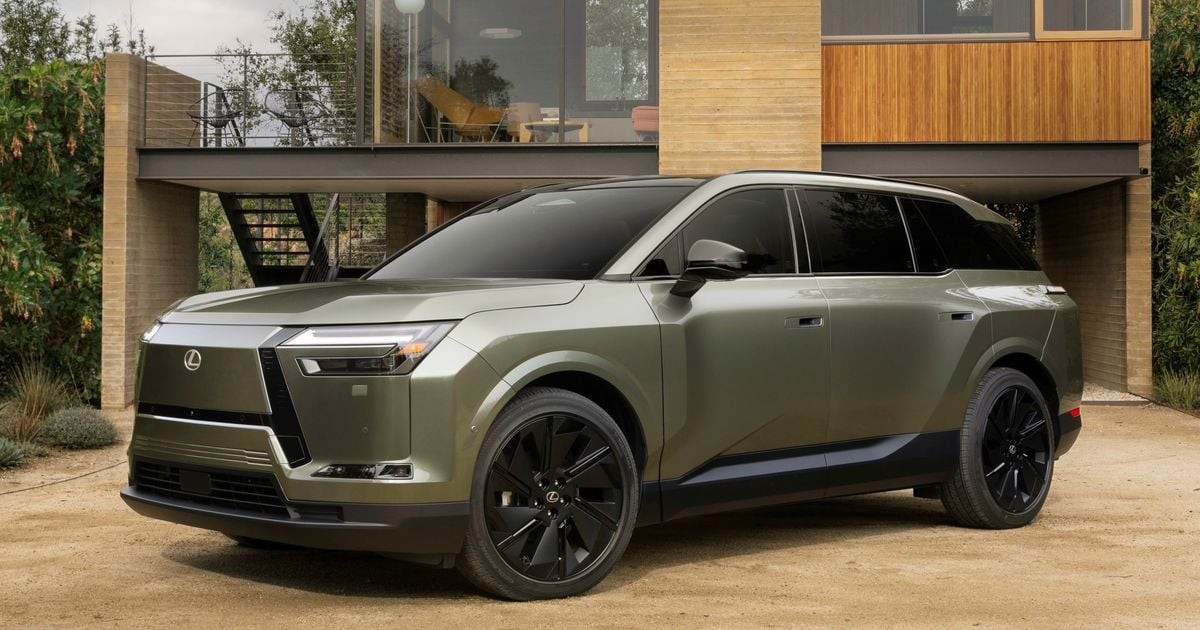
Lexus has officially unveiled the TZ, marking a significant milestone as the brand’s first-ever three-row electric SUV. Scheduled for launch in the United States in late 2026, the TZ is designed to compete directly with premium family haulers like the Volvo EX90 and Cadillac Vistiq. While primarily aimed at the North American market, the vehicle’s architecture and production strategy suggest it may eventually reach other regions, including Australia and potentially right-hand drive markets in Japan.
The TZ is not a standalone engineering experiment; rather, it is the luxury-badged evolution of the shared platform developed by Toyota and Subaru. It shares its foundational DNA with the Toyota Highlander EV and the Subaru Getaway. However, Lexus has differentiated the TZ through exclusive design cues, enhanced comfort features, and a performance-focused drivetrain configuration that sets it apart from its siblings.
Platform Sharing and Global Ambitions
The TZ is built on the TNGA platform, sharing battery technology and dimensional similarities with the Toyota Highlander EV. This strategic partnership allows for cost efficiencies while enabling each brand to tailor the vehicle to its specific audience.
- Production Strategy: Unlike the US-only Highlander and Getaway, reports indicate the TZ will be built and launched in Japan. This manufacturing choice is significant because it opens the possibility for right-hand drive (RHD) variants, potentially paving the way for an Australian release.
- Market Potential: Lexus Australia has stated that the “door is wide open” for the TZ, noting they are currently assessing its potential introduction. If launched locally, it would be the first three-row EV from the Toyota/Lexus/ Subaru alliance available in Australia, offering an electric alternative to the traditionally combustion-engine-dominated three-row segment.
Performance and Drivetrain: A Focus on Capability
A key differentiator for the TZ is its powertrain configuration. While the Toyota Highlander EV offers rear-wheel-drive and all-wheel-drive options, the TZ will be exclusive to dual-motor all-wheel drive (AWD). This decision aligns the Lexus more closely with the performance-oriented Subaru Getaway than with the standard Highlander.
Power and Range
- Battery Options: The TZ will offer two lithium-ion battery packs: 76.96kWh and 95.82kWh, identical to those in the Highlander EV.
- Range: Lexus claims a maximum driving range of up to 300 miles (482 km) on a single charge.
- Power Output: While exact horsepower figures are pending, the AWD-only setup suggests performance metrics closer to the Subaru Getaway, which delivers up to 313kW and achieves 0-60 mph in under five seconds.
- DIRECT4 AWD System: Borrowed from Subaru, this system dynamically distributes torque between the front and rear axles (ranging from 60:40 to 0:100) to optimize handling during cornering.
Driving Dynamics
Lexus has introduced unique driving modes tailored to electric vehicle usage:
* Range Mode: Optimizes efficiency for maximum distance.
* Rear Comfort Mode: This is a standout feature. It coordinates Dynamic Rear Steering, brake force optimization, and drive force distribution to minimize pitching and lateral motion, prioritizing the comfort of passengers in the second and third rows.
* Regenerative Braking: Five levels of regen strength are controlled via steering wheel paddles. It remains unclear if a true one-pedal drive mode will be included.
Interior Luxury and Technology
Lexus positions the TZ as one of its most luxuriously appointed models to date, focusing heavily on passenger comfort and sustainable materials.
Passenger Comfort
- Seating: The front passenger and second-row captain’s chairs feature ventilation and, for the first time in a Lexus SUV, power-adjustable ottomans. The third row offers “sofa-like cushioning,” and all seats are heated.
- Access: A removable two-tier tray system in the center console allows for easier access between the second and third rows.
- Four-Wheel Steering: The TZ features rear-wheel steering that turns up to four degrees, improving maneuverability at low speeds and stability at high speeds. This technology is rare even in Toyota’s internal combustion lineup.
Tech and Sustainability
- Infotainment: The cabin features the latest-generation Lexus Interface, likely a 14-inch touchscreen with customizable widgets, an improved “Hey Lexus” voice assistant, EV charge management with range mapping, and wireless smartphone mirroring.
- Audio: A 21-speaker Mark Levinson sound system is standard.
- Sustainable Materials: Lexus emphasizes social responsibility by using forged bamboo surfaces from Shikoku, bio-based UltraSuede upholstery, and recycled aluminum elements.
Exterior Design and Dimensions
The TZ’s exterior design draws inspiration from the rugged Lexus GX, distinguishing it clearly from the more streamlined Toyota Highlander.
- Styling: It features GX-like grille shapes, pronounced wheel arches, and a full-width LED light bar at the rear incorporating the “LEXUS” wordmark.
- Dimensions:
- Length: 200.8 inches (5,100 mm) — 50mm longer than the Highlander.
- Width: 78.3 inches (1,989 mm).
- Height: 67.1 inches (1,704 mm).
- Wheelbase: 120.1 inches (3,050 mm), shared with its siblings.
- Utility: Cargo capacity is quoted at 13.8 cubic feet (390 liters) with all three rows upright. The vehicle can tow up to 3,500 pounds (1,587 kg), matching the Subaru Getaway.
Safety and Future Variants
The TZ will come equipped with a comprehensive suite of safety technologies, including emergency steer assist, junction assist, adaptive cruise control with lane-centering, traffic sign recognition, lane-change assist, and rear pedestrian detection. A head-up display will be available on higher trims.
While the “TZ450e” badge has appeared in official imagery, trademarks suggest a higher-spec “TZ550e” variant may also be introduced. Full specifications and pricing for the US market are expected later in 2026.
Conclusion
The Lexus TZ represents a strategic move to electrify the brand’s family-friendly segment without compromising on luxury or capability. By leveraging shared platform technology but differentiating through exclusive features like rear-seat ottomans and a comfort-focused driving mode, Lexus aims to carve out a niche in the competitive three-row EV market. With potential global availability and a pricing strategy that may undercut traditional luxury SUVs, the TZ could significantly expand Lexus’s footprint in the electric vehicle landscape.