


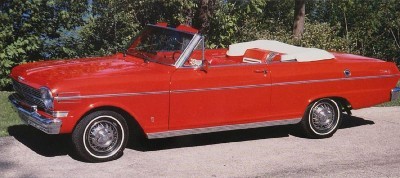
Chevrolet’s compact strategy has always been a tightrope walk. If you’re not careful, Vega’s reputation can be damaged. One more and you have a Nova. This car just doesn’t fill a gap in the segment. Define it. It had a greater impact on Chevrolet’s image in the small car market than any model before or since.
You can see the whole spectrum here. each iteration. Any body style. Every engine change turns your grocery store into a weekend warrior.
First generation: Roots 1962-1979
Nova didn’t come out of nowhere. It comes in compact coupe and sedan forms and is aimed at young drivers looking for style without the luxury price tag.
- Platform : Shared with Pontiac Tempest and Oldsmobile F-85
- Body model : Coupe, Sedan, Wagon
- Original Engine : 230 cu in straight-six
It’s very simple. Reliable. Choose the right transmission and it can be incredibly fast.
Second generation: 1975-1979 improvements
By the mid-1970s, emissions regulations curbed performance. Nova survives by being efficient. But it’s not just about efficiency. Enthusiasts enliven the engine compartment with a compact V8 engine.
Unlike previous muscle car eras, this era introduced the Chevrolet Nova, a performance icon in its own right. It’s all about torque. It was about handling. This proves that even though it’s small, it’s still interesting.
3rd generation: Redesign 1975-1979
The appearance of the third generation is cleaner. There is little chrome. More glass. The Chevrolet Nova became a mainstay on American roads, selling in large numbers to fleet buyers and families.
But don’t be fooled by its practical appearance. There is still 350 cu in V8 under the hood. A four-speed manual transmission is still available. It’s still possible to build a hot rod that scares big cars on the highway.
Why Nova is important today
Collectors know the truth. Stock Nova is good. A modified one? Legendary.
The search for a 1968 Chevrolet Nova SS isn’t just about nostalgia. It’s about finding a specific moment when American manufacturing was still bold. When you see it on the road, you see a piece of history that refused to be boring.
Legacy
Although the Nova series was discontinued in 1979, its spirit lives on. If someone were to put a small block in a compact platform, they would following the Nova’s path.
This is more than just a car. This is a statement. This is a small, loud, proud statement that Chevrolet can do it all.
“The Nova wasn’t just a compact. It is a platform full of possibilities.”
We have only scratched the surface. There are many other models to cover. More specs to dissect. More stories to tell.
But that’s next time. Now look at the line. Simplicity. The raw, unadulterated intent of a car built for one purpose: to drive.
The origin of the Chevrolet II and the origin of the emblem
By 1962, Chevrolet was in damage control mode. The Corvair was the only entrant into the compact segment, but it was a fragile basket. Buyers are turning away from the rear-engine oddity. Safety concerns added to the refusal. The division must be changed immediately.
Introducing a front-engined compact with a traditional look. It is reasonably priced. Available in sedan, hardtop and convertible versions. They called it the Chevrolet Chevy II.
The naming convention is a bit confusing at first. The Chevrolet II badge covers entry-level models. But what about the sports version? They use Nova brands. This is a way to improve the top trim without sacrificing mass market appeal.
Sales of the economical four- and six-cylinder versions got off to a strong start. Chevrolet saw an opportunity. In the 1963 model year, the Super Sports package was introduced. This is a game changer. It’s not just an economy car anymore. performance credentials exist.
In 1968, the brand changed again. Chevrolet has completely abandoned the “Chevrolet II” name. The entire collection is now Chevrolet Nova. That year’s renovation brought a curved style that softened the look. It has a cleaner, more modern look for the compact segment.
When economy cars become powerful
The Corvair became history in 1969. Currently, Nova is Chevrolet’s smallest car. This is where things get serious.
Buyers can order a 375-hp, 396-cubic-inch V-8. This is not a typo. A compact economy sedan equipped with a large V8 engine. This created a muscle car that is still revered today. Get raw power in a package originally designed for an affordable price.
The basic design of 1968 worked very well. It lasted 10 years. It lasted until 1979 and was finally phased out.
The beginning of the 1970s brought a change. The Chevrolet Vega slid under the Nova. It became Chevrolet’s smallest product. But Nova is still relevant. It has evolved. It’s not just about cheap anymore. This is all about performance. It’s a matter of style.
A modern revival
The name Nova is not dead yet. It went dormant. It reappeared in 1986. But this time it’s a modern, front-wheel-drive subcompact. The design was done by Toyota. The production facility is located in California. This represents a big change. Nova has come a long way from its muscle car days.
It still represents reasonable value. But sometimes they can also provide some serious fun. This is explained on the following pages. Nova’s legacy spans more than one era. It’s about adaptability. It’s important to survive when the Corvair couldn’t. When the market demands it, it becomes something completely different.
The Nova’s reign didn’t end with a massive, clunky redesign in the 1970s. It ended quietly. This body style defined the model’s golden age and lasted from 1968 to 1979. This snapshot is of a 1974 hatchback that most motorists ignored in favor of stylish fastbacks and practical sedans. But take a closer look. The lines are sharp. The stance is low. This is a piece of American muscle history that is often overlooked because it doesn’t fit the traditional coupe silhouette.
1974 hatchback: more than just a trunk
Most people think of the Nova as a two-door coupé. They’re wrong. In 1974, General Motors was pushing hard to capture the hatchback market before its Japanese competitors completely took over the market. The result is this utilitarian yet stylish back end. It offers practicality not found in fastbacks. You can carry food. parts can be transported. you can live your life.
The ’74 model sat right in the middle of the fuel crisis. Cars are getting heavier, slower and more expensive. But Nova stood her ground. It’s small. It was light. It is reasonably priced. This is perfect for budget conscious buyers looking for a car with personality.
Why body styles from 1968-1979 matter
When you hear “Nova” you usually think of the 1968-1974 generation. This is a car that has captured the hearts of muscle car fans. It’s lighter than the Chevelle. It was faster off the line. It was the compact powerhouse. By 1979, the nameplate had faded, but this body style lasted over a decade.
“The 1974 hatchback wasn’t just a practical option, it was a design statement for the boxy era.”
How Chevrolet is keeping the Nova alive
GM didn’t just coast. They made adjustments. They adjusted the geometry of the suspension. They refined the interior layouts. They kept the V8 options alive longer than you’d expect. Already in 1974, you could get a lot of horsepower under the hood if you knew where to look. The L48 350 cubic inch V8 remained an option. It doesn’t Scream like a high-revving monster like the 1970s, but the pull is strong. It pulled low. This is real world torque.
The Decline and the Legacy
By the mid-1970s, emissions regulations were choking performance. Horsepower numbers dropped on paper. But Nova is still relevant. This is a commuter vehicle. It’s a weekend toy. It was a first car for a teenager. It’s not just about speed. It’s about ownership.
Hatchback version? That’s rare now. Not in the same way a 1969 SS is rare. But it’s uncommon enough to turn heads. You see one at a car show. People stop. They ask what it is. You say it’s a Nova. They look confused. Next, open the back. then
Chevrolet II: Chevrolet’s pragmatic answer to the compact war
The 1962 Chevrolet II was not a revolution. It was a retreat.
Chevrolet executives stared at the sales sheets. Corvair. The placement of the rear engine is a technological marvel. It was developed in response to the compact boom. Instead, it lost to Ford’s Falcon. The Corvair has no mass. This is too weird for the mainstream. The polarization is too severe to allow for successful mass production.
So Chevrolet changed the pin. difficult.
They needed a car that wouldn’t hurt anyone. That’s clear. I drive a Chevrolet II. It was a sister car to the Nova, but the Nova was sport trim and based on the Chevrolet II. A simple car. a sensible choice.
Appearance that does not cause discomfort
The design team offered a boxy silhouette. It is not very beautiful in the dramatic sense. But I am completely satisfied. The theme is “serious style”. Marketers promised the car would turn heads years after it left the showroom.
Of course it’s subtle. But it works.
The 1962 line-up was divided into three different classes. There’s the basic 100, the mid-priced 300, and the Nova 400. The Nova 400 is at the top, available as a sports coupe or convertible. All sedans and station wagons are available.
The ad calls it “lively”. “It’s the size of a family.” They try to combine luxury with low prices. It’s a tightrope walk. But you can’t go wrong with the Chevrolet II. This doesn’t annoy anyone.
Behind the scenes: Back to Basics
This is where gear enthusiasts will be interested. The engine room speaks of cost cutting and legacy.
Chevrolet introduces the 90 horsepower, 153cc Superthrift 4-cylinder engine. This was Chevrolet’s first four-cylinder engine since 1928. It’s been a long time. A carefully selected basic model.
For those who need more muscle, there’s a 120-horsepower, 194-cubic-inch six-cylinder. This 6-cylinder in-line engine is standard on Nova models. This is not a V8. But it went smoothly. You can count on it. This is the core of the Compact Alliance.
Gear selection is equally conservative. A column-type 3-speed manual transmission is standard equipment. If you don’t want to press the clutch to change gears, you can choose the 2-SpeedPowerglide automatic transmission.
This has nothing to do with performance. It’s about accessibility.
“The Chevrolet II offered basic transportation and was modestly advertised as an ‘economy car’ but still promised ‘serious style’.”
Due to rushed production, the Corvair lost its experimental edge. What remains is a solid and reliable machine. They compete for presence, not talent, in an increasingly competitive league.
The second generation Chevrolet is not trying to win people’s hearts. It beats the wallet. For a company facing declining Ford sales, that’s the only metric that matters.
Did they beat the Falcons? Not immediately. However, it was the first step for Chevrolet. baseline. foundation.
The Nova later developed into a muscle car icon.
The base model of the 1962 Chevrolet Nova was launched with a 120 horsepower, 194 cubic inch inline six-cylinder engine. This is standard. That will do. It’s not exciting. But dealerships saw something else. They started wrenching.
One specific aftermarket setup changed the game entirely. One dealer installed a massive 360-horsepower V-8 in the Nova’s compact frame. The result? A 0-60 dash in just 5.2 seconds. That’s impressive by today’s standards, but in 1962 a car of this size was unheard of.
Chevrolet executives noticed. They saw the time slip. They see the headlines. They began a plan to offer the Nova a factory V-8 option. The plans are made in real time based on the retailer’s ingenuity and not the company’s mandate.
Independent suspension and unique design
The 1962 Nova was a standout in the General Motors lineup. No other GM vehicle combines a one-piece body and frame construction with a separate front frame. This technical choice is not just for show. It modifies driving dynamics.
Up front, the Nova used a single-leaf rear spring design. Chevrolet claims this setup eliminates the “inherent roughness” of traditional multi-leaf springs. Whether this applies to rough roads is debatable, but the point is clear that ride comfort is important.
Inside, the two-door Chevrolet II Nova 400 was equipped with front seats. It’s a small detail, but it’s a hint of what’s to come. By the mid-1960s, bucket seats became standard equipment in performance cars. Here, in 1962, they were a forward-looking option.
Total production for the model year is approximately 406,500 units. That included an impressive 23,741 convertibles. For a compact car, those numbers were massive.
1962 Chevrolet Chevrolet II and Nova production data
The hierarchy of the Chevrolet II series was very strict. Price and weight tracked closely with trim levels.
Chevrolet II 100
* Weight: 2,410 – 2,755 lbs.
* Price: $2,033-$2,399
* Production: ~47,000 pieces
Entry level model. light. cheap. This set the stage for all subsequent changes.
Chevrolet II 300
* Weight: 2,425 – 2,855 lbs.
* Price: $2,084-$2,577
* Production: ~92,800 units
A step up in trim, but still holding tight to the budget ethos.
Chevrolet II Nova 400 (I6)
* Weight: 2,540 – 2,775 lbs.
* Price: $2,198-$2,497
* Production: ~266,721 units
This is the volume control. badge of honor of the rising star
Convertibles That Never Existed (Mostly)
Model year 1962 has a strange place in Chevrolet II history. This was the only year the Nova 400 convertible existed. 1 year. Then it disappears. Why? Cost. Complexity. The market doesn’t fully understand this yet. But for those who wanted an open-air Chevrolet II, the ’62 model was the only option.
Under the hood: 400 engine
Nova 400 is more than just a brand. It is equipped with a serious V8. 327 cubic-inch small block. But not the 230 horsepower base version. This is a 350 horsepower model. Thanks to the stricter emission measurement standards of the time, the net horsepower was estimated at 290 horsepower.
Wait. The net hp is 290? This is misleading. The engine itself produces more power in a vacuum. However, GM’s net ratings are conservative. They correspond to accessories. alternator. water pump. All this. So what you’re looking at on paper is 290 horsepower. What about in reality? The car moves like something more powerful.
The gearbox is a 3-speed manual. standard. A two-speed Powerglide automatic transmission is optional. But who would buy a V8 convertible with an automatic transmission? Purists stuck with the stick.
Interior and Trim
The inside of the Nova 400 looks different. It has a unique dashboard. It differs from the base Chevrolet II. Wood grain trim. Unique instrumentation. The speedometer was larger. A tachometer is standard equipment. You needed to monitor that V8.
The seats are made of vinyl. You can also use fabric if you choose a less aggressive upholstery. However, the convertible top is made of vinyl. Manual operation. Crank it down yourself. No power tops. This adds weight and complexity. And the cost. Now back to why they killed it.
The Drop-Top Experience
Driving a 1962 Chevrolet II Nova 400 convertible is an incredible experience. The roof came off in seconds. However, the body isn’t as stiff as a hardtop. You will feel flex. Especially on uneven roads. This is not a track car. This is a cruiser. summer driver.
The steering box is a recirculating ball. heavy. Not precise. But those were the times. You don’t fight the handle. You’re guiding it. The suspension is a solid front axle. The leaf spring is in the back. Simple. Reliable. Not sporty. But adequate for the power.
Why did it disappear?
Chevrolet didn’t love convertibles. Construction costs are too high. Too niche. Sales were sluggish. By 1963, they discontinued the program. The Nova line continues. However, only coupe or sedan. The outdoor dream is over.
This makes the 1962 model a rarity for collectors. It’s not very rare. However, they are rarer than hardtops. You don’t see them at every car show. When you do, it will usually be preserved. Not driven daily. This is wise. The wiring for the top mechanism can be tricky. The sills of a convertible are prone to rust. Check carefully.
Legacy
The 1962 Nova 400 convertible was just a footnote. But it is unforgettable. It represents the moment when Chevy tried
SS Stamp on the Compact
Chevrolet looked at the numbers for the 1963 Chevrolet II and Nova and didn’t blink. Sales remained stable since the second year. Engineers and marketers realized that big cars were equipped with powerful Super Sport (SS) packages. The logic is simple. if it scaled up, it could scale down. The SS option has been introduced in a compact configuration.
It doesn’t apply to everyone. Chevrolet limits the badge to hardtop coupes and convertibles. These body styles were only available on the higher-end Nova trims, so the SS package was effectively locked to the six-cylinder Nova 400 models.
“The Nova 400 exudes the charm of a sports car.”
That was the pitch. The $161 option looks attractive on paper. It has 14-inch tires. Bucket seats. A four-gauge instrument cluster Wheel cover with fins. A silver-color rear cove. There is also a Nova SS badge. It’s so wonderful. It’s not quite as hot as the Falcon’s Ford V-8, but it’s still noticeable in your driveway.
The car itself has been slightly renewed. The grille is bolder and uses more aluminum. Under the hood of the Nova 400 is a standard 120 horsepower Hi-Thrift 194-cubic-inch inline six-cylinder engine. This is the heart of the sporty Nova. The more modest Chevrolet II 300 and 100 series had the 90 horsepower Superthrift four-cylinder engine. The beltline stripes and chrome rocker panel design distinguish the Nova 400 from the basic model. It can be seen a block away.
Chevrolet has incorporated new technology into its platform. Self-adjusting brakes. Delcotron alternator. These are no longer just commuter vehicles. You can order seat belts. Heavy-duty springs. Positraction limited-slip rear axle. A grille guard. Also suitable for taxi accessory use if durability is required. A year later, a brochure claimed that the unibodied Chevrolet II “stepping out from the crowd in popularity.” This is not a lie.
The convertible series will also end this year. It was the last year. This ragtop is manual unless you paid an extra $54 for power operation. Last chance to roll down the roof before the hardtop becomes king.
1963 Chevrolet II and Nova Specs
| Model | Weight Range (Pounds) | Price Range (New) | Number of Units Built (Estimate) |
|---|---|---|---|
| Chevrolet II 100 | 2,430 – 2,810 | $2,003 – $2,397 | 50,400 |
| Chevrolet II 300 | 2,440 – 2,900 | $2,084 – $2,575 | 78,800 |
| Chevrolet II Nova 400, I6 | 2,590 – 2,835 | $2,235 – $2,494 | 171,100 |
The figures for 1963 are fixed. About 60,000 Chevrolet II Nova station wagons rolled off the assembly line. This year has been a good year for power companies. But 1964? That year changed everything. Chevrolet didn’t just tune the car. They radically changed their identity. Nameplates are still evolving. Technology has changed. The interest was immediate and strong.
Redefining compactness
The Chevrolet II name lasted for several more years. However, the Nova brand began to dominate. This is no longer just an adjustment level. It is becoming a performance variant that enthusiasts are very interested in.
In 1963, the Nova was essentially a sportier version of the base Chevrolet II. There’s a bucket seat. You get Rally’s instrument panel. The suspension does not collapse during speed compensation. But what about behind the scenes? Most are standards.
In 1964, this hierarchy changed.
Chevrolet realized that buyers wanted more than just a better interior. They wanted a 283cc V8. They want it in an easy-to-handle package. The result is a car that falls between economy and muscle.
V8 options are central
At the heart of the 1964 Nova’s story is its 283cc V8 engine. Chevrolet has offered this small model before. However, it was improved in 1964. They make it available. They make it desirable.
The options page has two main configurations.
First up is the base V8. 195 horsepower. Includes 2 barrel carburetor. This is not a rocket. But it is powerful. Leave a signal to the authority. Turn your Nova from a commuter car into a cruiser.
Then there are the high performance options. The 283 has a 4-barrel carburetor. This produces 230 horsepower. By modern standards, this figure cannot be called high. But in 1964 it mattered. This makes the car go very fast. This is very interesting.
“The 283 V8 is more than just an option. That’s why you buy this car.”
The choice of gear is also important. The V8 models have a 3-speed manual transmission as standard. However, it can be upgraded to a 4-speed. This is a tight low box. Reconnection. Precise adjustment. It takes effort. That’s why experts love it. A two-speed Powerglide automatic transmission is also available, but it kills the life of the car. This makes Nova lazy. Gears are the enthusiast’s choice.
Style adjustments and structure changes
These changes may not be noticeable at first glance. The frame is similar to the 1963 model. Same flat front end. The back is similarly rounded. But take a closer look.
The front panel has received subtle updates. The grill has been slightly changed. The position of the bumper cover has been changed. This is not a revolution. This is evolution.
The interior has undergone more changes. The dashboard has been redesigned. It’s much cooler now. More modern. The position of the instrument panel has been changed to improve visibility. The steering wheel has also been replaced. It has become thinner. More responsive.
The suspension has been changed below. Chevrolet strengthened the front springs. they adjusted the rear end
1964 Chevrolet Chevy II and Nova
The price of a 1964 Chevrolet Chevy II Nova 400 sedan was $2,243. It’s not the cheapest option in the lineup, but it marks a change in Chevrolet’s compact lineup. The brand has long used four- and six-cylinder engines in the convertiblese small cars. In 1964, things changed.
Chevrolet adds a third engine option. That is, the V-8. Specifically the Turbo-Fire 283. This unit produces 195 horsepower. That adds $108 to the base price of the engine.
Marketing materials drive this new power. One ad said: “Despite the new vigor, it’s still a nice, quiet, solid, sensible and unassuming car. With sharper teeth.”
Sharp teeth, yes. But this car is no rocket. The V-8 Chevrolet II took more than 11 seconds to reach 60 mph. It’s slow by muscle car standards. It’s fast by compact standards. The gap is growing.
The convertible convertible version of the Nova has been discontinued. The SS option has also been disappeared. Or so it seems. Customer demand forced Chevrolet to take action. The SS package returned by midyear of the year. However, this is only available on the Nova Hardtop Coupe.
These 1964 Chevrolet Nova SS Coupes have a unique look. Thin body-peak of the top of the body defines the roofline. The Silver-colored rear adds style. The interior has front bucket seats. The gear lever mounted on the console is located between them.
Drivers can choose the Powerglide automatic transmission. V-8 models are equipped with a 4-speed manual transmission. This transmission option is important. It appealed to enthusiastic audience.
More than a third of all sports coupes have the SS option. That’s a lot of volume for a trim package. It shows where the demand are.
The Chevrolet II 300 series was phased out in 1964. This has simplified the product line. The Chevrolet II 100 remained as a two- and four-door sedan and as a four-door wagon forms. The Nova 400 took the plush role. Available in sedan, wagon and hardtop coupe form.
Engine availability is strict. The 90-horsepower, 153-cubic-inch four-cylinder engine was only available in the value-priced Chevrolet II 100 series. The Nova 400 has a 120 horsepower, 194 cubic-inch six-cylinder engine as standard.
1964 Chevrolet Chevy II and Nova Facts
| Model | Weight Range (lbs) | Price Range (New) | Number built |
|---|---|---|---|
| Chevrolet II 100 | 2,455-2,840 | $2,011-$2,406 | 53,100 (approx) |
| Chevrolet II Nova 400 | 2,560-2,860 | $2,206-$2,503 | 102,900 (approx) |
| Chevrolet II Nova SS, I6 | 2,675 | $2,433 | 10,576 |
“Despite the new vigor, it’s still a nice, quiet, solid, sensible, unpretentious car. With sharper teeth.”
More articles with pictures about Chevrolet and other great cars:
- Muscle Cars: A look at tire-burning Chevys and other machines from America’s Golden Age of Performance.
- Sports Cars: Discover the purest joy of sports driving with these fascinating articles on the best sports cars from around the world.
- Consumer Guide Automotive: Your source for news, reviews, prices, fuel economy and safety information on today’s cars, minivans, SUVs and pickup trucks.
- Consumer Guide Used Car Search: Looking for a used Chevrolet or any other used car? Check out these reports, including safety recalls and problem areas.
- How Chevrolet Works: Learn about one of America’s greatest car brands, from its founding in 1911, in this richly illustrated history of Chevrolet.
1965 Chevrolet Chevy II and Nova
1965 Chevrolet II and Nova: Clean lines and six engine options
For the 1965 model year, the Chevrolet Chevy II and its performance sibling, the Nova, were significantly redesigned. The chaotic front ends of previous years are gone. In their place is a clean, full-width grille that integrates the headlights directly into the body. This is a subtle but effective change that smoothed out the nose. However, the parking lights didn’t stay put. These are moved lower in the bumper and give the front panel a more solid look.
Sedan buyers will see a new, more stylish roofline. The rear part has not been neglected either. The tail and reversing lights have been redesigned, and the rear cove has also been reshaped to match the new aesthetic. But the real story is under the hood.
Extension of the range of engines
Chevrolet offers buyers six different powertrain options. It starts with an economical 90-horsepower Super-Thrift inline-4 engine. If you need more power without spending a lot of money, the 120 horsepower Hi-Thrift inline-6 is a smart choice.
For those who want a faster car, there’s a 140-horsepower inline-six and a 195-horsepower 283-cubic-inch V-8. At the top of the tree are two versions of the Turbo-Fire 327-cubic-inch V-8. One of them is 250 horsepower. Another more powerful version offered 300 horses.
Midyear, Chevrolet introduced a special 283 V-8 with dual exhausts. It produced 220 horsepower. That’s a lot of torque for a mid-1960s compact car.
Body style and equipment level
The 1965 Chevrolet II came in two main trim levels: the entry-level 100 and the more luxurious Nova 400. Both were available in three body styles. The Nova Super Sport is unique to the sports coupe body model. Production of this model was reduced to only 9,100 units.
Engine availability is very tight. The four-cylinder engine was only available for 100 models. Nova models require an inline-six or V-8.
Inside the Super Sport, the cockpit has been slightly modified. The new brushed chrome console features a floor-mounted 4-speed manual transmission. Powerglide automatic is also an option. However, the column-mounted 3-speed manual transmission remained standard equipment. Bucket seats with patterned vinyl upholstery replaced the benches, and the instrument panel eventually featured an ammeter, oil pressure and temperature gauges.
1965 Chevrolet II and Nova Specifications
| Model | Weight Range (Pounds) | Price Range (New) | Number of Units Built (Estimate) |
|---|---|---|---|
| Chevrolet II 100 | 2,505-2,875 | $2,011-$2,413 | 40,500 |
| Chevrolet II Nova 400, I6 | 2,645-2,880 | $2,243 to $2,510 |
The basic Chevrolet II model was very simple. Nothing extra. Just transport. But if you look at this particular example, you’ll notice an anomaly. Factory air conditioning. In a compact? It’s not the norm. It changed the vibe entirely.
If you’re looking for original specs and restoration tips, this model year is a good choice. This falls between Nova’s original launch and a complete rebrand.
Why the 1966 model is important
The 1966 Chevrolet II just didn’t show up. It evolved. In 1965, Chevrolet debuted too quickly and dropped the ball. By ’66 they had solved the problem. The body was heavier. Stiffer. It felt more substantial on the road.
For enthusiasts tracking the lineage, this is a bridge. You had the basic economy car. Then there are performance options. The 1966 Chevy II had a V8 engine under the hood, but without the bloat of the full size Bel Air. It was light. It was agile. And if you added the SS package? It was serious.
Most buyers in 1966 wanted a four-cylinder engine or a small-block V8. In-line six-cylinder engines are still common, but lacked punch. The 230 cubic inch, the Six is very efficient. The 283 cubic inch V8 was where the magic lived. This engine turns this sedan into a sleeper, especially if you opt for the 327.
SS Package: More than stickers
You can see the difference between the basic model and the SS model by looking at the grille. The SS has a distinctive grid pattern. The badges were subtle. There are no “Nova” scripts yet. Only “SS” is on the fender and deck lid.
Inside the car, bucket seats separate enthusiasts from commuters. The console added a gear shift for the manual transmission. With automatic transmission, the console is smaller. However, both show that you are paying attention to driving.
The suspension has been updated. Heavy-duty springs. Stiffer shocks. It cornered flat. The brakes are also bigger. Drum brakes are installed throughout, but the proportions have been improved. stopping power was adequate for a car this size. Not world class. But at the time it was enough.
Air conditioning: The Luxury Anomaly
Returning to that first point. Chevrolet II Factory A/C? Rare. Most buyers skip it. This costs money. Add weight. It reduced fuel economy.
But for those who live in the south or just hated sweating through their shirts, this is a lifesaver. The system is bulky. It takes up space in the glove box area and the routed lines through the firewall.
Thanks to the factory air conditioning, this car has spent its life in a warm climate. Or maybe it’s a show car that’s been kept in pristine. In any case, this is a standout feature. This shows that the previous owner wanted comfort. It’s not just about speed.
Where to find parts and information
It is possible to restore a ’66 Chevrolet II. Parts are available. Not as ubiquitous as the 1969 Camaro, but it’s close.
- OEM parts: Parts in original condition are hard to find. Look for NOS (New Old Stock) at swap meets.
- Reproduction: Companies like Copy
1966 Chevrolet II and Nova: at the top of the compact segment
The 1966 Chevrolet Chevy II and Nova got more than just a facelift. Their attitude has completely changed. This year, General Motors drastically redesigned its popular compact car, making it look like it belongs in the same dealership as the big boys.
The design is very refreshing. Angular. In bold.
Don’t miss the new grill either. It was aggressive. The roofline has a semi-fastback profile and looks surprisingly sporty for a car of this level. But what really stands out is the rear end. The “Humped” fenders stood out in a manner reminiscent of the larger 1966 Chevrolet models, giving the little Nova a muscular stance. Vertical taillights and single headlights set it apart from other full-size models, but the overall look is undeniable. This is a serious machine.
Modified build from 100 to SS
This hierarchy is still well known, but more distinct. We’ll start with the base Chevrolet II 100 model. Keep upgrading and you will get the Chevy II Nova 400.
Want to know more? Spend an extra $159 on the Nova 400 and get the Nova Super Sport. This is not an optional one-size-fits-all package. No. The Nova SS is only available as a sports coupe. If you wanted the badge, you bought the coupe. Nothing else.
Visually, the SS is impressive. This is not subtle. Wide rocker panels run along the sides. The trunk lid has a bright aluminum cove that captures the light. The grille and grooved rear panel are decorated with the SS emblem. The Super Sport script sits proudly on the quarter panel. Even the wheel covers are borrowed directly from the Chevrolet Malibu SS, linking this compact model to GM’s midsize success story.
Inside, Strato-bucket front seats are standard, offering even more support for the enthusiastic driver. Do you want a tachometer? You have to pay extra for this too.
Engine space: The 327 V-8 takes center stage
Under the hood of the Chevrolet II and Nova, a range was offered that surprised even some dealers. The 4-cylinder engine was left out of the SS group. You need more displacement to get there.
The top dog is this year’s newcomer. Turbo-Fire 327 cubic inch V-8. It produces 350 horsepower. This is the same engine that was first introduced in the Chevrolet Chevelle, which shows that the performance technology is trickling down.
To harness this power, you need the close-ratio four-speed manual transmission. It turns the normally gentle Nova into a little beast. A Powerglide automatic transmission is not available with this hottest engine configuration. You had to shift it yourself.
For those who don’t need 350 horses, there are other options. The 327 was available in a 275 horsepower version. The 283 cubic-inch V-8 engine was rated at 195 or 220 horsepower. Alternatively, you can use the inline-6 by choosing either 194 or 230 cubic-inchs.
The transmission upgrades are subtle but meaningful. The standard column-type 3-speed transmission is fully synchronized. You can also shift to 1st gear while rolling. It’s a small detail. That’s a big difference for a daily driver.
Two wagons were also available. The top version has the Nova name,
1967 Chevrolet II and Nova: Station wagon of the year really took off.
The 1966 model year was a significant footnote for a compact station wagon. It arrived in Chevrolet II 100 trim and Nova guise, but never really shook up the segment. 1967 changed that.
Chevrolet looked at the Falcon and Valiant. They found that the two-door body style dominated sales. They realized that buyers wanted practicality, but didn’t want a bulky full-size station wagon. The solution was a sharper look and more power.
The front has a new look. The horizontal bars of the grill are missing. They have vertical slats. The headlights move inwards. This will make your nose appear wider. It seems low. It still looks mean.
He follows behind. The tail lamp is now square. They replaced the 1966 round unit. The bumper protection has become thicker. The chrome trim on the tailgate is missing. Looks cooler.
Things are interesting behind the scenes. The base engine is still a 194 cubic meter six-cylinder. It produced 120 horsepower. It’s not exciting. But it is reliable.
Next up is the 230 cubic meter inline six cylinder. It produced 155 horsepower. Suitable for towing. Suitable for towing equipment.
The star is the V8 option. The 283 cubic meter small block is available in two modes. The power of the standard version is 195 horsepower. In the high-performance version, this power goes up to 230 horsepower.
The 327cc V8 is now optional on Nova models. Available in 3 flavors. The basic version has 250 horsepower. The power in the middle range is 275 horsepower. The top version had a four-barrel carburetor and produced 300 horsepower.
Shipping options have been expanded. A 3-speed manual transmission is standard. A two-speed Powerglide automatic transmission was optional. For the first time, the Nova model is equipped with a four-speed manual transmission.
Interior updates are subtle. The steering wheel has a new design. The dashboard has lost some of its chrome. There will be more vinyl. The sitting position remains unchanged. There is plenty of headroom. Rear legroom is narrow.
The trunk does not increase. With the rear seats folded, there is 50 cubic feet of space. It is 1.4 cubic meters. Handy for grocery stores. Not for transport.
Security features are minimal. Front seat belts are optional. These are standard on Nova models. There are no airbags. No ABS. Just steel and glass.
Fuel consumption is good. Fuel economy is estimated at 20-22 mpg for six-cylinder models. Fuel consumption drops 14-16 mpg with the V8. Driving in the real world is versatile. Stop-and-go traffic reduces mileage. Motorway cruising is better.
Prices for the Chevrolet II 100 Wagon start at $2,192. Prices for Nova wagons start at $2,392. The V8 version adds $200 to $400. Adjusted for inflation, that would now be around $22,000 to $25,000.
Your competitors are paying attention. Ford offers the Falcon Wagon. Plymouth has the Valiant. Both are available as a two-door option. Both have similar V8 options. Chevrolet’s strength is its design. and
1967 Chevrolet II Nova: a quiet improvement in the shadow of the Camaro
The 1967 Chevrolet Chevy II and Nova models were very subtle. If you look closely, you’ll see that this is a touch-up compared to the massive redesign a year ago. The lineup continues to appeal to compact car consumers who need reliable transportation. But a new variable enters the equation. In 1967, the Chevrolet Camaro was introduced. This new pony car quickly began to lose potential buyers to the likes of the Chevrolet II and Nova.
SS hardtop top dog
At the top of the 1967 Chevrolet II and Nova lineup hierarchy is the 1967 Chevrolet II Nova SS Hardtop. It wasn’t trying to be a family hauler. Try to be sharper.
One ad captures this sentiment perfectly: “It’s not plain Jane.” This trim is only available in hardtop coupe form. For 1967, the Nova SS received a new black anodized aluminum grille. The front looks meaner and more aggressive than the standard model.
All 1967 Chevrolet Novos had certain design cues regardless of trim. The upholstery of the lid has a rich lattice pattern. It’s a small detail, but it helps set the Nova apart from its smaller sibling. Officially, the car is still labeled Chevy II Nova. Despite the confusing naming convention, it beat the lower class Chevrolet II 100.
Transmission options and six-cylinder reality
The entry-level Chevrolet II 100 lacks trim and bright accents. This is utilitarianism. Although a four-cylinder engine was listed as standard equipment, most buyers opted for the six-cylinder engine. It’s a smart choice for a smart car.
The Nova version starts with a 194 cubic meter six-cylinder engine. If you need a little more money, you can upgrade to the 250 cubic meter version. If you’re looking for real performance, there are plenty of drivetrain options. It can also be equipped with a 195-horsepower, 283-cubic-inch V8 engine. For an additional $93, you get a 275-horsepower, 327-cubic-inch V-8.
Transmission options vary depending on the equipment level. The Nova SS Coupe comes with a console mounted shifter. It is mated to a Powerglide automatic transmission or a 4-speed manual transmission. Other models in this collection used column gearboxes. The shifter on the SS console is a visual and tactile indicator.
Sales tell the story of the recession
The SS hardtop was attractive, but the numbers show its decline. Chevrolet Chevy II and Nova sales fell by more than a third in 1967 compared to 1966 model year production. Total production was 106,500 units, of which 12,900 were station wagons.
1967 Chevrolet Chevy II Nova SS is still a favorite among car enthusiasts. Nova SS Chevrolet About 10,100 units
1968 Chevrolet II Nova: A Subtle Year
If you bought a 1967 Nova SS, it was probably equipped with a 283 or 327 small block. 327 is best for muscle. But what about 1968? Things have changed. Subtly.
Chevrolet did not equip the 68 Chevrolet II Nova with a new body. They kept the same sheet metal. The wheelbase is the same. The same basic architecture has been in use since 1962 and is very efficient. This is cost effective. It’s also boring for some drama-seeking fans.
But take a closer look. The changes are in the details. The grill has changed. The taillights are new. The interior has a new dashboard layout. This is not a redesign. It was a refresh. The real story of SS buyers is under the hood.
Engine options and performance
The 1968 Nova SS came standard with a 327-cubic-inch V-8. This is no ordinary 327. This is a high performance version. Especially the L48 code. This engine produces 300 horsepower. This is not a typo. 300 horsepower.
Why stop here? Chevrolet offers a 396 cubic-inch big block as an option. This is the L78 code. It produced 375 horsepower. 375 is the factory rating, although some sources claim the number is even higher. That’s a lot of power for a compact car.
283 is still in stock. But it will be phased out. Enthusiasts knew the 327 was the right choice. 396 is for those who want to buy tires in bulk.
Transmission choices is important. The Muncie M21 4-speed manual transmission was the gold standard. It was close-ratio. It shifted crisp. A Turbo-Hydramatic three-speed automatic transmission is also an option, but at the expense of performance. If you’re buying a SS, you want a stick shift.
Handling and Suspension
The Nova is not a Corvette. But it handles better than most cars its size. A coil spring is used in the front suspension. A leaf spring is used at the back. This setting is easy. It is sturdy. It worked.
The SS package adds specific shocks. Add a stiffer spring. Add a large anti-sway bar. These aren’t just cosmetic updates. Reduces body roll. They improved cornering.
Brakes are standard equipment. Disc up front. Behind is a drum. SS usually have larger rotors. The braking power is also sufficient. Don’t expect a modern pedal feel though. Sometimes it is necessary to pump.
Weight distribution is key. Nova is front heavy. This affected handling. However, the short wheelbase helps. It makes the car agile. It could turn even in tight spaces. You can dance on the drag strip.
Interior and features
The interior is functional. SS trim adds bucket seats. Add a console. Add a special steering wheel. The gauge cluster is unique. It has a tachometer. It had a fuel gauge. It comes with a clock.
The dashboard is made of plastic. It’s very simple. It aged poorly. sunburn damage
The 1968 Chevrolet II Nova had a long body and clean lines.
Chevrolet hasn’t just tweaked the compact. They stretched it. The 1968 Chevrolet Chevrolet II Nova had a wheelbase of 111 inches. It’s only an inch lower than the midsize Chevrolet coupe platform. Next comes the bodywork. It’s been a long time. reduce. More spacious.
The roofline uses what Chevrolet calls a “tunnel effect.” This gave the car a sleek, forward-leaning silhouette, perfect for an era when long hoods and short covers were favored. The marketing team claims it’s a win in terms of style, performance and affordability. they are not wrong.
The body model is cropped. The wagon disappeared. The two-door hardtop has disappeared. The rest are strictly two-door coupes and four-door sedans. Inside, leg and shoulder room has been improved compared to the 1966 model. The dashboard has a new outline. It doesn’t feel very old.
Powertrain Options Definitions 1968 Chevrolet II Nova
Behind the scenes, the options are extensive. The base model is powered by a modest 90 horsepower Superthrift four-cylinder engine. Next comes the 140 horsepower Turbo Thrift 230 cubic meter six-cylinder engine. Want more torque? The 250 cubic meter 6 is right there.
V-8 buyers have several options.
* 200 hp Turbo-Fire 307 cu.in.
* 275 hp Turbofire 327.
*The highest grade 350 horsepower 327 is no longer available.
This reduces damage by 350 horses and 327 horses. This means change. Chevrolet strengthens its sports coupe range. When the Camaro and Chevrolet entered the same market, the Nova Super Sport suffered a blow. Production dropped from over 10,000 units in 1967 to just 6,571 units.
Still, Supersport is fun. A 295-horsepower Turbofire 350-cubic-inch V-8 engine is standard. You can spot it from the fake air intake on the hood. The grille and lid are finished in black. The special marks speak for themselves.
The interior is equipped with a luxurious steering wheel. Wide oval tires with red stripes surround the rally bikes. The suspension is stiff. The gear lever moves to the floor. A 3-speed manual transmission is standard. A 4-speed manual transmission is optional. A Powerglide automatic transmission is also an option.
Features and latest information
The sales brochure contains 15 different power combinations for the coupe. There are more than a dozen cars. There are many options. Electric brakes and power steering are available. Stay cool with year-round or comfort car air conditioning. Added rear shoulder straps and neck support for safety.
Enthusiasts can improve performance even further. Front disc brakes are optional. A strong clutch handles the power. Thanks to two exhaust pipes, the V-8 engine breathes easily. Install a non-slip differential to keep the tires in place. Special devices monitor the pressure.
Chevrolet has also updated its naming convention. “Chevrolet Two” seems unnecessary. The company quickly removed this prefix. Since then they have been a real rising star.
1968 Chevrolet Chevrolet II Nova Spec
- Model: Chevrolet II Nova
- Weight Range: 2,760 – 3,025 lbs.
- Price Range: $2,222 – $2,419
- Number of units built: About 201,000 units
Body style and market position
The 1968 Chevrolet II Nova was limited to two body styles: a two-door coupe and a four-door sedan. Nothing else. If you want a convertible or wagon from a certain model year, you were out of luck unless you consider other options. This streamlined configuration keeps costs down, but has limited appeal.
More articles with pictures about Chevrolet and other great cars:
- Muscle Cars: A look at tire-burning Chevys and other machines from America’s Golden Age of Performance.
- Sports Cars: Discover the purest joy of sports driving with these fascinating articles on the best sports cars from around the world.
- Consumer Car Guide: Your source for news, reviews, prices, fuel economy and safety information on today’s cars, minivans, SUVs and pickup trucks.
- Consumer Guide Used Car Search: Looking for a used Chevrolet or any other used car? Check out these reports, including security reminders and problem areas.
- How Chevrolet Works: Learn about one of America’s greatest car brands, from its inception in 1911, in this richly illustrated history of Chevrolet.
1969 Chevrolet Nova
A year of subtle changes
In 1969, the Nova received some minor changes. It is not revolutionary. These are just evolutionary adaptations for buyers looking for reliability and style. The front has a new look. The grille has been redesigned into a horizontal bar pattern, giving it a cleaner look. The headlights are still two-piece, but the frames around them are now sharper.
The rear gets the biggest visual update. The taillights are now integrated into the body panels instead of protruding. This gives Nova a more unified and modern look. It helped the car blend in with the refined design of Ford and Dodge.
Engine options and performance
Under the hood, the familiar engine selection remains. The basic model is still powered by a 140 cubic inch six-cylinder in-line engine. It’s good enough for commuting, but lacks liveliness. The real interest starts with the 170 cubic inch six-cylinder engine. Improves torque. It’s more sensitive.
The V8 engine gave the Nova its reputation as a muscle car. The small-block 327 cubic inch V8 engine is the star. There are two outputs: 250 horsepower and 300 horsepower. The 300 horsepower version had a four-barrel carburetor and a higher compression ratio. This transformed the Nova from compact to a viable contender in the pony car wars.
When enthusiasts ask how to identify a genuine 1969 Nova SS, look for the badging and dual exhausts. The SS package includes a sports suspension, heavy-duty shock absorbers and special wheels. This is more than just a sign. This is a handling upgrade.
Interior and comfort
The interior of the 1969 Nova was more comfortable than its predecessor. The seat material has been updated. The dashboard has been redesigned with a simpler layout. Gauges are now easier to read. The steering wheel has a two-spoke design, making it sportier than last year’s big unit.
Air conditioning is optional, but requested. The improved compressor design improves the reliability of the air conditioner
The 1969 Chevrolet Nova officially became Chevrolet’s smallest passenger car. The rear engine Corvair finally stopped. This marks a big change in the brand’s compact collection.
Chevrolet dropped the name “Chevrolet II” part. The car is now just a Nova. It retained the 1968 two-door coupe and four-door sedan body styles. The basic model has only one equipment level. Buyers choose from three engines.
- 90 horsepower 4-cylinder
- 140 horsepower 230-cubic-inch 6 cylinders
- 200 horsepower 307 cubic inch V-8
The pictures in this article show the model with the 307 V-8 and vinyl roof.
Why the 1969 Nova SS Matters
Need more muscle? Check out the 1969 Chevrolet Nova SS. It is advertised as a “turned-on version of Nova”.
The SS Coupe comes standard with a 300-hp 350-cubic-inch Turbofire V-8. It has a hood with a dummy air intakes. The grille was blacked out. The highlights on the body are also black. Front disc brakes were included. The car is equipped with 14-inch tires with red stripes.
Chevrolet offers an optional 396-cubic-inch V-8 engine. Produces up to 375 horsepower.
Handling is better than the basic model. A Multiple-leaf rear springs replaces a single-leaf setup. Fake front fender louvers can also be used, but are not required.
SS coupe production was high. A total of 17,564 vehicles were built.
Market situation and sales information
Chevrolet’s sales brochure mentions a low-cost clutchless Torque-Drive transmission. Designed to attract value-conscious buyers. But gadgets alone are not enough.
Muscle cars run at full power. Medium-sized models are in fashion. This damages Nova’s image as a sports machine.
Sales have halved. Total production fell to approximately 106,200 units. 17,564 SS models make up only a fraction of this total.
1969 Chevrolet Nova Facts
| Model | Weight Range (lbs) | Price Range (New) | Production Quantity |
|---|---|---|---|
| Nova | 2,785-3,065 | $2,237-$2,434 | 106,200 (approx) |
More articles with pictures about Chevrolet and other great cars:
- Muscle Cars: A look at tire-burning Chevys and other machines from America’s Golden Age of Performance.
- Sports Cars: Discover the purest joy of sports driving with these fascinating articles on the best sports cars from around the world.
- Consumer Car Guide: Your source for news, reviews, prices, fuel economy and safety information on today’s cars, minivans, SUVs and pickup trucks.
- Consumer Guide Used Car Search: Looking for a used Chevrolet or any other used car? Check out these reports, including safety recalls and problem areas.
- How Chevrolet Works: Learn about one of America’s greatest car brands, from its inception in 1911, in this richly illustrated history of Chevrolet.
1970 Chevrolet Nova
1970 Chevrolet Nova: A year of subtle tweaks and big changes
Prices for the base model start at $2,335. It was a 4 cylinder 2 door car. It was the entry point into the brand’s lineup.
From the outside, the 1970 Chevrolet Nova looked almost identical to its 1969 predecessor. Unless you’re looking for a new egg-crate grill, You won’t miss the changes That’s the only real visual difference.
The body style remains the same. There is only a 2-door coupe and a 4-door sedan. There are no convertibles. There is no hardtop. Just simple steel.
Behind the scenes, the options are simple.
-Basic Nova is powered by a 153-cubic-inch four-cylinder engine with a power of 90 horsepower.
– Upgrade to the new 155 horsepower 250-cubic-inch 6-cylinder engine.
– Or choose the popular 200-horsepower 307-cubic-inch V-8.
But people who care about performance didn’t care about economy. They want a Super Sport package.
The Nova is light, so it makes sense that speed is a priority. The SS package includes a 300-horsepower, 350-cubic-inch V-8. Or the “big-block” 396.
Chevrolet played the numbers game with its big engine. In 1970, displaced 402-cubic-inches This is achieved by slightly increasing the bore diameter However, the marketing team kept the name “396”. Familiarity sells.
These hot Novas were named the SS 350 and SS 396. Transmission options were limited to a four-speed manual or a floor-shifted Turbo Hydra-Matic. No three-speed automatics for the fast ones. a three-speed automatic transmission.
The SS 396 is came in two flavor profiles: 350 horsepower or 375 horsepower.
The visuals of the SS model are very aggressive.
– Special hood with simulated air intakes.
– Blackout grill.
– Blackout rear panel.
– Wide oval tires on seven-inch wheels.
You can dress up a lesser Nova even more with a Custom Exterior package for $98. Adding a vinyl top costs an additional $84.
Total sales for the year were 254,242 units. Of these, only 19,558 were the high-performance SS 350 or SS 396 versions. Less than 8% of the total. A niche within a niche.
1970 Chevrolet Nova Specifications
| Model | Weight Range (lbs) | Price Range (New) | Production Quantity |
|---|---|---|---|
| Nova | 2,820-3,071 | $2,335-$2,533 | 254,242 (approx) |
The difference between the base price and the top-of-the-line SS model emphasizes the hierarchy. You paid for power. You pay for looks.
Most buyers stuck to the standard. The SS version were the exceptions. Rare. Sought after.
Why did Chevy keep the 396 badge for the 402?
The 1971 model year marked the end of the second generation Nova era. The exterior retained the same basic silhouette as its 1969 and 1970 predecessors, but subtle and significant changes were made to the front fascia. The new Egg Crate Grille Pattern is more than just decorative. This was the main visual cue that set the 1971 Nova apart from other vehicles. If you want to find a ’71 model in the wild, check there first.
Under the Hood: Big Blocks Get Smaller
Chevrolet has chosen its V8 engine lineup carefully this year. This 454 cubic-inch big block was dropped from Nova. In any case, it never really lived up to the car’s purpose as a mid-size sports coupe. Instead, the top performance option is now a 400 cubic-inch small-block V8.
This engine is not a high revving engine. Built for torque and low-end grunt. In standard form, it produces 300 horsepower. However, if you want more bite, you can choose up to 350 horsepower. This switch is important. This allowed the Nova to maintain its presence in the muscle car wars without forcing buyers to pay for an engine they would never use.
350 small blocks are still the core of Nova’s performance. You can count on it. Adjustable. It also eliminates the need for wide fenders and heavy cooling systems required by big blocks.
Suspension and handling: heavier
In 1971, the ride quality changed significantly. Chevrolet added more rubber to the suspension bushings. The goal is comfort. result? The steering feel is a bit soft and difficult to convey.
This is not a disaster. This makes the car even more suitable for everyday driving. But if you’re looking for a crisp, go-kart-like snap of its early days, you might notice a decline. The driveability of the car is good. It just prioritizes compliance over clarity.
The brake system of the performance model has been slightly updated with larger front discs. You can see it by looking under the wheels. While not huge by today’s standards, it’s better than the drums still used by many of its competitors.
Interior changes and options
The interior of the 1971 Nova had subtle adjustments to the dashboard and seats. The vinyl covering of the seats is thicker. The plastic on the dashboard is unlikely to dent. These are consumer updates.
The Rally Sport option package is still popular. It has unique wheels, a special grille (ironically, no egg crates) and a black interior. Looks mean. This is still true today.
For those looking for luxury, the luxury package adds carpet, a fuller instrument cluster and better sound insulation. It’s a step toward personal luxury cars that are starting to eat away at muscle car market share.
Why this is important for collectors
The 1971 Nova is often overlooked these days. The 1968-1969 models attracted buyers for their raw aggressiveness. They ignore the 1970-1972 cars as just “later” versions of the same thing.
They’re wrong.
In 1971, the Chevrolet Nova two-door coupe overtook the four-door sedan. This is more than just a statistical footnote. This shows that buyers’ perception of the compact car market was shifting. Nova has found a niche.
For the first time, Chevrolet didn’t offer a four-cylinder engine in the Nova. The subcompact Vega had taken over that role. The Nova moved up. It has a more responsive six-cylinder engine. Standard is 250 cubic inches, 145 horsepower. This is a sensible upgrade.
Little else changed mechanically. The biggest visual update is the new Power-Beam headlights. Makes the front end look sharper. The marketing department called the 1971 Nova “America’s not-too-small, not-too-big car.” This is a direct jab on the cramped new subcompact class. The copy says that the Nova Coupe can accommodate five adults. The sedan can handled six.
Torque-Drive Compromise
The six-cylinder Nova offers weird option. You get Chevrolet’s clutchless Torque-Drive semi-automatic transmission. It was also in the Vega. It was ill-fated Only 2,992 Novas got it. Most drivers prefer the clutch.
The coupe could be dressed up. Custom interior and exterior trim can be added. Or you can buy Super Sport equipment. The SS group was serious. It was equipped with a 270 horsepower, 350 cubic inch V8 engine. This is the largest V-8 engine available in the Nova. The era of muscle-car is over, but the demand is still there.
SS models have black accents. The sports suspension handles the power. E70x14 tires hold the asphalt. The SS badge completes the style.
Why the 1971 Chevrolet Nova Appeal Worked
The coupe is the most popular model. Many vehicles were equipped with the 307 cubic inch V-8 engine. The rated is 200 horsepower. A useful output. It’s not a racing engine. A daily driver engine.
The Vega stole sales this year. However, the Nova would see a resurgence. This popularity continued into the 1970s. Why did it stick?
Nova is enjoyed by a wide range of buyers. It offered practical and sensible driving experience. The coupe’s appeal crossed demographic lines. It is large enough for families. But not so much that it seems “unnecessary” to young singles.
Older buyers liked the conservative styling. For young people, it is rakish enough to be fashionable. Prices start at just under $2,400. Suitable for most people.
It fit a new era. Insurance rates were escalating. Federal emission and fuel consumption standards are getting stringent. Nova gave Chevy a strong player to Chevrolet. It could go up against with similar “sensible” cars from other GM divisions. Ford and American Motors were in the mix too.
1971 Chevrolet Nova Facts
| Model | Weight Range (lbs) | Price Range (New) | Number built |
|---|---|---|---|
| Nova | 2.952-3.108 | $2,376-$2,501 | 194,878 (approx) |
The move to Vega cleared out for lower-end transmissions. It is maturing a new star. The result is a car that feels more solid. More responsive.
A semi truck does not require a clutch. But you might want it. 250-6 is enough. The 308 V-8 is better. The SS 350 is perfect for weekend thrills.
Vega was full. Nova is spacious. There is room for five adults in the coupe. There were six people in the car. This is important.
Insurance rates were escalating. Nova’s insurance premiums are manageable in this category. This is not a full-size sedan. This is not a microcar. This is in a great location.
Power beam headlights improve night visibility. It also looks modern. A little variation. That’s a big statement.
The 270 horsepower and 350 cubic meter engine was the top of the range. After that, the show will be delayed. But in 1971 it was still in the headlines.
The best seller was the 307 cubic meter V8 engine. 200 horsepower. Sufficient space according to the amount of traffic. I’m not that attracted to it.
The sales volume was 194,878 units. That’s a solid number. Vega’s numbers are even lower. Nova is in the middle position.
The slogan “nothing too small, nothing too big” is more than just marketing. This is a positioning strategy. It worked.
It looks balanced. Conservative enough for an older audience. It is very presumptuous for young people.
The interior package also adds to the feeling of luxury. without adding too much cost.
The sports suspension of the SS model can handle the extra weight. E70x14 tires provide traction.
The torque transmission fails for some reason. it doesn’t work. Most buyers skip it.
Sales of four-door sedans were lower than coupes. However, it offers seating for 6 people. It’s a realistic choice.
A 250 cubic meter six-cylinder engine is standard. 145 horsepower. Enough for daily driving.
Vega is a new product. It works as a 4-cylinder. Let Nova grow.
No. 350
Look, if you parked a 1971 Chevrolet Nova next to a 1972 Chevrolet Nova and asked someone to tell the difference, most people would shrug their shoulders. The main body is also exactly the same. The same goes for lines. You’d have to be an expert to tell them apart, and even then, you probably won’t know for sure unless you observe the combination of interior fabric and vinyl up close and personal.
But here we are talking about 1972 Chevrolet Nova sales. They were the best in the car’s history.
The production volume was 349,733 units. This is not just a good thing. It is dominant. The car sold itself on momentum, habit and the fact that it’s reliable, affordable and looks good.
What actually changed for the 1972 model year?
For the 1972 Chevrolet Nova, GM didn’t bother with a facelift. They barely broke a sweat. For the average buyer, the only real visual difference is the new sunroof option.
Folding soft sunroof. Available in 6 colors. Appeared in 6,268 coupes. There aren’t that many of them, but they give the car a bit of personality without changing the sheet metal.
Then there’s the Rally Sport package. It’s making a comeback. If you want a special suspension setup that actually works better than the base model, you can get it. Purchased by 33,319 buyers.
12,309 coupes were equipped with supersport equipment. Some even come with a rally package. Although sales were not huge, it continued to satisfy enthusiastic audiences.
Where are these cars from? Production moved to Norwood, Ohio. The Nova is currently assembled alongside the Camaro. Same plant. Same supply chain. Just a different badge on the trunk.
Engine selection and pricing
The choices were sparse. There are three options.
- 250-cubic-inch inline-six – This is the standard engine. It was slow, but it ran forever. Of the 349,733 cars produced, 139,769 were equipped with this engine.
- 307 cubic inch V-8 – 130 horsepower. This is the entry-level V-8 option.
- 350 cubic inch V-8 – rated at 165 horsepower. The performance pick.
Prices for the coupe with the six-cylinder engine start at $2,351. The four-door sedan costs $28 more. That was it. There is no need to understand complex configurations.
If you want to liven up your car, our custom trim team can add full-length rocker panel moldings, body side moldings, bright window or drip rail moldings. Air conditioning costs $381. A vinyl roof costs $87.
Important numbers
**1972 Chevrolet Nova facts tell the story of simple and efficient manufacturing.
Model: Nova
* Weight Range: 2,949 – 3,116 lbs.
*
350 Cubic-Inch King
If you’re looking for the best option for your 1972 Nova, the answer is simple. The ** 350 cubic-inch V-8 was the engine of choice and produced ** 165 horsepower. It’s not the most luxurious mill in Chevrolet’s stable, but for a compact car of this era, it’s the right tool for the job. No need to burying the front end to get power.
1973 Chevrolet Nova
By 1973, the rules had changed. Federal emissions standards are starting to put pressure on performance, and Chevrolet isn’t going to quietly throttle its small cars. The Nova has received a slight facelift and some mechanical improvements to keep it up to date.
The base engine is still a 250 cubic-inch inline-six. It’s reliable, cheap to fix, and as exciting as watching paint dry. Most buyers don’t want that. They wanted V-8 power.
Chevrolet kept the 350 cubic-inch V-8. But here’s the problem. Horsepower has decreased. It’s not because the engine is weak, it’s because of the how they calculated it. Net horsepower vs. gross. The numbers look small on paper. The reality on the road is different. You still got that torque curve. You still got that low-end grunt, making the heavy little car feel lighter.
Why the 350 is still popular
People ask what engine is best for a 1973 Nova. 350 cubic inch V-8 is the answer for enthusiasts. This is also the same displacement. The basic architecture is the same. Just less advertised power.
This had no effect on sales. It didn’t kill interest. It just changes the way people buy. Collectors are now considering large block options. But then what? The small-block 350 is the center of the muscle car movement. Nova has that too.
What Changed Under the Hood?
The Emissions equipment grew. The larger carburetor was replaced with a smaller, restrictive ones. Exhaust systems got baffled. result? It has a quieter, less aggressive sound. However, the frame is rigid. The suspension still works well. This is not a slow car. It’s just legal.
If you’re looking for survivors today, check the engine bay. Is it the original 350? Or has anyone switched to 305? 305 is a reduced version. Torque is low. It lacks soul. If you’re looking for authenticity, stick with the larger displacement.
“The 350 cubic-inch V-8 was the engine choice for the 1972 model year and set the standard before regulations were tightened in 1973.”
Inline 6 cylinder reality
Don’t sleep on a 6 cylinder engine. It’s not for speed. To survive. Parts are everywhere. Mechanics know them by heart. If you are building a project vehicle and have a limited budget, start with six. Swap the engine later. Or just live with the modest acceleration. This is a valid choice. It’s just not the fun one.
Comparison of 1972 and 1973
The two year difference is subtle. Visually,
Regulatory barriers and hatchback debut
Federal regulations don’t care about aesthetics. They care about safety. In 1973 this meant five-mph. Chevrolet must adapt to them. The 1973 Chevrolet Nova received a larger bumper to accommodate new federal regulations. This is more than just a cosmetic adjustment. The footprint of the car changes.
The front part has been completely renewed. Stylists installed a new grille with a loose pattern. The parking lights have been moved inside between the headlights and the grille. The rear followed suit. The overall length has increased. The wheelbase remains exactly the same. Weight jumped about 100 pounds. The metal is thicker. The guards were longer.
SS package sold well, surprisingly
Performance enthusiasts might expect the SS to disappear under the weight of red tape. It didn’t. 1973 Chevrolet Nova SS options are still available. It’s effectively a $123 dress-up package. You got a blackout grille. You got Rally wheels. You could pair it with any engine in the lineup.
result? 35,542 SS packages were installed. This figure made 1973 the best-selling year for this option group. It’s proof that people want this look, even if emissions and weight limit performance.
Engine configuration and power data
Behind the scenes, the options are limited, but well known. The base engine is a 250-cubic-inch six-cylinder. It produced 100 horsepower. If you need more torque, you can opt for the 307-cubic-inch V-8. It produces 115 horsepower.
High-performance buyers looked at the big blocks. The 350-cubic-inch V-8 came in two flavors. One rated at 145 horsepower. The higher-output version made 175 horsepower. No big power jumps here. It’s just an incremental upgrade to the existing architecture.
Hatchback bodies and prices
The 1973 Chevrolet Nova was introduced as a two-door hatchback. It was a significant body style addition. This panel includes the rear window. It extends above the taillight. It has a hinge at the top.
The Custom Series was born from this new body model. This custom hatchback listed for $2,701 with a six-cylinder engine. Compare that to the base-model two-door hatchback. The base model is $173 cheaper. Air conditioning added $381 to the tab. It wasn’t cheap to keep cool in these new heavy cars.
Body and interior updates
All 1973 Chevrolet Novas were equipped with side door cross members. These are federal regulations that for occupant protection. Improves sound insulation. The through-flow ventilation system is standard. The rear spring has been changed to a multi-leaf spring to improve the load capacity of the spring.
Options also include skylights. The rear seats can also be folded down. Comfort features are added gradually. The ride was likely stiffer. The noise floor was lower. The safety cage is stronger.
1973 Chevrolet Nova Facts
| Model | Weight Range (lbs) | Price Range (New) | Production Quantity |
|---|---|---|---|
| Nova | 3.033-3.274 | $2,377-$ |
The contours of the hatch opening of the new Nova hatchback can be seen in this picture.
This is the moment when the 1974 Chevrolet Nova** finally sheds its sedan guise. This isn’t just a redesign. This is a fundamental change in the way cars are loaded. There is no longer a trunk lid in the rear. This is a glass door. It swings.
The reality of hatchbacks
Chevrolet has been trying to fit the Nova into the box for years. A box with a small opening. A box where you couldn’t fit a fridge. In the new hatchback model, the shape of the rear window has changed. The glass extends downwards. The hinge points are higher. This allows you to lift the entire panel upwards.
“It’s not just about style. Practicality is also important. You can now fit things that couldn’t be installed in a sedan before.”
The 1974 Chevrolet Nova was not designed for showroom use. It was designed for people who actually used their cars. Think lumber. Think groceries. Think about your weekend camping gear. The sedan version of the Nova has a trunk. The trunk had a lip. That lip was a barrier. The hatchback removes the barrier.
Why the Change?
The beginning of the 1970s was a chaotic time. Exhaust gas regulations are being tightened. Fuel efficiency has also gradually become a concern. Consumers are changing. They want versatility. They don’t just want a car to take them from A to B. They wanted a car that could handle a load.
Chevrolet responded. They don’t just add spoilers. The back structure has been redesigned. The roofline extends further back. The C-pillar has become thicker. It supports the extra weight of the hatch mechanism. What about the locking system? It’s reinforced. Because lifting a glass door with a wiper blade attached is not an easy task.
Under the metal
The frame remains mostly unchanged. The same applies to frame rails. The suspension attachment points are the same. However, body-in-white is different. The rear quarter panels are cut away. The inner panel is reinforced. If you look closely, you can see the welding spots They are messy. But they are strong.
The engine bay? Same as sedan. The V8 engine is still available. You can also swap in an inline-six. The same goes for the hood. The same applies to the front fender. The changes are purely behind.
The Interior Shift
Inside, the rear seats can be folded down. Or come out. It depends on the trim. The backrests are split. This allows for long objects. Skis. ladder. sofa. The seat cushion can be slid forward. Next, turn the backrest flat. The cargo floor is now ready. It’s not big. This is not a van. But it’s better than a suitcase.
No changes have been made to the dashboard. The same goes for instrumentation. The same goes for radio. However, the rear window wiper is new. It’s electric. It is attached to the glass. Not in the tailgate. Because the tailgate is “glass”.
Market reaction
Did it sell? Yes. Not in massive numbers. But enough. People love this utility. They like the look. It’s not as sporty as the Camaro. It is not as practical as a pickup truck. It’s somewhere in between. A compromise. A practical choice
Why the 1974 Chevrolet Nova is a smart choice for fuel rationing
The 1974 Chevrolet Nova was more than just a car. This is a reaction to panic.
The countries of the Middle East have reduced oil exports. The result was chaos. Americans queue for hours at gas stations. The fear of fuel rationing is real. In that environment, thrifty compacts were no longer a priority. They will become a necessity.
Nova fits perfectly.
Chevrolet knows it. Their 1974 sales brochure lacked the usual hype about the new style. Instead, they took a page from Volkswagen’s playbook. Volkswagen considered the Beetle’s lack of change a virtue. Chevrolet did the same.
“We’ve been making basically the same car since 1968. We think we’ve got it down pat.”
This is a bold statement. Confidence in a stagnation strategy.
Sales are accelerating despite the stoppage of the model
The strategy worked. Nova’s sales have been more than steady. they surged.
In 1974, the number was almost 400,000. This is a continuation of the momentum that started in 1972. But something changed behind the scenes.
Sales of the V-8 Nova were down. Six-cylinder models grew the fastest.
Why? Fuel consumption.
The energy crisis is forcing shoppers away from thirsty big-blocks. The in-line six-cylinder engine offers efficiency without compromising too much practicality. This is a pragmatic choice in a pragmatic time.
Design improvements and mechanical upgrades
The 1974 model year was not completely set in stone. Chevrolet has made special updates to improve safety and aesthetics.
This car has large parking lights. The Bowtie Grill logo has been updated. But the most significant change is the bumper.
Changed. 2 inches longer length. This addition helps cushion minor impacts. This is not a safety redesign. This is a incremental step toward durability.
Under the surface, there are SS hatchbacks and notchbacks options. Buyers can choose a 100 horsepower six-cylinder engine. Alternatively, you can choose a 350-cubic-inch V-8 engine. This V-8 is available in two models with 145 or 185 horsepower.
First use of Steel-belted radial tires. This greatly improves handling and service life.
Performance seekers must pay attention to the transmission. The 185-horsepower V-8 was ordered with a Muncie four-speed floor transmission. The linkage was improved. It’s a tighter and precise experience.
American Spirit Limited Edition
Not everyone wants to be the workhorse. Some are wanted flair.
Chevrolet releases a limited edition “Spirit of America” series. It was distinct. The body is painted white. Red and blue accent stripes run along the sides. It’s a patriotic tribute to a tumultuous year.
Conclusion on value and quantity
The 1974 Nova proved that consistency can beat novelty. In times of uncertainty, known quantities have value.
The numerical breakdown of the model is as follows:
Model: Nova
Weight Range (lbs): 3,150-3,437
Price Range (New): $2,
1975 Chevrolet Nova
The 1975 Chevrolet Nova** was noticeably lacking in drama compared to its predecessor. Gone are the days of large blocks. V8 engines continue to shrink in size. Emission regulations reduce performance. If you want speed, you need to focus on economy. In the 1975 Nova had to face this reality.
This isn’t just a redesign. This is a retooling. The body got sharper. Angles replace curves. The front end has lost the softness of the early 70s and has been replaced by a more aggressive, almost harsh look. The taillights have been redesigned. They were rectangular. They looked heavier. The bumper fasteners have been moved to a lower position. This is not just about aesthetics. This complies with the new federal bumper standards.
Engine selection
Let’s talk about what goes on under the hood. Because if you’re looking for 1975 Chevrolet Nova specs, you need to know the truth. Gone is the big 454 cubic inch V8. In fact, the Nova big-block 400 has also been discontinued. You couldn’t spec a monster is no longer possible.
The base engine is still a 250 cubic-inch inline six cylinder. It was reliable. It has more torque than a 4-cylinder engine. It’s not fast. But it starts every morning. This is a wise choice.
For those who still need V8 power, Chevrolet offers two small-block options. The 305 cubic-inch V8 was the standards V8. It produced 145 horsepower. that’s it. 145 horsepower. In a car that weighs around 3,000 pounds. It was adequate. Barely.
The top-of-the-range V8 is a 350 cubic-inch small block. There are two flavors. The low-compression version produced 155 horsepower. The high-compression version, typically associated with a sports coupe or SS trim, produces 175 horsepower. Still not exciting enough by 1970s standardss. Still not exciting by 1960s standardss. But this is the best you can get.
“The 350 V8 was the heart of the Nova, but its power was hampered by strict emissions regulations and low compression.”
SS and the “American Spirit”
You can’t talk about the 1975 Nova without mentioning the SS. However, the meaning of the SS badge has changed. This is not a performance package in the traditional sense. It’s a cosmetic package. handling package are also available.
The SS is equipped with a stiffer suspension. Heavier duty shocks. A larger front sway bar. It handled better. It didn’t accelerate faster. The engine is the same 350V8. The exhaust is also a dual system. The difference is the chassis.
And the “American Spirit” livery. This is not a standards equipment level. This is a special paint scheme. Red, white, and blue. There are stripes on the side. Looks very patriotic. It feels very festive. It appeals to buyers who want to stand out from the crowd of beige and brown station wagons.
Was it fast? No. Was it cool? Subjective. But it’s iconic in its own right
1975 Nova LN: Chevrolet’s answer to European luxury
Chevrolet had great success with the 1975 Nova. It was the most modified car in the division that year. This booklet is beyond words. He describes the new sheet metal as “beautiful”. They claim to be refined in line with stylish European sedans.
The wheelbase was kept at 111 inches. This is very effective. The visual affinity to the 1968-1974 models is maintained. There is also a coupe. hatchback. 4-door sedan. If you want excitement, you can also choose the SS 2-door with sports stripes.
But the real story is the new LN trim.
This pushes Nova into the premium segment of the compact market. In fact, some buyers believe it rivals high-end European imports. The LN is known as Chevrolet’s most luxurious compact sedan. The backs of the front seats are wide and can be tilted. It looks like a big, soft lounge chair. They feel the same way.
The list of devices shows that they mean business. Additional sound insulation keeps the cabin quiet. Map pockets are now available at the doors. The electronic clock is ticking. Instrument shots are smoked to make them appear darker and richer. A day/night mirror is standard equipment. If you order the coupe, it comes with roll-out triangular windows.
“With LN, Nova will never look the same again,” says the sales pitch.
Chevrolet has a standardized cut pile carpet throughout. It was once an exclusive product of the Custom series. The speedometer graphic is now larger. Easy to read at a glance. The windshield offers a larger glass area. The front door armrests have been redesigned and have integrated drawbars. A practical touch.
Under the hood, the hardware has also changed. The front track has been widened by an inch and a half. The front stabilizer is thicker. Novas finally introduced front disc brakes as well. Equipped as standard with steel belt belt rings.
1975 Chevrolet Nova Fact Sheet
Model Nova
Weight Range (lbs) 3,276-3,493
Price Range (New) $3,099-$3,870
Number of productions 272,982
Design tips are subtle. You have to look twice to catch it. But in 1976, Chevrolet wanted the Nova sedan to look more like an import than a compact economy sedan. Something expensive. Something European.
They call it the “European look”. In fact, this is a facelift designed to soften the Nova’s dull edges. The front grill is thinner. The headlights are now lower. The bumper cover has been redesigned. This is not a new car. Turns out she was just getting dressed.
They try to price accordingly.
Price tag problem
This is where the story gets interesting. And frustrating. In 1976, a basic Nova sedan cost about $3,500. New styling packages, options and inflation are hitting the auto industry with some fully loaded models hitting the $4,000 mark.
In 1976 it was $4,000.
Do you know what that buys today? Maybe it’s a used lawnmower. At that time? It was a serious commitment. It was entering territory occupied by compact imports. Datsun 510, Toyota Corolla. Volkswagen Beetle.
Why pay $4,000 for a Chevrolet Nova when you can get a German or Japanese car for less? That was the question hanging in the air at dealerships from coast to coast.
Why Euro Facelift failed
The answer is not complicated. It’s execution.
Chevrolet is trying to bring a touch of luxury to an affordable platform. “European” badge is not a trim level like GT or sports coupe. It’s just… there. A visual trick.
- The interiors have new upholstery patterns.
- The steering wheel has been slightly modified.
- Badges have been minimized.
But under the hood? Same engines. Same suspension geometry. The basic architecture is the same as in 1968.
“You can put lipstick on a pig, but it’s still a pig.”
The market isn’t buying it. Consumers are smart. They saw Nova for what it was. It’s an aging design stretched to its limits. The European styling cues felt forced. unnatural. Like a middle-aged American trying to wear a beret and sip wine.
Engine selection: not many options
I want to be clear. This is not about performance. Not really.
The standard engine was a 200 cubic-inch straight-six. 100 horsepower. Not enough to move the curb weight, let alone impress anyone with the “European” driving dynamics that Chevrolet was hoping for.
Option up to the 250 cubic-inch inline-six. 110 horsepower. It’s still very slow. Still adequate.
Or a small block V8.
- 305 cubic-inch V8. 145 horsepower.
- 350 cubic-inch V8. 170 horsepower (in some applications).
that’s it. No turbochargers. No fuel injection. Carbureted V8s from the last decade have been tuned to meet emissions regulations.
“European looks” do not come with European performance. American weight and American
Compact concierge level
Chevrolet decided it needed more talent for 1976. They introduced the Concours model. Think of it as a direct shot across the Ford Granada and Mercury Monarch. Chrysler’s top-tier Dart and Valiant models also qualify. It comes in three different forms: coupe, hatchback and sedan.
This is more than just a token swap. It’s the most luxurious compact car GM has ever released. Rosewood vinyl is everywhere. Door panel? rosewood. Dashboard? rosewood. Steering wheel? you guessed it.
The exterior has received the same treatment. Staring down the road is a vertical hood ornament. The bumper guards improves the structure. A bright decorative strip draws attention. The black bumper strip protects the paint. A set of wheel covers covers the steel frame. The Nova platform comes with dust caps. The Concours got the fancy stuff.
Luxury features and price
This coupe made history. This was the first Chevrolet coupe with a folding front center armrest. Practical? perhaps. elegant? Yes.
How much does this luxury add-on cost?
The V-8 Concours costs $547 more than the base Nova. In 1976, the dollar was real money. No change.
Behind the scenes, the options are limited, but effective. It is equipped with a 105 horsepower 6-cylinder in-line engine. Boring but practical. Alternatively, you can upgrade to the 165-horsepower 350-cubic-inch V-8. or the 140-horsepower 305-cubic-inch V-8 engine.
“The Concours is the most luxurious compact car Chevrolet has ever offered.”
The Cabriolet’s padded vinyl top is another addition to the coupe. The silhouette changes completely.
Mechanical regulations and police contracts
The mechanism was not rewritten. Just tweaks. The brakes have been reasonably modified. The fuel system mountings shifted. The exhaust system bracket has been moved. The dashboard has new knobs. Easy upgrade. But they are important.
Then came the SS.
You can get the SS option group for $187. The black grille has a unique diamond mesh pattern. Rally wheels. 4-spoke steering wheel. Sturdy suspension. Looks mean. It handled better.
Evidence comes from an unexpected source. A 1976 Nova was tested by the Los Angeles Sheriff’s Department. They didn’t just buy a few. At the time, they placed the largest order for a compact police cars in the United States.
That doesn’t mean you should ignore it.
1976 Chevrolet Nova Specifications
| Model | Weight Range (lbs) | Price Range (New) | Production Quantity |
|---|---|---|---|
| Nova | 3,188-3,485 | $3,248-$4,134 | 334,728 |
The numbers don’t lie. About 335,000 units moved. Most are basic models. However, the Concours and SS versions have their own niches.
Is saving the compact segment enough? The market is changing. The SUV were creeping in. The number of trucks continues to grow. Nova leads this generation for one more year
The 1976 Nova SS had special trim and decals that looked good on paper. Trying to capture the disappearing magic of muscle cars. The reality in 1977 was different. Less flashy. More practical.
Chevrolet knows things are changing. Emission regulations come at the expense of performance. Insurance premiums go up. Gone are the days when big blocks ruled. Novi must adapt or perish. It chooses to survive.
Adapt your design to a changing world
The main body is almost the same. The sheet metal work was carried over from the previous year. But the details have changed. The front panel has been subtly refreshed. The grill model has changed. Seems a bit more conservative.
The headlights are still rectangular. This was the standard of the time. The bumper has grown. They absorb more influence. It also adds weight. Weight slows down acceleration. But security is a new task.
There are almost no decorations on the pages. The SS badge is still there. This is a thin strip that runs along the bottom door. The stickers are not as aggressive as before. Gone are the bright, chaotic graphics of the early 1970s. Looks cooler. More fashionable. Some may find it boring. This actually works.
Behind the Scenes: Finding Power
Horsepower continues to decline. The numbers on the sign lied. Or rather they lied by omission. The previous SAE aggregated data is long gone. This time an online assessment. They measured the force of the flywheel. smaller than the crankshaft. So the 350cc V8 doesn’t actually make 200 more horses. In many configurations it is closer to 145.
Chevrolet offers several engines.
- 250 cubic meter 6-cylinder in-line engine. It’s very slow. But it started out cold. it lasts forever.
- 305 cubic meter V8. A small part designed to fill the exhaust gas. It is very light. That will do.
- 350cc V8. big boy Still available. Still desirable. However, the adjustment is for torque, not maximum horsepower.
Shipping options are limited. A 3-speed manual is still available. But it’s heavy. I feel like the column motion is outdated. The floor gearbox is optional. A 4-speed manual transmission is rare. Most buyers opt for the turbo-hydraulic three-speed automatic transmission. It is very smooth. It’s easy. It’s not fast.
Controls and chassis
The suspension hasn’t changed much. The leaf spring is in the back. The coil spring is in front. It’s easy to drive. It absorbs shocks. Still spinning in the corner. Nova was never a control hero. It’s a cruiser.
The brakes are hydraulic. Front disc brakes are optional. Many buyers skip them. Costs are increasing. Increased maintenance. Drum brakes are perfect for the speeds people drive at.
The steering system is a recirculating ball system. This is not accurate. There is drama. The steering wheel feels loose when driving at high speeds. Highways always require repairs. But it is very light. Easy to turn even at low speeds.
Interior and features
The cockpit uses a lot of plastic. Vinyl interior. hard surface. It is not a luxury fragrance. Smells like 1977.
The seat is bucket style
The Concierge Class: Defining the 1977 Chevrolet Nova Concours
Chevy knew the math. Of the 365,264 Novas that rolled off the assembly line in 1977, a whopping 75,000 units were sold as Concours models. That isn’t a niche crossover. This is a strategy.
Marketing didn’t just tweak the badge. They published a separate sales brochure specifically for the Concours. It wasn’t about utility. It was about prestige. Text and images distinguish this model from cheaper versions. This is an attempt to sell elegance in a compact package.
The visual differences are subtle but intentional. The grille uses a finer mesh pattern than the standard Nova. The upper part of the engine room has a vertical bonnet decoration which gives it a luxurious feel. Wheel covers were newly designed. Bright moldings around the wheel openings were wider. Every detail is adjusted to show a higher level of ownership.
“International in style, it is American in function.”
The brochure pushed that narrative hard. They describe the game as a special combination of classic style and good judgment. That last point was crucial. The Nova itself was marketed as sensible. Not too small. Not too big. Not too expensive. It was the Goldilocks car for an era of economic uncertainty.
Under the hood, the choice remained simple. Three engines. Four transmissions. The entry-level option is a 250 cubic meter inline six-cylinder with 110 horsepower. For those looking for more power, there was a 305cc V-8 engine with a twin-barrel carburetor that produced 145 horsepower. Best of all is the V-8, a 350-cubic-inch four-cylinder unit that produces 170 horsepower.
The transmission is handled by a 3-speed (column-mounted or floor-mounted) or 4-speed manual transmission. Automatic buyers got the Turbo Hydra-Matic. It was reliable. It was proven. It worked.
Suspension options add another level of customization. Most buyers would take the standard setup. However, enthusiasts can also choose heavy suspension. Or the F41’s sports suspension. This is a performance package that improves handling without breaking the bank.
There is an interesting development going on here. The police love Nova. They especially like the V-8 option. Multiple government agencies issued orders to Novus after the Los Angeles Sheriff’s Department thoroughly reviewed its terms. They want a 305 or 350. This is a realistic option for scouting.
1977 Chevrolet Nova Data Breakdown
If you’re thinking of buying now or wondering how much these new ones will cost, these numbers will tell you everything. Nova is very convenient. It wasn’t a collector’s item in 1977. It’s a daily driver for millions of people.
model
Nova
Weight Range (lbs)
3,139 ~ 3,486
Price range (new)
$3,482 to $4,186
Production quantity
365,264
The price range shows the price difference between the base model and loaded Concours. Weight variation reflects engine choice and accessories. you can buy one
The 1977 Nova sedan succinctly defined mainstream American cars. You can count on it. It is reasonably priced. It’s hidden in a driveway in the Midwest. Then came 1978.
This year marks a subtle but important change. Nova has not changed its fundamental nature. It still sits on a shortened Chevette chassis. It still offers basic transportation. But the pressure is mounting. Fuel prices are no longer just a nuisance. They are a crisis. The legacy of the oil embargo left a lasting mark on consumer expectations.
Changing priorities in compact design
By 1978, Nova was locked in a two-front war. On one side, Japanese imports are becoming more and more popular. Toyota Corolla and Datsun 510 are eating into their market share. They were smaller. They are very thrifty. Meanwhile, GM’s internal struggle to justify Nova’s existence. The X-body platform is showing its age. It was efficient, sure. But it’s also cramped.
Several minor updates were made for the 1978 model year. The grille has lost some of its bright chrome. Looks cooler. More fashionable. perhaps. The interior has remained largely unchanged. Vinyl bucket seats are standard equipment. They were stiff. It wears off quickly. But they are replaceable. Parts are cheap. It’s a selling point.
“The Nova wasn’t exciting. It was practical. In 1978, practicality was the most important thing.”
Engine Selection: Looking for MPG
Behind the scenes, your options are limited. The base engine is still a 200 cubic-inch inline-six. It is very smooth. Very lazy. If you drive carefully, you will get better fuel economy. For those looking for more power, there’s a 229 cubic-inch V8.
229 is a small block. It’s very simple. Very durable. It’s not fast. But it sounds good. There is a low rumble at idle. There is a pleasant rumble when you open the throttle. This is a compromise. You traded horsepower for fuel economy. EPA ratings for the 1978 Nova with the V8 engine hovered around 15 mpg in the city. Not impressive by today’s standards. Decent for the time.
Competitors are approaching
Chevrolet knew the writing was on the wall. The Ford Pinto is dying. AMC Gremlin was irrelevant. But the Honda Civic and Toyota Corolla are growing. Offers better build quality. Improves reliability. Nova has one advantage. price.
You can buy it cheap. It’s cheaper to get insurance. It’s cheaper to fix. If you are a first-time buyer with a small budget, Nova makes sense. This is perfect if you need another car for grocery shopping or school trips. This is not a dream car. This is a tool.
Why the 1978 model matters now
In retrospect, the 1978 Nova represented the end of an era. The era of simple and affordable American compacts. Things have changed since 1978. Emission standards are being tightened. Fuel injection started trickling down to the lower trim levels. Nova was eventually replaced by Cavalier
1978 Chevrolet Nova Custom: The end of the General Motors compact car era
The 1978 Chevrolet Nova received a facelift that marked the end of its most expensive trim line. The 1978 Chevrolet Nova Custom became the flagship model, outselling the Nova Concours. The Concours was deemed too expensive to produce and maintain. New customized products are not only at the top of the hierarchy. seems appropriate.
A custom finish brings a fine mesh grille. Built-in vertical parking light. Bright accents are placed around the headlights. The triple rear lights give the rear of the car a distinctive look. The design of the hood adds visual weight to the nose. These designs remove the vertical Hood decoration used by competitors. Interior choices were stark. You can buy it all vinyl or a combination of Edinburgh woven sports fabric and vinyl.
The basic model is treated differently. The grill uses a checkered structure. The parking lights are located inside the headlights. This one has a simpler look. It looks cheap.
Rally Gear offers a third way. This package introduces a diamond pattern grille. Horizontal parking lights are an alternative to vertical parking lights. The optics are surrounded by a black headlight frame. Three stripes run along the body. Colored rally wheels complete the package. Inside, every driver is met with a new two-spoke steering wheel wrapped in soft vinyl.
Under the hood and on the road
The transmission options remain the same as in previous years. The standard equipment was a 250 cubic meter inline six-cylinder engine. It’s effective, but not exciting. More serious buyers can choose from two V-8s. A 305-cubic-inch engine delivered 145 horsepower. A 350-cubic-inch V-8 pushed 170 horsepower. That’s a good number for a compact car of this era.
By 1978, Nova had become an essential tool for law enforcement. Government agencies in 48 states are responsible for promoting them. The sales brochures tell about this widespread adoption. It’s not just a commuter car anymore. This is a tool.
But the numbers tell a different story. Total production decreased by almost 100,000 units. Nova sold 288,109 units. That makes it the only Chevrolet lineup to see sales decline this year. The hatchback is significantly behind the standard coupes and sedans. Buyers prefer traditional shapes. Sales of basic models significantly exceeded customized models. People are looking for affordable transportation, not luxury finishes.
1978 Chevrolet Nova Specifications
| Model | Weight Range (lbs) | Price Range (New) | Production Quantity |
|---|---|---|---|
| Rising Star | 3.132-3.443 | $3,132 – $3,443 $3,702 – $4,220 | 288 109 |
The decline wasn’t sudden. It was a slow bleed. Things are changing in the compact car segment. Imports from Japan are becoming more and more popular. US shoppers’ preferences are changing. Nova lasted, but barely. Bespoke interior design aims to enhance the experience, but the market is looking for value. And in 1978, value won.
Nova Custom is a well equipped car. It had nice details. The grille was intricate. The interior was
The 1978 Nova was available in a variety of finishes depending on the trim. The custom model shown here is simpler than the high-end sports coupe. You can see the difference on the front panel. The custom version does not come with an aggressive body-colored spoiler or a heavy grille. It has a cleaner, more suburban look.
If you want to learn more about other classic vehicles, we have a lot of them in our archive. Check out the Muscle Cars section for tire-shredding Chevrolet models from the golden era. If you want pure driving dynamics, you can also flip over to Sports Cars. The Consumer Guide Automotive include current prices, safety ratings and fuel economy. Want to buy used? Consumer Guide Used Car Search Reports flag recalls and common problem areas before handing over money. If you really love the brand, check out its history all the way back to 1911 in our How Chevrolet Works history article.
1979 Chevrolet Nova
By 1979, the Nova had been around long enough for the factory to start narrowing down the list of accessories. GM is under pressure to meet new CAFE standards, and despite its diminutive name, the Nova is still a gas guzzler like a V8. The result was a year of consolidation.
The change in style is subtle, but important. The front end featured a revised grille that seamlessly blended in with the bumper more than the 1978 models. This isn’t a complete redesign, just a tweak. The taillights retain the same vertical unit, while the rear bumper has been flattened to reduce drag. Aerodynamics is still a foreign concept to most boxy cars of this era, but if you want 18 mpg, every little bit helps.
The biggest internal news is the change in engine strategy. The big 350 V8 was still available, but was squeezed out by smaller, more efficient units. The 200 cubic inch inline six cylinder engine became the standard engine on many trims. It’s not fast. Don’t expect it to chase down a Trans Am. However, it is reliable and affordable. If you need more torque for towing, the 250 cubic inch six is still an option.
The interior has not changed much. Vinyl bucket seats remain standard on sport coupes, while custom models retain the bench seats. The layout of the dashboard is familiar. No new gadgets. Just the basics. Just look at the speedometer, fuel gauge and the occasional warning light and you’ll have a guess.
The handling is firm, almost harsh. The suspension is tuned for stability, not comfort. If you hit a pothole in your 1979 Nova, you’ll feel it. Steering is direct, but some basic models lack power assistance. This means that big turns at low speeds require real muscle.
Fuel economy numbers are better than in the early 1970s, but still mediocre by today’s standards. With the four-speed manual, you can expect 20-22 mpg on the highway. Automatic cars dropped that by a couple of points. It’s not great, but it’s acceptable for the time.
1979 marked the beginning of the end for the third generation Nova. Sales are declining. The market is moving to more efficient compact cars. Nova is left in the middle. Too small for a full size cruiser
The rear-wheel drive Chevrolet Nova also had its moments. That moment ended in 1979.
Chevrolet eventually produced less than 98,000 cars. that’s it. That’s a small number for a mass dealer, but a fine result for a family line that began with the 1962 Chevrolet II.
The compact segment is changing. literally. Front-wheel drive technology is coming to Detroit showrooms. By 1980, the Nova nameplate disappears from showroom floors. It will not be replaced by any other RWD compact. Instead, buyers looking for a new Chevrolet subcompact will find this deal. A completely different animal.
Production ended in November 1978. These are not just leftovers. Those are the last words of the story.
Final year powertrain details
You can also order muscle if you want. Or a simple and reliable commute.
It has a 250 cubic meter inline six cylinder. This is the most important force. It can be mated to a twin-barrel 305-cubic-inch V-8. This is a popular product for those looking for more power.
Buyers living in California and the highlands have options that other areas miss out on. 350cc V8 cylinder. There, the emission regulations are getting stricter. The air is thin in the mountains. The 350 makes up for that.
Both V-8 engines feature a new exhaust gas recirculation (EGR) system. This is part of our efforts to clean the air. It doesn’t make the car faster. It just legitimizes them.
Trimming and styling tips
The collection has not changed much since 1978. There is a basic hatchback. basic coupe. Basic sedan. Next is the custom cut.
Custom comes with a special acoustic package. Consider improving sound insulation. Improved title. Completely isolated. The design has a more luxurious feel. More expensive.
The base model sells the best. they do this all the time. cheap. Simple. I’ll take you from A to B.
Chevrolet marketed these final Novas as “fixed value”. They rely heavily on their “reputation for reliability”. This has been a tradition for 17 years. People trust Nova. It didn’t crash.
Visually, it is the Ultimate RWD model. An improved horizontal grille has been introduced. Built-in vertical parking lights. New chrome trim is placed along the hood and fenders. The front bumper filler panel completes the front styling. This is not a redesign. This is Paul.
Number game
Looking at the stats, it’s clear that this is ultimately a niche product.
Model: Shinko
Weight Range (lbs): 3,135-3,394
Price range (new): $4,055-$4,499
Production number: 97 721
Buy a new car for just $4,055. That was a lot of money in 1979 dollars. Inflation has eroded this value.
This sedan remained king until the 1979 model year. It is still the best-selling body model of its time. A concrete example of this is Custom trim.
Want to learn more about classic metal? Check out these guides.
- Muscle Cars: A look back at tire-smoking Chevrolets and other machines from America’s golden age of performance.
- Sports cars: the purest form of sports driving and home to some of the best models in the world.
- Consumer Automotive Guide: The latest automotive news, reviews, prices, fuel economy and safety information.
- Consumer Guide Used Car Search: Used Chevrolet Safety Recalls and Issues.
- How Chevrolet Works: The Story Behind America’s Biggest Brand Since 1911.
Background of the 1986 model
By 1986, Nova was no longer the volume leader. The compact segment has changed. Buyers want fuel economy and reliability over speed. GM stripped the Nova down to its essentials. It was a placeholder in the lineup.
Engine choices are limited. Most 1986 Novas were equipped with a 2.5 liter inline four-cylinder engine. It produced only 90 horsepower. The torque figures are modest. This is not a performance car. This is transportation.
The suspension is the basic setup. MacPherson struts in front. There is a leaf spring at the back. The handling is predictable. Not exciting. Just adequate for commuting.
Interior and features
The interior is upholstered with cloth upholstery. The dashboard is simple. Analog gauges. There is no digital display. Stereo is optional. Air conditioning is available for an additional fee.
The space is small. Rear legroom is small by today’s standards. The trunk is small. But it is practical.
Market position
The 1986 Nova sat below the Cavalier in GM’s hierarchy. This is an affordable option. The target audience is first time buyers or fleet buyers. Sales volume was low.
Production has decreased significantly compared to its peak in the 1970s. The Nova was fading. This is one of the last significant years of this model before its final demise.
This car is not flashy. It went unnoticed. But there is a purpose. Reliable, affordable transport.
Why today matters
Collectors aren’t looking for the performance of the 1986 Novas. They look at them for historical significance. This is the end of an era. The last of a lineage started in 1962.
Preservation is extremely rare. Most were driven hard and scrapped prematurely. It’s hard to find a clean example. Values are rising slowly.
The 1986 Nova is a time capsule. It shows what compacts looked like before Japan took over. It was GM’s attempt to stay relevant.
The reality of ownership
Parts are still available. Aftermarket support is there. However, it is not widespread. If you’re looking for hard-to-find items, you can turn to salvage yards.
Maintenance is very easy. No complicated electronics. Basic mechanical work. Cheap to fix. Expensive to buy well-maintained.
Insurance premiums are low. Registration fees are low. It’s cheap to own. It’s not fun to drive.
The 1986 Nova was not made for enthusiasts. that
1986 Chevrolet Nova: Front wheel drive returns
The 1986 Chevrolet Nova underwent a difficult transformation. It was at this time that General Motors gave up the rear-wheel drive subcompacts to front-wheel drive. This is more than just a facelift. This is a complete architectural change. The nameplate has been dormant since Compact Nova production ended in 1979, but it has been resurrected in a completely different guise.
This new Nova arrived in June 1985. Made by NUMMI. Abbreviation for New United Motor Manufacturing Company. A joint venture between General Motors and Toyota has turned a former factory in Fremont into an efficiency center. The car itself? It was a Toyota Corolla in disguise. The design under the skin is the same. There are subtle differences in style. But the technical DNA is pure Corolla.
Upholstery and powertrain information
Initial availability is limited. Only the 4-door sedan is available. Shortly after the release, a 5-door hatchback was added to the range. The two of them shared a heart. The carbureted 1.6-liter four-cylinder engine produced 74 horsepower. that’s it. There is one engine option.
Transmission options were standard at the time. A 5-speed manual transmission is available. The same applies to the three-speed automatic transmission. The transmission is exactly the same as in the Corolla. The signs do not require special adjustments. I just renamed it.
This pricing speaks to confidence, or perhaps overconfidence. The four-door sedan starts at $7,435. The five-door hatchback has split-folding rear seats and starts at $7,669. The Corolla is hundreds of dollars cheaper. That premium was steep. Chevrolet knows it.
Options and packages
General Motors simplifies the purchasing process. They grouped all accessories into seven packages. This eliminates the long and confusing options list that plagues cars like the Chevette. The Chevette has almost 30 options. It’s very messy. The Nova was clean. Simple.
But just because it’s simple doesn’t mean it’s cheap. Adding expensive packaging also increases the price of the sticker. Easily exceeds $10,000. That’s a lot of money for a compact car. It raises questions about value. Does the Nova earn a premium over its Japanese counterpart?
1986 Chevrolet Nova Facts
- Model: Nova
- Weight Range: 2,163 – 2,205 lbs.
- Price Range (New): $7,435-$7,669
- Production quantity: 167,749
The numbers don’t lie. Over 167,000 units moved. This is admirable. However, the difference between the Nova and the Corolla still exists. Buyers have to decide if they want Toyota reliability or the Chevy badge. Nova has shown that the name can survive. Even if it’s just borrowing bones.
Last year of Nova
In 1987, the Chevrolet Nova series ended.
It’s not a confetti grand finale. Just a quiet phase-out.
General Motors has been phasing out its X-body program since 1985. By 1987, the Nova was no longer a product, but a legacy. The lineup was sparse.
The sedan is gone. Only the 2-door hatchback remains.
This is not a Nova, a 60s muscle car. This was economy. This is the fuel consumption after the oil shocks.
Powertrain Options
Under the hood, Nova is obsessed with what works.
1.8L OHV Inline 4
Power: 80 hp
Torque: 105 lb-ft
*Gearbox: 5-speed manual or 3-speed automatic
2.0L MPFI Inline 4
Power: 92 horsepower
Torque: 109 lb-ft
*Gearbox: 5-speed manual or 3-speed automatic
A 2.0 liter multi-point injection engine is recommended. Throttle response is better and fuel economy is slightly better.
1.8 liters is the basic level. It resides in lower trim levels. It struggled on hills.
Trim levels and features
GM didn’t bother with fancy names.
There is Nova S.
Its standard configuration is:
Cloth seats
Tilt steering wheel
* AM/FM stereo
*Power door locks
* Cruise control (optional on some packages)
There are few accessories. electric window. Air conditioner.
It’s not about luxury. It’s all about getting from A to B without breaking the bank.
Market background
Why did Nova die?
Compacts were losing relevance.
The market has changed.
Small sedans like the Civic and Corolla are gaining popularity. They offered better refinement.
Nova is still cheap. But it feels cheap.
The X-body suffered from build quality problems in its last years. rust. Electrical gremlins.
The GM knows it.
They don’t advertise it as much anymore.
Dealers stopped stocking it.
Legacy
The 1987 Nova sold poorly.
Total sales in the US are estimated to be less than 20,000 units.
Production ended at the end of 1987.
Chevrolet did not replace it with a direct successor.
The Geo Prizm arrived later. It was a Corolla with a badge.
The name Nova has disappeared.
10 years.
Until 2005.
But that’s another story.
The 1987 Nova is still a footnote.
It’s cheap, efficient, forgettable and compact.
But there is a certain charm in its simplicity.
It worked.
It didn’t try to be anything else.
1987 Chevrolet Nova: The quiet end of the NUMMI effort
The 1987 Chevrolet Nova arrived with little fanfare. Almost a twin car to the front-wheel-drive Toyota Corolla, Chevrolet decided that a few subtle tweaks were enough to justify the new model. These changes are primarily cosmetic. The taillights are now wider. The bumper finally matches the color of the body instead of hanging in black plastic. The CL option package finally adds shiny aluminum wheels to break up the monotony.
Inside, the only real addition is the rear window defogger. Standard equipment. Practical. boring.
The body style remains the same. You can still buy a 4-door sedan or a 5-door hatchback. Sedan won by a landslide. The ratio is about 3:1. People want a traditional trunk and back seat. They don’t care about the practicality of a hatchback. They want a sedan.
Under the hood, everything remains the same. There is only one engine. 1.6 liter 4 cylinder engine. It produced 74 horsepower. Designed by Toyota and manufactured by NUMMI (New United Motor Manufacturing Inc.) in Fremont, California. This joint venture between General Motors and Toyota is seen as the answer to Japanese quality. Nova is a proof of concept.
The transmission is a 5-speed manual transmission or a 4-speed automatic transmission. Nothing fancy. Only reliable. Simple.
Sales are…slow. But “slow” is relative. By Chevrolet standards (usually measured in the hundreds of thousands of units), the Nova’s sales are comparable to those of the Corolla. Typically, the Corolla has a slightly cheaper sticker price. But Chevrolet dealers were desperate. Slow sales mean discounts. Even if the badge says otherwise, you can often drive a Chevrolet Nova cheaper than a Corolla.
The cars are almost the same. Same platform. The basic mechanism is the same. The Nova’s suspension seems a bit soft. Chevrolet has made adjustments to improve driving comfort. Handling took a back seat. If you want to carve corners, buy a Corolla. If you wanted to float above the bumps, you should have bought the Nova.
Key Insight: The 1987 Nova was a comfort-oriented version of the Corolla platform that trading sharp handling for a smooth ride and appealed to buyers who prioritized everyday usability over sporty dynamics.
Why the 1987 Nova is still important to enthusiasts
It would be easy to dismiss the Nova as just an badge-engineered import. But NUMMI cars have a special charm. It is manufactured in the same factory as the Corolla. It’s the same robot. Same workers. Same quality control. If you buy a 1987 Nova today, you’re buying a Toyota with a Chevy bowtie on the grille.
The weight range is 2,206 to 2,253 pounds. It is very light. It’s really light. This power-to-weight ratio is pretty good for a 74 horsepower car. It’s not fast. You wouldn’t win a stop light race with a modern Honda Civic. But it is very light. It is very easy to get along. It doesn’t cost much to fix.
The new price range in 19
### The Hatchback Misfire
The 1987 Chevrolet Nova Hatchback didn’t just fall behind its sedan counterpart. It was largely ignored by buyers. The fact that this is the least popular body style in the lineup highlights a broader shift in American car buying habits. While sedans remain reliable workhorses, hatchbacks have struggled to find a foothold in a market increasingly suspicious of compact, practical models that lack the appeal of larger cars.
This lack of enthusiasm is not an isolated incident. It was a symptom of the era’s transition. As the 1980s progressed, the appeal of small front-wheel drive imported cars began to overshadow domestic products in the compact segment. Chevrolet knew this. The halo car was needed to remind the public that the Nova was more than just a budget appliance.
1988 Chevrolet Nova: Quiet Evolution
Let’s move on to the 1988 model year. The changes are subtle, but meaningful. The Nova is still Chevrolet’s entry-level compact car, sitting below the Cavalier in the hierarchy. This is a car characterized by utility over excitement, and it has fulfilled that role since its rebirth as the rebadged Opel Kadett.
The engine selection is the same as last year. A base 2.0-liter inline four-cylinder engine is standard, and while its power output is modest, it offers adequate fuel economy for the daily commute. A 2.8-liter V6 is also available for those who want a little more power, but this is generally considered an unnecessary expense in such a cheaply priced car.
Why the hatchback failed
The main reason for the poor sales of hatchbacks is perception and utility. Shoppers don’t want small, boxy wagon to carry their groceries. They want something with more presence. This sedan offers a more traditional and respectable look that will appeal to core Nova demographic. The hatchback is utilitarian and feels too much of a tool and not enough of a car. This is a niche product in an market that had already moved on.
Legacy of the Compact
By the end of 1988, it was clear that Nova’s role in the Chevrolet ecosystem was changing. It’s no longer a top-tier sales, but a consistent seller for those who want a simple car. The hatchback experiment was practically over, and the sedan became the definitive Nova. This change highlights a broader trend in the automotive industry to consolidation of models to maximize efficiency and appeal.
The 1988 Nova was not a revolution. It was a refinement. Remember that sometimes the best strategy is to stick with what works and ignore the distractions. The hatchback had tried to break the mold, but the mold is even stronger. This sedan remains at the heart of the Nova story and proves the enduring appeal of simplicity and reliability.
Short drama
The 1988 Chevrolet Nova needed a pulse. The very compact line is sturdy, reliable and boring. To get real adrenaline into the front-wheel-drive lineup, Chevrolet installed a twin-cam engine under the hood. This move borrowed heavily from Toyota’s engineering prowess, but also added to the American spirit.
This is not just branding work. The 1988 Chevrolet Nova Twin Cam uses Toyota’s 1.6-liter four-cylinder engine and upgrades. The regular Nova has the same module, but the Twin-Cam version borrows its soul from the Toyota FX-16. It is the high performance model of the Corolla. By switching to two overhead camshafts, Chevrolet increased the output to 110 horsepower. That’s 36 horses more than its standard single-cam sibling.
Transfer and processing information
Electricity distribution has also changed. A five-speed manual gearbox is standard on all sides, which maintains a strong connection between the driver and the machine. But that’s the turning point of the Twin-Cam. If you need an automatic transmission, you can choose a 4-speed transmission. A regular nova? They chose 3 speeds. The extra gear helps keep revs in the sweet spot.
The rest of the package is sporty. Power steering is standard equipment. The suspension is stiffer. It has four-wheel disc brakes, which is important if you have extra weight on the back. Wide tires wrap around aluminum rims to put that power down. The dashboard has a tachometer. The steering wheel covered with genuine leather adds to the luxurious feel.
Fuel injection is also on the menu. It is not carbonized sludge. Direct injection. Curb weight ranges from 2,211 to 2,257 lbs. It feels very light. It moves very fast.
Entry fee
And then there are the stickers. The base Nova costs about $8,800. Dual camera? $11,395.
This is a huge improvement. Additional jewelry and packages include a premium of over $2,500. In the late 1980s, the situation was very difficult. Buyers are hesitant. Tariffs are high and few subscribe to them.
There is no color selection. All 1988 Chevrolet Nova Twin-Cams are finished in Black Metallic. Gray interior. Period. There is no blue. It’s not red. It’s not white. Black only.
The end of an era
Every 1988 Nova had some standard features that we probably now take for granted. Back shoulder strap. Rear window defroster. AM/FM stereo. However, the Twin Cam was the last one with a Chevrolet badge on the nameplate.
After 1988, Chevrolet stopped production. They didn’t kill the car. They just moved it. Prism was born. It has landed in a new Geo division.
Geo is a marketing experiment. Chevrolet needs a label like an import car. They wanted buyers who liked Japanese reliability but thought American cars had no soul. Prism is that bridge. However, the Nova was missing.
1988 Chevrolet Nova Facts
| Model | Weight Range (lbs) | Price Range (New) | Production Quantity |
|---|---|---|---|
| Nova | 2.211-2.25 |
The transition will not be seamless. It’s a corporate rebrand disguised as evolution.
1988 Chevrolet Nova is missing. 1989 Geo Prism is used instead.
Same frame. This also comes from Suzuki Engineering. A new brand and a new name designed to sound appealing. Nova is dead. Prism was born.
Why is this important? Because the Prism represented GM’s pivot toward efficiency. This has nothing to do with horsepower. It was about getting better numbers on the EPA test cycle.
The Prism inherits the core features of the Nova, a light front-wheel drive compact car. But the style has become sharper. The brand looks more European. The market perception has changed from an “economy hatchback” to an “affordable import replacement vehicle”.
Is it effective? Sales data shows that this is the case. But what happens to the soul of the car? That stayed with Suzuki.
If you want to learn more about the history of American cars, check out:
- Muscle Cars: traces the tradition of American performance. See how Chevrolet ruled the city in its golden age.
- Sports car: Discover pure driving dynamics. Learn about machines that define handling and fun.
- Automotive Consumer Guide: Get current information. Fuel consumption. Safety assessment. Prices are going down.
- Consumer guide Used car search: Do you need a used Chevrolet? Inspection report. Reminder found. Avoid trouble spots.
- How Chevrolet Works: The brand dates back to 1911. Understand the mechanisms behind the metals.
Nova’s legacy lives on in Prism’s shadow.
Did the rebrand save the model, or does it just hide the fact that GM outsources the soul of its small cars?
The Prism lasted. Nova is a memory.


