Cars are usually an afterthought. They sit in the driveway, then in the garage, and finally on the road. You only notice them when the check engine light flickers on or a door handle refuses to latch. For most buyers, a vehicle is just a metal box that moves from point A to point B. It’s an appliance, like a refrigerator or a washing machine. These appliances rarely cross your mind until they fail.
But cars today are fundamentally more reliable than they were even a decade ago. This isn’t magic. It’s the result of obsessive automotive quality control. Manufacturers have mastered the art of finding bugs before the car ever reaches your driveway. If you’ve ever wondered how a manufacturer ensures a vehicle won’t fall apart after 50,000 miles, the answer lies in a grueling, multi-stage validation process that subjects prototypes to conditions designed to break them.
The Prototype Phase: Breaking Things Before They’re Sold
Quality control doesn’t start at the factory gate. It begins in the design studio. Before a single bolt is tightened on a production model, engineers build prototypes. These are not the cars you see in showrooms. They are rough, often unstyled shells built specifically to be tortured.
The goal is simple: find the weaknesses. Engineers drive these test mules over specially engineered surfaces that mimic potholes, speed bumps, and rough roads. The objective is to stress the suspension and chassis components until they fail or show signs of fatigue. If a control arm cracks during testing, the design is tweaked. The cycle repeats until the hardware can survive the abuse of daily driving.
Climate control is another battleground. Prototypes are sent to extreme environments. They are parked in freezers to test cold starts, battery performance, and fluid viscosity. They are baked in deserts to test cooling systems, plastic expansion, and interior material degradation. A car must function in both -30°F and 110°F environments. If the seals leak or the electronics glitch in the cold, the design is rejected.
One of the more bizarre but essential tests involves smoke. Engineers fill the cabin with smoke and then monitor for leaks. If smoke escapes around the window seals or door gaskets, the cabin is not airtight. This isn’t just about comfort; it’s about preventing wind noise, water intrusion, and future rust issues.
Crash Testing: Beyond the Government Mandate
You know crash tests. You’ve seen the side-impact dummies and the crumple zones on the news. But the tests mandated by government safety agencies are just the baseline. Automakers run their own, far more extensive crash programs.
These internal tests simulate a wider variety of real-world collisions. They look at offset impacts, rollovers, and rear-end collisions that might not be covered in standard federal ratings. The data is used to refine safety systems—airbag deployment timing, pre-tensioner seatbelts, and structural rigidity. The aim is to ensure that when things go wrong, the car protects the occupants exactly as designed.
Department 180: The Extreme Testers
To see this process in action, look no further than Chevrolet’s Department 180. This is a dedicated validation center where the job is singular: break the car. The team at Department 180 doesn’t care if you like the car. They care if the car holds together.
They subject vehicles to extreme scenarios that mimic decades of wear and tear in a matter of months. This includes vibration testing, where cars are placed on shaker tables for thousands of hours to simulate road noise and component fatigue. It includes durability testing on tracks designed to replicate every type of road surface found in the real world.
The result of this rigorous automotive quality control is a vehicle that feels solid, reliable, and safe. It’s a process that is invisible to the consumer until something goes wrong. And hopefully, that never happens. But when it does, you can bet the engineers have already seen it coming—and fixed it.
This is just the beginning of how cars are built to last. The next phase involves the final assembly line, where every single unit produced undergoes its own battery of checks.
It looks simple on paper. You engineer a vehicle, roll out a prototype, break it until it fails, fix the breaks, and then hit the assembly line. That was the playbook for decades. Technology has shredded that simplicity. Quality control isn’t just a final check anymore. It is an invasive, data-heavy process that happens before the steel is even cut.
Manufacturers now run tests that are tighter and more extreme than anything a driver would experience on a Tuesday commute. Sure, they still drive prototypes through places like Death Valley to see how the AC holds up in the desert heat. But they also have indoor centers that can replicate those conditions—and push them further—without the sun beating down on the hood.
The difference is in the data. Precision sensors feed into complex computer programs. These systems measure a car’s response to stress with a level of detail the human eye could never catch. They track micro-vibrations in the chassis. They monitor thermal variance in the battery packs. If a component deviates by a fraction of a millimeter, the system flags it.
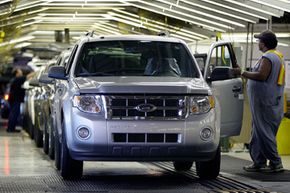
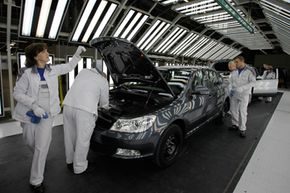
This precision extends to the assembly line itself. Automated quality control systems now patrol the robots. They scan welds for weakness. They check panel gaps. A poorly fitted door isn’t a mistake that gets painted over; it’s a data point that stops the line. The machines see what humans miss.
“Automated systems detect defects that manual inspection would likely overlook, ensuring consistency across millions of units.”
But here is the catch. For all the sensors and algorithms, the most critical component in building a quality car is still human intuition. Robots can’t smell burnt insulation. They can’t hear the subtle rattle that only appears when the car hits a specific frequency on a bumpy road.
That’s why top-tier automakers are obsessed with corporate culture. They want every employee to feel personally responsible for the final product. It’s not just the QA department’s job. If a welder on the floor sees a misalignment, they are encouraged to stop the line. If an assembler notices a wire harness routing that looks “off,” they report it.
This isn’t just about fixing defects. It’s about prevention. A sharp set of eyes combined with a culture that rewards vigilance keeps cars safe. It keeps them running properly. It turns quality control from a reactive step into a proactive habit.
The result? Fewer recalls. More reliability. And cars that survive the real world because they were broken a thousand times in the lab first. The technology handles the precision. The people handle the judgment. Both are necessary. You can’t have one without the other if you want to build something that lasts.