The answer is complicated. However, if you’re looking for one magic number that applies to every vehicle on the road, you’ll be disappointed. Instead, we look at the mechanics of power.
Horsepower is basically a measure of work. It measures how fast the engine can move mass. This is the most important number you can use to judge acceleration potential without using an afternoon test on a sedan. It also explains the slang. When someone says there are horses under the hood, they are not warning about an animal control situation.
One Horsepower equals 550 foot-pounds per second. That’s 745.7 watts. A foot-pound is the energy required to lift one pound one foot into the air. The unit was coined when steam engines and tractors replaced draft animals. Engineers needed a benchmark that farmers and workers already understood. A healthy horse can produce about one horsepower over a long period of time.
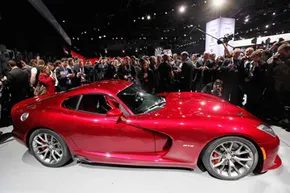
Literally using a horse to pull a car would be inefficient and slow. Modern engines produce significantly more power. Consider the 2013 Shelby GT500 Super Snake. It produces 850 hp. The 2013 Dodge Viper offers 640. The entry-level 2013 Chevrolet Spark, on the other hand, offers a modest 84. What’s the “right” value?
Technically they all have way too much power if your only goal is to move one foot per second.
Let’s look at the math for the Chevrolet Spark. It has a curb weight of 2,337 pounds (1,060 kg). You only need 4.24 horsepower to move that mass one foot per second. The heavier Dodge Viper weighs 3,374 pounds (1,530 kg). To cover the same foot in one second only 6.13 horsepower is needed.
If your only requirement is to move the car a foot per second, even the smallest engine has more than enough power.
But a car traveling at a speed lower than walking speed is pointless in everyday use. You need to cover more territory. You have to merge onto the highway. You have to accelerate at the traffic lights before the light turns red. This is where the total horsepower becomes decisive. With more power, you can travel faster. It ensures that the car accelerates instead of crawling to a stop.
So how much is enough? It depends on your destination. It depends on your speed. It depends on whether you are commuting in the city or chasing lap times on the race track. The number changes depending on what task the car has to perform.