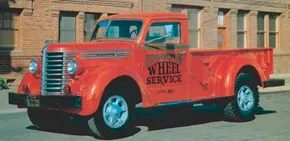
You don’t see many one-ton trucks from the late 1940s anymore. Decades ago, most heavy goods vehicles were disassembled or left to rust on the job site. The 1949 Diamond T Model 201 pickups were different. It’s rare. This also has important consequences.
Chicago’s Diamond T is known for its quality and style. They call themselves the “Cadillac of commercial vehicles.” This is not just marketing. This is a declaration of intent. But while they build big plates, they also build powerful pickup trucks. Model 201 remained in this area.
Design that refuses to die
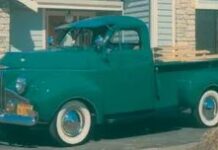
Body work on the 1949 model 201 did not begin in 1949, but in 1936. Diamond T does not believe in planned obsolescence. They make things that are built to last.
A 1936 improvement introduced a horizontal grille. It looks like a car grill. It also has a two-part, swept-back windshield. Can be opened for ventilation. This is very practical. It is also very distinctive.
By 1938, the front end had changed. The grille and headlight assembly is similar to the Pontiac. However, there is no silver lining. It’s a subtle reference to the automotive trends of the time. A 1939 update gave it a look similar to the Cadillac 60 Special. Then the shape is fixed. There are no other changes. The 1949 model was similar to the 1936 original. That’s why the 1949 Diamond T Model 201 pickup looks timeless.
Under the metal
There are three different styles of this pickup truck. Standard tapes are also available. We have open couriers. Panel delivery is also available. The Diamond T has 99 inches of cargo space in the panel version. That’s pretty big for a truck this size.
The frame has an X-shaped support. Supports a very sturdy front axle. The rear axle is fully floating. Leaf springs hold everything in place at every corner. This is the end of construction. They do it on purpose.
The engine is a 6-cylinder Hercules. There are 7 main bearings. Great support for 6 people. A gear driven water pump keeps it cool. It produces 91 horsepower at 3200 rpm. Not so much by today’s standards. In towing, however, torque is more important.
Power is provided by a Warner T9 4-speed manual transmission. The speed ratio of the rear axle is 4.62:1. It’s a steep ratio. Help the truck to pull the load. 1st gear is basically emergency low. Rarely used. The first three gears are sufficient for normal driving.
The bare chassis weighs 2750 kilograms. The total weight of the car is 8000 lbs. Load capacity is 5,250 pounds. Impressive for a half ton truck.
品質の代償
この品質に対してお金を払うのです。 ダイヤモンド T ピックアップの価格は 1,655 ドルです。 それは高価です。 フォードのハーフトン V-8 ピックアップの価格は約 3 分の 1 安い。 平
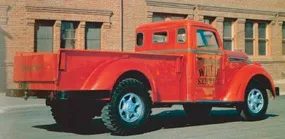
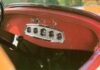
The pre-war era of Diamond T manufacturing told a different story. These earlier Model 201 pickups were decorated for display. There were machine-turned dashboards that looked like machines. There were electric clocks. Steering wheels were nice. Full-disc hubcaps turned into wheels. Upholstery imitated soft leather. It was all about style.
A post-war change removed this. The 1949 version focused heavily on utility. Practicality took over. You didn’t get the chrome and flair anymore. You have indicators. An additional rear light improves visibility. The cabin lighting offers a view inside. The oil filter keeps the engine clean. An efficient generator for handling the electrical load. It’s built to work, not pose.
Why is the 1949 Diamond T 201 worth collecting?
When you find one, the appeal is undeniable. It’s not just another truck. It is sturdy. It has a good looking face that doesn’t try too hard. It stands out from the crowd of generic pickups.
The ride quality is a shock. You would expect a heavy duty truck to shudder and shake. This is not the case with the 201. It works smoothly. Quiet for its size. The build quality feels high quality. The fit and finish are exceptional. Each panel fits correctly. The metal feels thick. It doesn’t rattle while driving.
The hard truths of ownership
The first battle is to find a survivor. A lot of work has gone into these trucks. They have been replaced by newer models. Survivors are incredibly rare. Maybe you’ll see one at a fair. You won’t find one in the field.
Parts are a nightmare. You can’t go to a car dealership and get a new one. Most components are specific to this platform. You have to collect, repeat or improvise. If something breaks, you’re in for a long hunt.
Then there is the driving experience. The rear axle bounces. Experience the difficult stage and watch the background dance. This is a feature of the suspension design. It won’t destroy the car. It just demands respect on bad roads.
The cab is tight. If you are tall, you’re out of luck. Your knees touch the dashboard. Your head touches the ceiling. It was designed in the late 1940s for average-sized drivers. The modern body doesn’t always fit.
Verdict on Diamond T model 201
It is a mystery to collectors. You get a unique, well-built, smooth-running truck that looks really cool. In terms of maintenance and comfort, it causes headaches.
Most enthusiasts want the comfort of a Ford or Chevy. They want parts boxes and known issues. The 201 offers neither. It offers character.
Is the fight worth it? Only if you have the space and patience. It’s a statement. It’s not a daily driver. It’s a museum exhibit that’s runs.
If you are still looking for more information about these machines, you should stick to specialized guides. Look into classic truck archives. Check consumer reviews from the era. Don’t expect mainstream sources to report this. This truck lives in the shadows.