


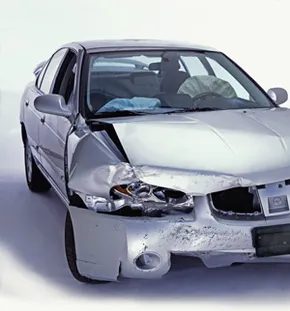
Airbags changed the game for car safety in the 1990s. Before that era, seatbelts were your only real defense in a crash. The shift was massive. According to the National Highway Traffic Safety Administration (NHTSA), frontal airbags saved 50,457 lives between 1987 and 2017. That is a staggering number. Driver fatalities dropped by 29 percent. Passenger deaths fell by 32 percent.
But there is a dark side to this safety feature. It is not a perfect shield.
An airbag deploys at more than 200 mph. For an adult, that force is manageable. For a small child or a petite adult, that same blast can cause permanent head and spinal injuries. It can be fatal. The rule has always been simple: put small passengers in the back seat. Some states even make it law. But the real world is messier. What if the back seat is full? What if you drive a two-seater sports car and have no choice but to put a child up front?
Manufacturers could not ignore this risk. That is why many vehicles now come equipped with an Occupant Classification System (OCS). This technology uses sensors to detect who is sitting in the passenger seat. It identifies whether an adult or a child is present. This smart system largely eliminates the need for a manual airbag on/off switch. The computer handles the decision. The technology is sophisticated. It reacts before the crash even happens.
To understand how OCS works, you need to understand the basics of the airbag itself.
The Mechanics of Deployment
When a collision occurs, sensors detect the sudden deceleration. This triggers a chemical reaction that fills a nylon bag with compressed nitrogen gas. The bag inflates instantly. It sits inside the steering wheel, door, or dashboard. The goal is to cushion the occupant from the force of the impact. The bag absorbs energy. It slows the person down gently.
This process happens in milliseconds. Too fast for the human eye to see.
But the system has to be smart about it. Deploying an airbag for a child seat can be worse than not deploying it at all. The weight of the occupant matters. The position matters. The OCS solves this problem. It measures the weight and sometimes the pressure distribution on the seat. If it detects a child seat, it disables the airbag. If it detects an adult, it prepares to deploy.
Why Manual Switches Failed
Before OCS, drivers had to manually turn off the passenger airbag. This led to mistakes. People forgot to turn it back on. They turned it off for themselves. They assumed the system knew better than they did, but without sensors, it did not.
The OCS removes the guesswork. It uses load cells and pressure sensors. These components send data to the airbag control module. The module decides whether to inflate the bag. It is automatic. It is reliable. It saves lives by preventing injuries from the safety device itself.
The Role of Sensors
The heart of the OCS is the sensor array. These sensors are built into the seat cushion. They measure the weight of the occupant. They also look at how the weight is distributed. A child in a car

How Modern Airbag Suppression Systems Actually Work
The math of family logistics rarely favors safety. You’re hauling boxes, the minivan is packed tight, and your seven-year-old needs to be in the car. There is simply no room for a rear-facing or forward-facing booster in the back. So, you slide her into the passenger seat. The question isn’t just about comfort; it’s about survival. If the world ends in a split-second collision, does the airbag save her or crush her?
Putting kids in the front is a last resort. But if you are behind the wheel of an American vehicle manufactured after 2006, you are likely protected by the Occupant Classification System (OCS). It’s not just a sensor. It’s a complex network of electronics designed to make a life-or-death calculation before the crash even happens.
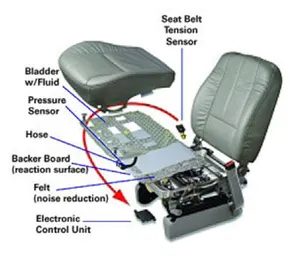
Take a Delphi system, for instance. It’s the kind of hardware you’ll find buried in the seats of many mainstream trucks and SUVs. Under the upholstery lies a pressure sensor, a silicone-filled bladder, and an Electronic Control Unit (ECU). When your daughter climbs in, her weight presses on the bladder. The sensor sends that data to the ECU. The ECU then talks to the airbag’s own control unit. The result? The passenger airbag either stays dead or wakes up.
But weight isn’t the only variable. The OCS reads posture. It checks if the seatbelt is buckled. It uses a tension sensor to detect the specific pressure pattern of a child safety seat. The computer is trying to distinguish between a seven-year-old, a rear-facing infant carrier, or a bag of concrete mix. A light on the dashboard tells you if the system has granted the airbag permission to fire.
Even with that intelligence, the hardware has limits. Modern vehicles use dual stage airbags. This means the deployment isn’t binary. The system can trigger a full-force explosion, a reduced-speed puff, or nothing at all. Full speed is fine for an adult. It is lethal for a child. Dual-stage airbags can mitigate this by deploying at lower speeds during minor impacts. But they aren’t magic. The golden rule remains: keep small children in the back.
“The system is designed to tell whether a child safety seat is occupying that seat or whether you’re just carrying some heavy object there.”
The Evolution of Crash Sensitivity
Why do we need all this complexity? The answer lies in the history of the OCS. Early airbags were blunt instruments. They deployed based on impact force alone. No thought for who was in the seat. No consideration for size. This led to a grim trend of fatalities among small adults and children who were too close to the steering wheel or dashboard.
Engineers realized that detecting the occupant was just as important as detecting the crash. The OCS was born from the need to differentiate between a full-grown driver and a toddler. It wasn’t about adding features for marketing. It was about stopping the airbag from becoming a weapon.
Today’s sensors are far more sophisticated than the simple weight plates of the 1990s. They analyze vibration, pressure distribution, and belt tension. But they still have blind spots. A small adult might not trigger the same sensor profile as a large child. The technology is good, but it isn’t perfect.
We’ll look deeper into the specific failures and successes of these systems in the next section, exploring why the OCS is necessary in the first place.

How OCS Tech Fixed the Airbag Problem
Early airbags were supposed to save lives. Instead, they sometimes became the hazard.
Rae Tyson, a spokesman for the National Highway Traffic Administration, put it bluntly. Drivers expected airbags to replace seatbelts. They were wrong. Airbags were never the primary safety device. They are supplements.
The problem? Early systems were too aggressive. They deployed with too much force. They reacted too easily. The result? Injuries. Especially for smaller occupants.
The solution required a shift in engineering. Automakers had to develop systems that could “feel” who was in the seat. This led to the Occupant Classification System, or OCS.
The 2006 Mandate: Why Rules Changed
In 2000, the U.S. Transportation Secretary issued a new rule. It targeted cars made after 2006. The goal was simple: reduce the risk of serious injury.
Who was at risk? Women. Children. People of smaller stature.
The old airbag designs didn’t account for them. They treated every front-seat passenger like a 5’10” man. That approach failed.
The 2006 mandate forced automakers to adapt. They had to use weight sensors. They had to use dual-stage airbags. These technologies allowed the system to modulate deployment force based on the occupant’s size and position.
Crash Tests Now Include Smaller Dummies
The rule didn’t just change the cars. It changed the testing.
Previously, crash tests only required average-sized male dummies. That data was incomplete. It ignored half the population.
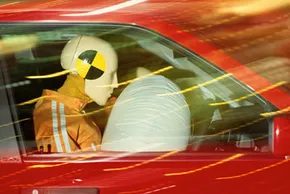
The new law required dummies representing small women and children. This provided real data on how airbags interact with different body types.
It also mandated low-risk deployment for child seats. If a child sits in the passenger seat, the airbag must deploy with minimal force—or not at all.
The law required suppression for rear-facing infant seats. It also required suppression for forward-facing child seats. Yet, it had to allow deployment for passengers as small as five feet tall and 110 pounds.
That balance is tricky. Too much suppression risks injury in a crash. Too little risks airbag trauma.
Modern Airbags: A New Standard
Today, every new car made in America after 2006 uses these systems.
They aren’t all identical. Tyson says it’s up to manufacturers to meet the standard. They can use different technologies to achieve the same result.
Weight sensors are common. Seat position sensors help too. Some systems combine data from multiple sources to decide if and how an airbag deploys.
The result? Fewer injuries. The problems seen in the early days are largely gone.
Education plays a role too. Drivers are told to keep kids in the back. They are told to sit away from the deployment zone. Both reduce risk.
But technology isn’t perfect. OCS systems have their own flaws. Weight sensors can be fooled. Clothing affects readings. Objects on seats interfere with classification.
We’ll look at those trade-offs next.


The shift toward Occupant Classification Systems (OCS) and dual-stage airbags wasn’t just about compliance. It was about survival. These systems fundamentally changed how airbags behave, making them significantly safer for children, small adults, and even inanimate objects left on the passenger seat. By allowing drivers more flexibility in how they seat passengers, the technology reduced the risk of airbag deployment causing more harm than good.
But it wasn’t smooth sailing. Early iterations of these systems were notoriously finicky. Sensors frequently misread the passenger, triggering the airbag when it should have stayed off, or vice versa. Some smaller occupants found that their seating position dictated whether the airbag deployed, as if the system couldn’t decide if an adult or a child was in the seat. Other times, the OCS was too sensitive. A simple newspaper placed on the seat could trick the sensor into deactivating the airbag entirely.
This lack of reliability plagued several major manufacturers. Complaints flooded the NHTSA regarding issues in vehicles from Hyundai, Jaguar, Jeep, Lexus, Nissan, and Toyota. The consensus was clear: the initial technology needed refinement.
How Modern OCS Solves Early Sensor Failures
Time and data analysis allowed engineers to tune these sensors. The goal was simple: distinguish between an adult, a child, and nothing at all. Today, the system is robust enough to handle the complexities of human behavior and cargo.
“It’s worked fantastically. We’ve gone from a safety system with unintended consequences to one with [no consequences]. We’ve had no airbag fatalities in recent years.” — Tyson, NHTSA spokesman
The results speak for themselves. The NHTSA notes that Occupant Classification Systems have drastically cut down on airbag-related deaths. By ensuring the airbag only deploys when necessary and with the appropriate force, modern vehicles have turned a potential hazard into a life-saving tool. The fear of being injured by your own safety equipment has largely vanished.
Understanding Advanced Frontal Airbag Regulations
The regulatory push behind this change came from the realization that one-size-fits-all deployment was dangerous. The NHTSA’s Advanced Air Bag Regulation was designed to improve benefits while reducing risks. This shift didn’t just protect the driver; it created a safer environment for everyone in the front seat.
For car enthusiasts, this evolution highlights a broader trend in automotive safety: complexity leads to safety. Early airbags were blunt instruments. Modern dual-stage airbags adjust their inflation based on crash severity and occupant size. This precision is what makes the difference between a minor bruise and a catastrophic injury.
If you’re looking into older models from the brands mentioned earlier, be aware that early OCS issues were a known defect. However, for newer vehicles, the technology is mature. The risk of a malfunction is minimal, and the benefit of proper deployment is immense.
The safety of your vehicle depends on these hidden systems working as intended. It’s not just about the steel in the frame or the brakes; it’s about the software and sensors that decide when to deploy. As long as manufacturers keep refining these systems, the road remains a bit safer for everyone.


