Audi is preparing to pivot its luxury strategy, shifting focus from traditional executive saloons to the high-growth segment of massive, three-row SUVs. The upcoming Audi Q9 is set to become the brand’s new flagship, designed specifically to compete with established heavyweights like the Range Rover, Mercedes-Benz GLS, and BMW X7.
This move reflects a broader shift in consumer behavior: wealthy buyers are increasingly abandoning the classic four-door sedan in favor of versatile, commanding, and spacious luxury SUVs.
Design and Dimensions: A Larger, Boxier Presence
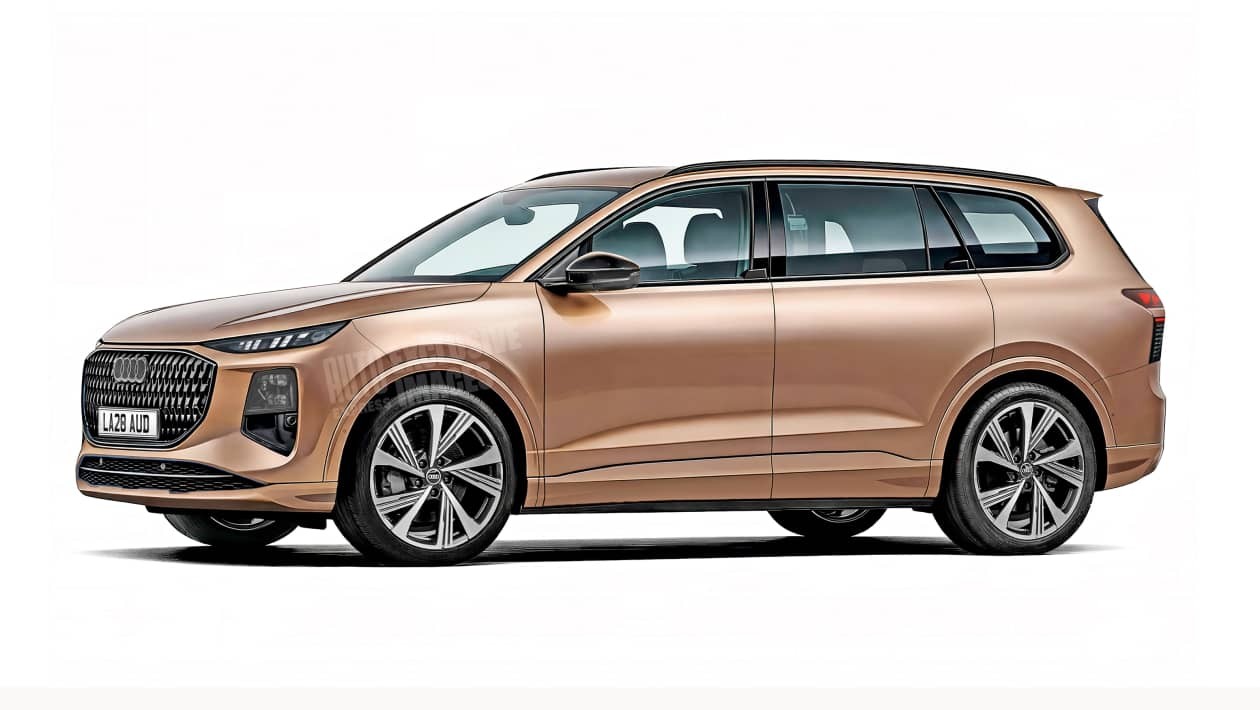
While the Q9 will share technical DNA with the upcoming Q7, it is not merely a stretched version of its sibling. To meet the demands of the ultra-luxury market, the Q9 will feature a more upright, boxy silhouette and a longer wheelbase.
Key design and structural differences include:
– Increased Interior Volume: A longer rear overhang and wheelbase will provide extra room for a premium cabin and additional luggage space behind the third row.
– Premium Seating: The middle row is expected to feature “captain’s chairs” to enhance passenger comfort.
– Modern Aesthetics: The exterior will utilize Audi’s current design language, featuring a large single-frame grille and split headlights, rather than the ultra-minimalist look seen in recent concepts.
– Innovative Hardware: Early reports suggest the Q9 may utilize electronic door latches (similar to the Ferrari Purosangue) rather than traditional handles, though physical handles may be included to comply with evolving regulations in markets like China.
Powertrains: Hybrid Focus and High Performance
Audi intends to differentiate itself from competitors through its electrification strategy. While rivals like the BMW X7 and Mercedes GLS currently rely heavily on petrol and diesel, Audi plans to make Plug-in Hybrid (PHEV) models the backbone of the Q9 lineup.
For those seeking raw power, the lineup will include:
– The SQ9: A high-performance variant likely featuring a twin-turbocharged V8 engine producing between 550 and 600bhp, supported by advanced chassis technology like active anti-roll stabilization and torque vectoring.
– The Horch Flagship: There are indications that Audi may revive the ultra-luxury “Horch” sub-brand for a top-tier Q9 model, aimed directly at the Mercedes-Maybach GLS. However, it remains unclear if this ultra-premium version will be available in the UK and Europe.
Market Positioning and Technology
The Q9 is being engineered with a global mindset, specifically targeting the preferences of the US and Chinese markets, where large-scale vehicles are highly prized.
Inside, the cabin will serve as a high-tech sanctuary:
– Advanced Infotainment: The dashboard will house Audi’s latest MMI system, featuring dual screens for the driver and an optional dedicated screen for the front passenger.
– Passenger Comfort: Expect high-end materials, an electrochromic glass roof, and dedicated tech interfaces for second-row passengers.
Pricing Expectations:
With a projected launch in late 2026, the Q9 is expected to sit in the premium bracket, likely starting around £90,000. This positions it above the current Q7 (which starts around £70,000) but keeps it competitive against the Mercedes GLS, which can exceed £110,000.
The Audi Q9 represents a strategic bet that the future of flagship luxury lies in massive, tech-heavy SUVs rather than traditional executive sedans.
Conclusion
By combining high-performance V8 engines with a strong emphasis on plug-in hybrid technology, the Audi Q9 aims to bridge the gap between traditional luxury and the modern demand for electrified, spacious utility. Its success will depend on whether it can offer enough distinctiveness to unseat the long-standing dominance of the Range Rover and BMW X7.