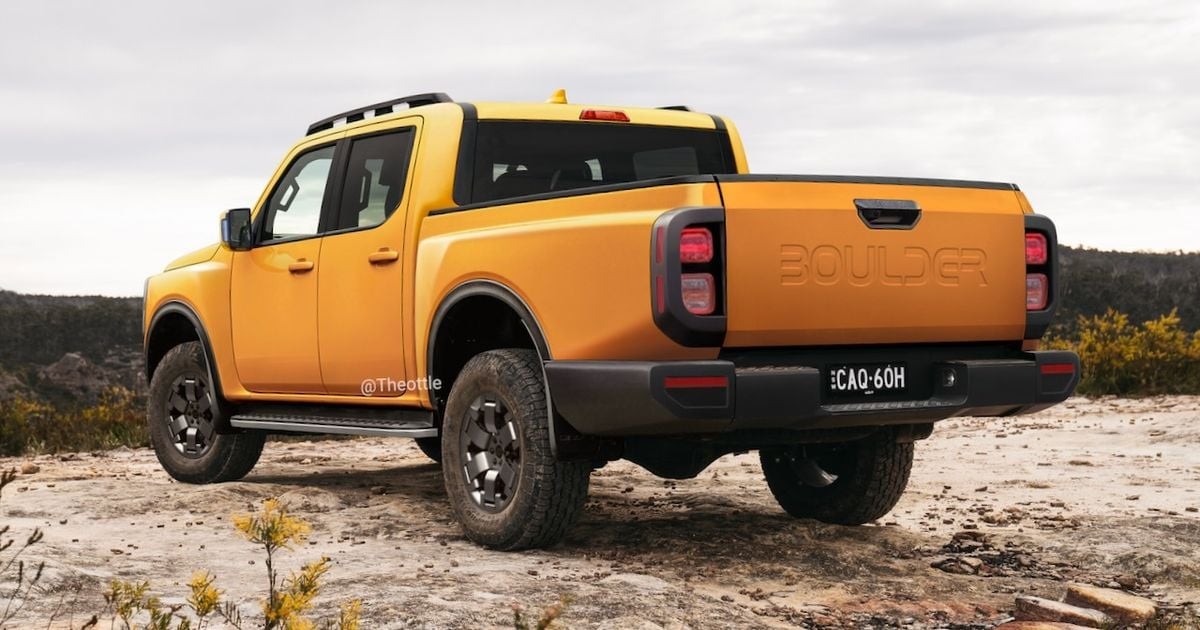
Hyundai is officially entering the highly lucrative pickup truck segment, though consumers will have to wait several years before seeing the final product. While the company is a latecomer to a market dominated by established giants, its strategic approach suggests it is prioritizing long-term design success over a rushed release.
The Blueprint: From Concept to Production
The foundation of Hyundai’s entry into the segment was recently teased through the Boulder, an off-road SUV design study. While the Boulder is a concept, it serves as a critical technological precursor; it utilizes the same ladder-frame platform that will underpin Hyundai’s upcoming mid-size pickup.
Bill Thomas, Hyundai Australia’s General Manager of Public Relations, Sponsorship, and Events, has indicated that the transition from concept to production will be a meticulous process.
“The production version of the Boulder concept will no doubt be subject to many design clinics and market studies as it progresses toward final sign-off,” Thomas noted.
This suggests that while the “Boulder” aesthetic may influence the ute’s DNA, the final vehicle will be heavily refined based on consumer feedback to ensure it meets market expectations rather than just following a concept’s whims.
Learning from Market Volatility
The timing of Hyundai’s entry is notable. The pickup segment is notoriously difficult to break into, particularly in markets like Australia, where consumer tastes are highly specific. The industry has recently seen mixed reactions to new entries—most notably the Kia Tasman, which faced significant design criticism upon its unveiling.
Hyundai appears to be taking a “lessons learned” approach to avoid similar pitfalls. By monitoring how rivals succeed or fail, the automaker aims to strike a delicate balance between:
– Proven aesthetics: Providing the rugged, familiar look that ute buyers expect.
– Innovation: Offering unique features that differentiate the brand from established competitors.
Why the Delay Matters
With a projected launch window around 2028, Hyundai is playing a “slow and steady” game. This delay allows the company to refine its ladder-frame technology and ensure its powertrain and design are “highly competitive” from day one.
For a brand like Hyundai, which has successfully transitioned from a budget manufacturer to a leader in EV and SUV design, the pickup segment represents the next major frontier. Entering a crowded market late is risky, but doing so with a polished, battle-tested product offers a higher chance of long-term viability.
Local Testing and Development
While the global production details remain under wraps, Hyundai Australia has confirmed its role in the development cycle. The region is widely considered one of the most demanding testing grounds for four-wheel-drive vehicles due to its harsh terrain and high consumer standards.
The company has committed to testing the production version in Australia, ensuring the vehicle can handle the rigors of the local landscape before it reaches showrooms.
Conclusion
Hyundai is prioritizing precision over speed, utilizing its Boulder concept as a testing ground to develop a mid-size ute that can compete in a crowded global market. By focusing on rigorous market studies and local testing, the automaker aims to turn its late arrival into a calculated, high-impact entry.