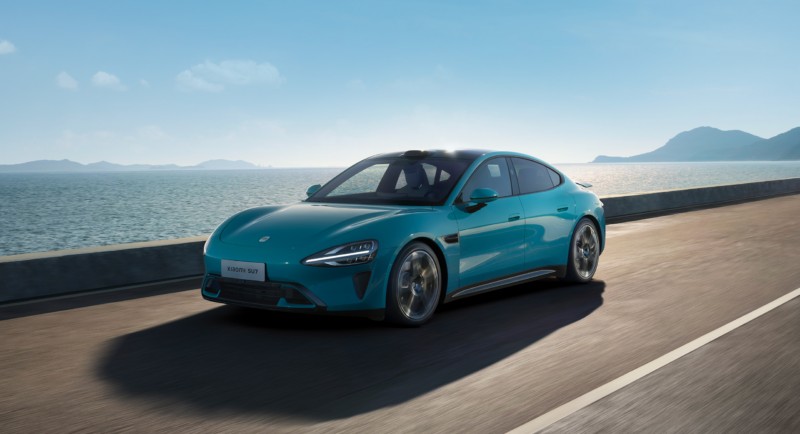
A Xiaomi SU7 owner has reported remarkable battery health retention after 265,000 kilometers (165,000 miles) of driving over 18 months. The vehicle, a rear-wheel-drive Pro model, still retains 94.5% of its original battery capacity, a figure that surprises both the owner and industry standards.
Extreme Usage, Minimal Degradation
The owner, identified as Mr. Feng, drives approximately 600 kilometers (373 miles) daily – equivalent to a near-daily round trip between New York and Boston. This intensive usage would quickly degrade most vehicles, yet the SU7’s 94.3 kWh battery has shown minimal wear.
Calculations suggest roughly 506 full charge-discharge cycles, though the actual number of partial charges is likely much higher given typical EV charging habits. This longevity is significant because most EV manufacturers guarantee battery health for only 8 years or 150,000 kilometers, with acceptable degradation rates of 20-30%. Even Tesla, a leader in EV battery tech, warranties its Model 3/Y for 160,000 km with a 70% minimum capacity after eight years.
Beyond the Battery: Component Durability
The SU7’s durability extends beyond just the battery. After this high-mileage period, tire tread depth remains at a new-car specification 8mm, and the vehicle has not required brake pad replacement. Coolant analysis shows zero water contamination and maintains ideal purity, with a freezing point of -38°C (-36°F).
Real-World Impact and Financial Savings
Mr. Feng estimates he has saved over 100,000 yuan (approximately $14,300 USD) in fuel costs compared to a gasoline vehicle. He intends to push the SU7 further, aiming to reach 600,000 kilometers within three years. This aggressive goal underscores the owner’s confidence in the vehicle’s reliability.
Implications for Xiaomi and EV Longevity
The data went viral on Chinese social media platforms (Weibo and Bilibili), gaining attention from Xiaomi CEO Lei Jun. The SU7’s first generation is ending production in anticipation of a new version launching in April 2026, but this real-world durability data provides reassurance to existing owners about long-term vehicle value.
This case offers a rare glimpse into the potential of modern EVs under extreme conditions. While it’s just one vehicle, it challenges common assumptions about battery lifespan and reinforces the argument that electric vehicles can be as, or more, durable than their gasoline counterparts.
This demonstration of resilience is timely, as consumer interest in EV longevity grows. Although individual results vary, the SU7’s journey highlights the growing potential for electric vehicles to outlast traditional combustion engines with proper maintenance and usage.