Autumn is not just about changing the leaves. It’s about reduced visibility and deer movements.
Dangers are increasing rapidly on rural roads. Especially in the dark. Especially when it’s a full moon.
More than one million car accidents in the United States caused by deer occur each year. Costs? Property damage exceeded one billion dollars. About 200 people died. In addition, 29,000 people were seriously injured.
Insurance claims cost an average of $2,600 per accident. When serious injuries and Deaths are taken into account, the amount rises to over $6,000. This is more than just a fender bender. This is a financial and material blow.
In the countryside, it is impossible to avoid deer, elk, moose and other ungulates. You can’t control animals. You can’t control the weather. However, you can control when it appears most often.
Traffic agencies try to predict where these animals will come to the roads. They put up warning signs. They put up a fence. They build wildlife crossings. But time and place are equally important.
My former students Victor Corino Ravanal, Nimanti Abeyrasna, and I analyzed more than 86,000 deer-vehicle collisions in white-tailed deer in New York State. We used three years of police records.
Here’s what the data says about timing and risks.
Time, month, year
The risk of encountering a moose changes over time. It varies according to the calendar. It varies depending on the month.
These cycles are not random. They follow a pattern.
Driver behavior plays an important role. Accidents are at their peak when traffic is busy. When the driver is tired. If the situation makes it difficult to find the animal.
The deer’s behavior is also important.
Many accidents involve multiple vehicles. The driver swerved and passed the deer. They hit the other lane. Or hit the brake. The car behind me didn’t stop in time.
This is a chain reaction. And the price is high.
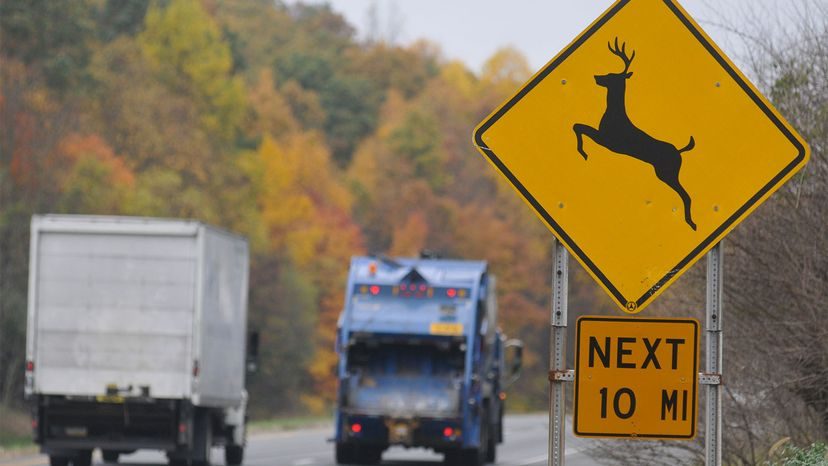

When is moose most likely to affect drivers?
Most accidents happen in low light and narrow windows. Dusk and dawn are danger zones. Then the deer starts moving. Then the headlights can’t cut through the darkness fast enough.
The information is clear. Only 20 percent of accidents happen in daylight. evening? The hourly risk is eight times higher than during the day. Conditions are four times worse after sunset than at midnight. you are blind, they are brave.
Commuting causes weekly peaks. When there are more cars on the road at dawn and dusk, more metal hits the flesh. Friday night brings chaos. On date night, traffic slows you down. The reaction time is shorter.
The moon’s hidden role in traffic safety
Look at the calendar. The full moon is the most dangerous time.
When the moon is bright, the deer moves out of cover. They felt safe enough to travel through the open fields. In the dark, I hit asphalt that I should have avoided. Accident rates are highest during the brightest hours of the night.
This is not just a North American feature. The same pattern can be seen on European roads. Ungulates around the world respond to the moon’s cycle. Nature runs on a clock that we don’t pay attention to.
The moon does not cause accidents. It just gives the deer confidence to move towards them.
Why do you think drivers are surprised when a deer appears at midnight during a full moon? The data shows that this is predictable. Science shows that this is inevitable. I’ll have to take a closer look.
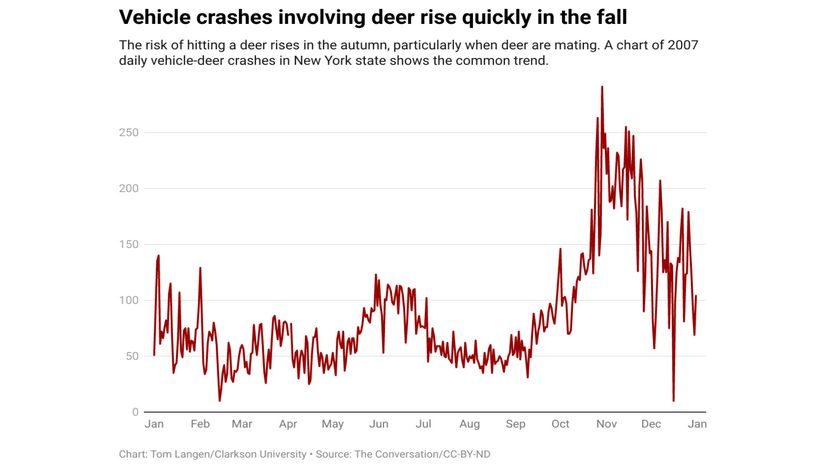
Stereotypes, darkness and clock changes
The statistics are clear. Autumn is when the asphalt gets dirty. In particular, late October through early November is peak time for deer-vehicle collisions in New York State. This is the time when the number of accidents suddenly increases four times in the spring. Why? Rut. Male fights. they mate. They are distracted, aggressive and ignore traffic rules that do not apply to them.
The moose follows the same terrifying pattern.
But there are complex variables that make this season a nightmare for commuters. Daylight saving time ends. In 2021, this transition will occur on November 7. One hour. Your night commute is suddenly timed perfectly at the same time as peak activity and darkness. Due to the clocks changing, you are driving at the most dangerous time of the year – the most dangerous time of the day.
This is not just a local custom. Seasonal clock changes have been observed in more than 70 countries. Combining this global practice with the increase in ungulate accidents reveals a widespread systemic problem.
Why is this conversation important now?
The discussion about daylight saving time focuses on human biology. Circadian rhythms are disturbed. Short-term stress. Fatigue. Let’s consider whether the energy savings and seasonal changes are worth the biological costs.
Next, add the deer-vehicle collision risk to the accounting.
Is an hour of light in the evening worth the increase in accidents? According to the data, the answer is no during the critical weeks of autumn. Clock changes increase commuters on the roads at times when deer are most active and visibility is reduced. It creates a conflict between schedules and instincts.
Time is not everything
This is where the narrative often breaks. Drivers believe that safety is strictly tied to calendars and clocks. they don’t know.
Deer-vehicle collisions happen all the time. at any time.
Don’t let autumn fears overwhelm you in July. A moose crosses the road in a scattered urban area. They cross the road through a dense rural forest. They are in a place they shouldn’t be in the suburbs. The peak season warning is true, but it is not the only truth.
“Accidents involving deer and vehicles can happen at any time of the day or night. Deer are hurt both in rural and urban areas.”
The routine determines the number, but the deer determines the risk. You can never get rid of problems. Just because it’s May, we can’t let our guard down. Rutting is a noisy and chaotic event. However, moose are quiet all year round.
Why you’re more likely to hit a moose than you think
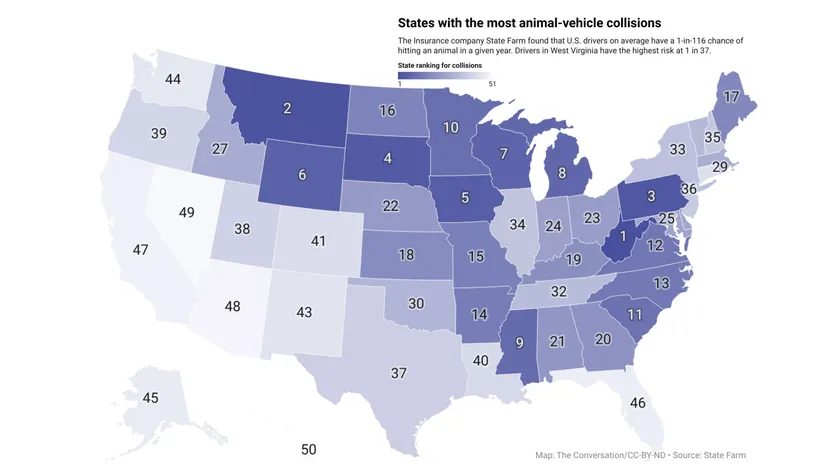
Statistics don’t lie. State Farm analyzed the data and found that drivers in the United States have an average of one in 116 chance of hitting an animal. This figure is significantly skewed in some areas. West Virginia, Montana and Pennsylvania are the states most affected by the wild animal.
See data for the 12 months ending in June 2020. State Farm has 1.9 million wildlife collision insurance claims nationwide. About 90% of accidents are caused by deer. This isn’t just bad luck. It’s a matter of time and place.
“Drivers should always be alert and use caution in areas where deer or other ungulates may be present.”
When to watch wildlife
Ungulates are not random. They follow a pattern. Be very careful when driving in areas where these animals live. The risk increases rapidly during certain periods.
- dawn
- twilight
- bright moonlit night
- Autumn heat
Now is the golden time. Deer are active. Visibility was poor. The reaction time is shortened. When you have big risks in your everyday life, you’re basically playing Russian roulette with a buffer.
Tom Langen, a biology professor at Clarkson University in Potsdam, New York, studies this dynamic. Animal behavior creates danger. It’s not just about looking. It’s about predicting where they’re going.
How to reduce risk
Acknowledging it is the first step. But knowing when to be careful is only half the battle.
If you see a moose, expect more. They travel in groups. Changing direction is a common instinct. This is also a common cause of rollovers and multi-vehicle collisions. The safest option is usually to brake hard and stay in the lane.
The information is self-explanatory. The risks are real. The season has nothing to do with commuting time.