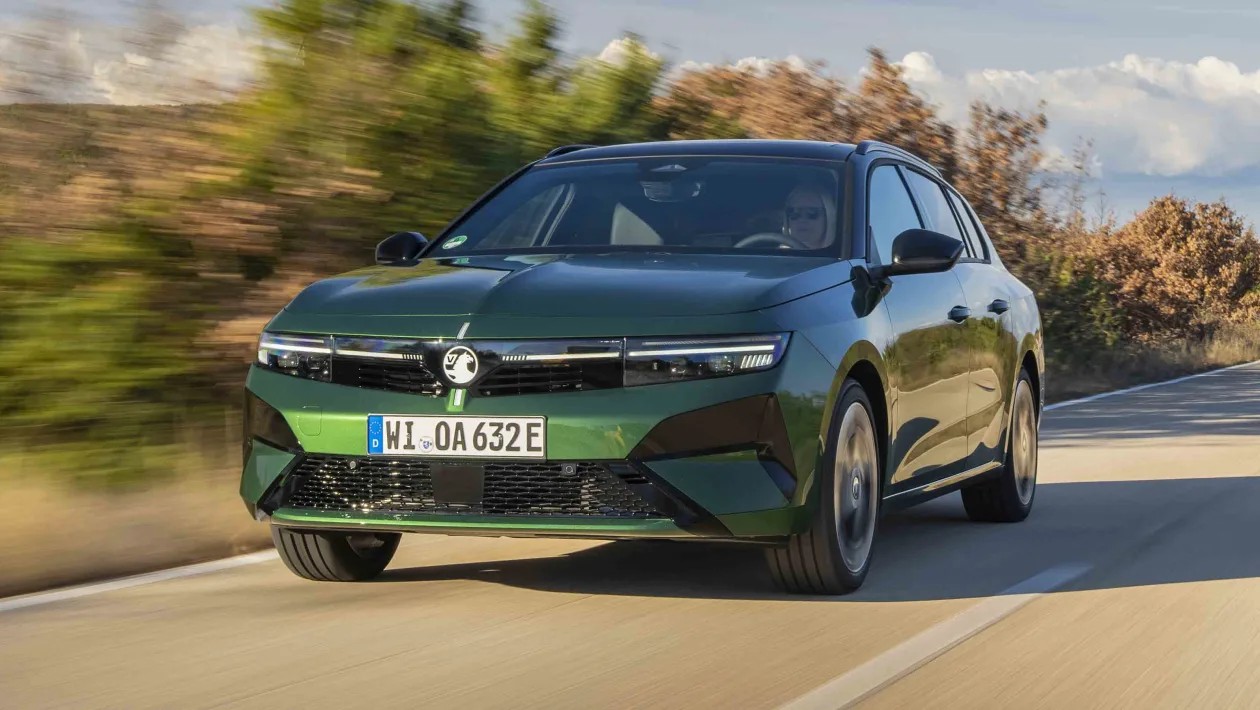
Stop arguing about the hatchback version. The Vauxhall Astra Sports Tourer is basically the same price now. Same money, more space. It’s the logical move.
It’s not perfect. Rear legroom could be bigger. The interior lacks some premium feel compared to rivals. But it’s packed with tech, versatile, and offers a menu of engines. Petrol. Mild-hybrid. Plug-in hybrid. Fully electric.
The pure-electric model? That’s the standout. It’s one of the few all-electric estates on the market.
Under the Metal
We are looking at the eighth generation now. The 2026 facelife did two important things.
One. It matched the estate price to the hatch. Two. It aligned pricing across all powertrains. Petrol starts just under £30k. Hybrids, PHEVs, EVs all follow close behind.
We’ve tested the lot. From the 192bph plug-in hybrid beast to the modest 128bhp petrol. From the e-DCT6 mild hybrid to the all-electric 154bph model.
Performance & Driving
Want speed? Pick the PHEV. 0-62 mph in 7.7 seconds.
The EV is the smoothest. Quiet around town. Calm on the motorway. It’s not lightning-fast, though. The Cupra Born or Smart #1 will eat this lunch, reaching 62 mph well under eight seconds. The Astra takes 9.5s. The mild hybrid? 9.3s. The petrol? Nearly 10s.
Slow? No. Just unexciting.
Model Power 0-62mpH Top Speed
Astra 1.2 Turbo 128bph 9.9s 130mph
Astra Hybrid 145 145bph 9.3s 130mph
Astra PHEV 192bph 7.7s 140mph
In town, the steering is light. Responsive. The PHEV and EV nip between junctions nicely. Torque helps here. The eight-speed auto in the petrol can be sluggish, shifting with a slight delay. The PHEV’s electric motor covers the gaps in acceleration.
It’s not always smooth. The throttle metering feels weird pulling away. The brakes? They mix regen with physical pads. The feel is inconsistent. Some like it. We found it annoying.
Country roads expose the weight. The EV and PHEV fidget on bumps. Larger wheels make it worse. Handling is safe. Predictable. Boring? Maybe. It feels like a heavy hatchback. Stable.
Motorways are better for the electric variants. Quiet. Wind noise is down. The ride? A bit crashy over potholes. The firm suspension helps stability, at least.
Running Costs
Petrol models hit 46.3 mpg combined. Mild hybrid gets 58.9 mpg. Not bad. But the Toyota Corolla Touring Sports ekes out over 60 mpg easily.
The PHEV claims 122.8 mpg. In real life? Unlikely. Charge it daily and it’s like a diesel. Without charging, forget that number.
Model MPG CO2 Insurance Grp
Astra 1.2 Auto 47.9 mpg 133 g/km 19
Astra MHEV 57.6 mpg 109 g/km 20
Astra PHEV 122.8 mpg 50 g/km 29
The EV battery got a bump for 2026. From 255 miles to 276 miles. We managed 4.2 mpg/kWh. Real-world range hovered around 245 miles. Better than before.
Charging takes less than half an hour on a 100kW rapid charger. Slower than some rivals—Elroq does 175kW—but decent. At home, a 7.4kW wallbox fills it in eight hours. The PHEV has a 17.2kWH battery. Up to 52 miles electric range. If you pre-heat the cabin first. Three hours on a home charger.
Insurance groups are average. Griffin (128bhp) sits at group 18. Corolla is lower at 17. SEAT Leon Estate is even cheaper to insure at group 14. The EV starts at 26. The PHEV at 27.
Depreciation? Expect to keep 44-48% of the value after three years. The electric Griffin trim holds value best. Toyota still beats this, retaining nearly 50-52%.
The Vauxhall Astra’s Pure Panel Pro looks great but lags in response times.
Interior & Tech
The new “Vizor” grille splits opinion. You like it or you don’t. The 2026 update added an illuminated badge and more lights. Looks sharper.
Trims range from Griffin (our pick) to Ultimate.
Griffin gives you a lot. Heated seats. Heated wheel. Adaptive cruise. Wireless charging. AGR-approved ergonomic seats. GS trim adds ambient lighting, dual-zone climate, and a 360-degree camera. Ultimate adds a head-up display and massaging seats. It also has new ‘Intelli-Lux’ headlights. We found them less precise than VW’s Matrix lights.
The cabin feels better than the old Astra. Soft plastics up high. Some Alcantara in Ultimate trim. But the centre console and door bottoms are hard plastic. Cheap feeling. At least they replaced the scratchy gloss black with satin silver.
The dual 10-inch screens are the highlight visually. Sharp graphics. Good reversing camera. But the software? A bit slow. Auto-dimming in tunnels makes the screen unreadable for a few seconds.
The upside? Physical buttons for climate. And shortcuts for media. No swiping through touch sliders like the Golf owners complain about. But the menu structure is deep. Buried settings.
The head-up display is brilliant. Easy to adjust via the mirror stalk. No digging through sub-menus. Many brands should copy this.
Practicality
Boot space? Good. But rivals have more.
The rear seats split 40/20/4 0. Flexible. The PHEV and EV don’t sacrifice much trunk space compared to the petrol versions. The flat floor helps.
Interior storage is decent. A large cubby between the front seats. Two sliding trays. A hidden spot for phones below the air vents.
The seats themselves? Comfortable. Adjustable. Front passengers get plenty of support.
But the back seat legroom… it’s tight. Adults in the front? People behind will complain. It’s fine for kids. Or shorter adults. But don’t buy this car solely for hauling long-limbed passengers in the back.
Is it worth it? The price gap between hatch and estate is gone. The EV version offers a rare blend of practicality and electrification. The driving dynamics won’t win rallies. But for daily commuting? With decent efficiency and low running costs for the EVs and PHEVs? It’s hard to look away.
Just check the rear seat legroom before you sign the dotted line. And maybe skip the largest wheels unless you like bouncing around on bad roads.