It knows exactly what it is. No ambiguity here.
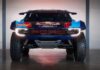
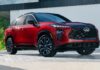
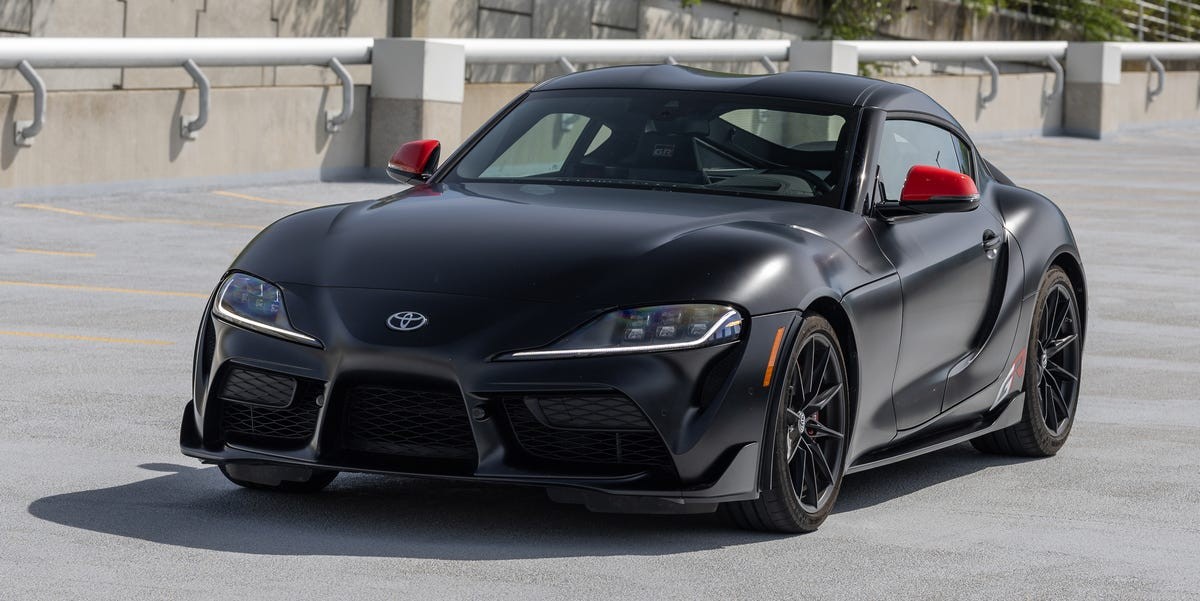
The GR Supra wears its heart on its sleek, sculptured sleeve. That double-bubble roof isn’t just for looks—it screams performance intent, just like the 382-horseinline six underneath. Sure, it shares its bones with the BMW Z4, but Toyota dressed it better. More lively. More aggressive.
The cabin is tight. If you are broad-shouldered, you might struggle to get in. But do you care?
The moment you hit the gas, the claustrophobia vanishes. Replaced by the rush of torque. The road opens up. You forget you ever squeezed into a bucket seat.
What Changed in 2026
Enter the MkV Final Edition.
It sits atop the trim ladder now. Above the base 3.0 and the Premium. This isn’t just a badge job.
They tweaked the differential mapping. Upgraded the Brembo discs. Stiffened the bushings. The adaptive dampers got their own unique tune. Visually, it stands out too. Matte black 19-inch wheels. Gloss carbon fiber on the rear spoiler and mirrors.
Inside? Red seatbelts. Carbon fiber accents. Specific “GR” stitching on the seats. And yes, a car cover comes included. It feels limited. It feels special.
Should You Buy It
We always liked the base 3.0. But the “Final Edition” nameplate suggests a looming end. Production cycles move fast. This might be the last of the road for this specific chassis generation.
If the money is there, grab it. Take the final bow while it’s happening.
And please. Pick the manual. It does not matter which trim you choose. The automatic might check off faster times on paper, but paper cannot feel the engagement of a synchronized clutch and a mechanical linkage. The manual is the point of buying a rear-wheel-drive sports car.
Driving It
382 horsepower from that turbocharged inline-six is no joke. It remains the only engine option, and that is fine. We like it that way.
The steering is sharp. Direct. Nicely weighted. You feel every bump through the suspension, which is stiff enough for cornering but compliant enough for a daily drive. Most of the time.
Then you hit snow.
Despite winter tires, this car will happily find itself stuck in a driveway if conditions get dicey. The rear end gets loose easily. It is not a winter wonderland machine. Stick to dry pavement. That is where it belongs.
“The manual transmission ratchets up satisfaction exponentially.”
In a standing start test, the automatic version with less horsepower (back in 2020) actually hit 60 mph in 3 seconds faster than the current manual. But that test ignored a variable no stopwatch can measure: joy. A 0-150-0 km/h test showed the manual can sprint from zero to top speed and back in roughly 31 seconds. Smooth brakes. Controlled chaos.
Range and Refueling
Expect about 22 mpg in the city if you take the automatic. 19 with the manual. Highway numbers sit around 29 (auto) and 26 (manual).
Real world testing at 75 mph on the highway pulled an impressive 33 mpg from our test unit with the auto gearbox. For a twin-turbo… wait, it’s single turbo, but still—a 300cc performance car that gets 33 mpg at cruise is efficient enough not to feel guilty every time you pump gas.
Inside the Cabin
It is tight. The double-bubble roof helps slightly with headroom for shorter drivers. For the tall and broad? Expect to feel pinched. The 14-way power seats help you find some position.
The trunk is a hatch. It swallows about four carry-on bags. Enough for a weekend trip or a heavy grocery haul.
The interior layout feels different from a BMW at first glance, but the switches? Identical. If you have spent time in a 3-Series, you already know how to adjust the mirror settings and volume.
The tech setup includes an 8.8-inch screen. It runs BMW’s iDrive. Reskinned. Slightly. It works well enough. No Android Auto, though. Apple CarPlay and Nav are available.
A digital gauge cluster looks unique compared to its German cousin. Standard JBL sound is nice in the Premium, though the base 10-speaker system suffices given how small the room actually is.
Safety Nets
Toyota throws standard automated emergency braking at everyone in the line. Pedestrians are included in that detection.
Lane-departure warnings are standard too. Automatic high-beams work fine.
If you want blind-spot monitoring or adaptive cruise control, you need the Driver Assist package. Check the NHTSA and IIHS websites for crash test data if numbers comfort you more than steering feel.
Specs & Numbers
2026 Toyota GR SupA (MkV Final Edition Test Spec)
- Engine: Turbocharged 2.0-liter DOHC I6 (direct injection)
- Power: 382 hp at 6500 RPM
- Torque: 368 lb-ft at 1800 RPM
- Transmission: 6-speed Manual (Tested)
- Drive: Rear-wheel drive
Dimensions:
* Weight: 3,384 lbs
* Length: 172.5 inches
* Wheelbase: 97.2 inches
* Cargo: 10 cubic feet
Performance Tests:
* 0-60 mph: 3.9 seconds
* Quarter Mile: 12.4 seconds at 115 mph
* Top Gear (30-50 mph): 6.4 seconds
* Braking (70-0 mph): 155 feet
* Skidpad: 0.98g
* Observed MPG: 19 (Highway Test Loop)
It is loud when you stomp the gas—87 dBA. It stays relatively quiet on the highway—74 dBA.
The Final Edition ends the era with style. Will you take the keys before the lights go out?