Cold tires. That was the warning flashing on the dashboard when I restarted the engine after a ten-minute stop. Waiting for our photographer to reset. Boring? Maybe. But that specific alert changed how I looked at this car.
I’ve seen many Ferrari dashboards. Never one telling me to warm up the rubber.
The “cold tire” warning wasn’t just software. It was proof the 2027 Ferrari Testarossa Spider is built for speed first and comfort second.
The manettino dial confirms this attitude. No “Normal” mode here. The mildest setting is “Sport.” If you dig deeper into the powertrain modes via the e-manettino, you find eDrive and Hybrid. Then there is Qualifying mode. That label does not mince words.
How does the Testarossa Spider differ from the SF90 Stradale?
It replaces it. But it is not a clone. It is heavily based on the SF90 architecture, sure, but Ferrari changed the recipe significantly.
The headline number is power. The previous SF90 had 1031 horsepower. This thing pushes out 1036. That sounds like a rounding error. It is not. The extra 50 ponies come from bigger turbochargers. The V-8’s impellers grew from 62mm to 68mm. The exhaust turbines went from 56mm to 62mm.
More size usually means more lag. Ferrari engineers disagree.
They adjusted the turbine blade configuration to capture more exhaust energy. The boost pressure hit up to 29 psi. Why? To meet Euro 7 emissions. Cleaner exhaust means higher combustion temperatures. That requires less spark advance. Which drops power. So Ferrari added boost to make it up.
It’s the same trick Porsche used on the recent 911 Turbo S. You need power. You also need to pass environmental tests. The compromise is ceramic catalyst substrates instead of metal. They handle heat better.
The Electric Motors Are Instant Relief
Three electric motors add 217 horsepower in Qualifying mode. Together with the 819 hp V-8, you get a smooth surge of power. The electric fillers plug any gaps in the torque curve.
In Performance mode, those motors are capped at 150 hp. Total output dips under 1000. Yet the car still feels like a rocket.
The acceleration stats back it up. The old SF90 coupe hit 0-60 mph in 2. seconds flat. This coupe weighs the same. It should be faster. This Spider? It adds 198 pounds for the retractable hardtop mechanism. But it stays close to those coupe times.
Ferrari managed that weight gain through careful engineering. Bigger turbos add mass. Larger radiators add mass. But they switched to titanium fasteners and machined components thinner where possible.
Grip, Brakes, and The FIVE System
Tires grow one size. 265/35 R20 in front. 325/35 R23 in back? Wait, 325/3 R20.
That change adds grip. Estimated improvement? 3%. Roughly 1.1 g lateral force.
Suspension remains unequal-length arms in front. Multilink in back. But the geometry is updated. Titanium springs cut body roll by 1%.
The brakes are larger too. Because going fast requires stopping.
Then there is the air. Downforce increases by 5 lbs. Total: 95 lbs at 5 mph. The movable vertical spoiler deploys in under a second. It adds 2 lbs of downforce when you need it most.
All of this data flows into the FIVE system. What is Ferrari FIVE?
Ferrari Integrated Vehicular Evaluator. It’s a real-time simulator running in the background. It monitors tire load. It adjusts ABS, traction control, and steering assistance instantly.
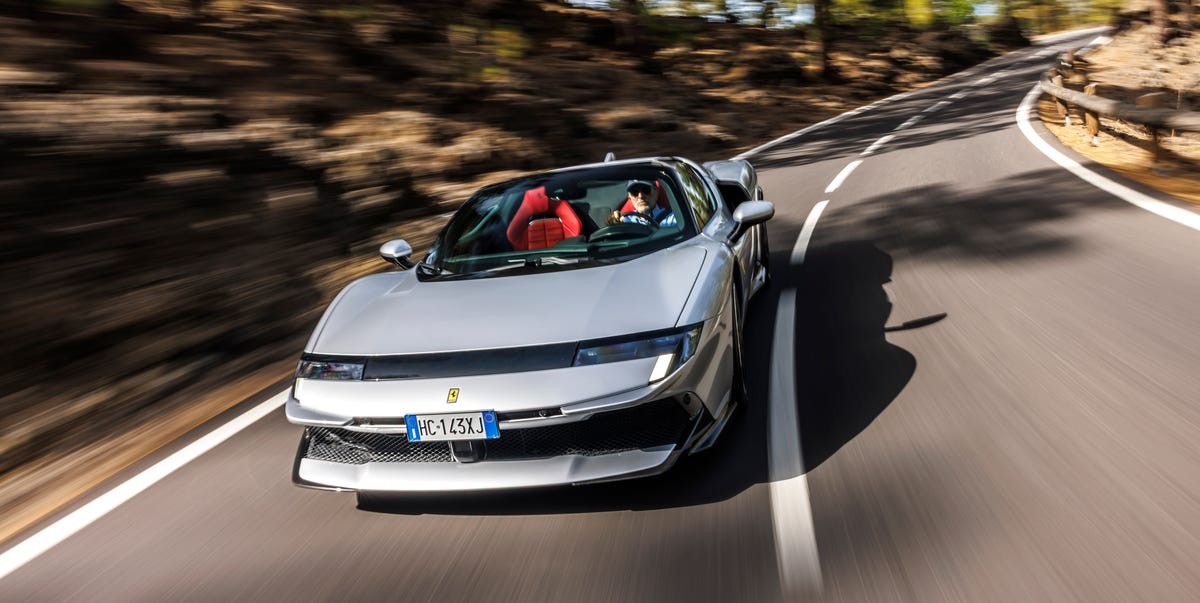
During our drive in Tenerife, it felt invisible. Not intrusive. Just correct. The steering feedback is decent. Not heavy, but clear.
The eight-speed dual-clutch shifts perfectly. Hard snaps in sport mode. Buttery smooth at traffic-light creeps. You can drive this car to the office without shaking your teeth loose. If you want.
Engine Note: A Metallic Scream
Ferrari wanted a better sound. They got it.
At idle? Subdued. Rev it past 7,500 rpm? Metallic rasp. Aggressive. Emotional. One of the better sounds from the Maranello factory recently.
Styling Is Subjective (But This Is Aggressive)
Here is where I get picky. I don’t love the face.
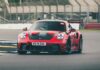
The profile looks like a serpent ready to eat a goat. Jutting bumpers. A splitter that wants to bite. Side scoops? They are busy. Less integrated than the previous mid-engine cars.
But function dictates form. That weird nose cools the brakes. The rear quarter view is cleaner. Maybe the best angle.
The cabin? Tight. The battery is mounted vertically between the seats and the engine. It eats space.
I’m nearly six feet tall. I leaned back, hit the rear wall. I wasn’t fully reclined. Dave VanderWerp is 6-foot-5. He said he fit fine. Until the helmet went on. Then he didn’t.
Measure twice. Cut once. Especially if you are buying a 60,00-dollar toy.
Complex Controls: A Wheel of Doom
There is no center screen. Only a 6-inch cluster. Everything is there. Menus dive deep.
The steering wheel looks like a control tower. Buttons, toggles, knobs. It approaches F1 complexity. Is that sporty? Yes. Is it overwhelming while pushing 1,000 hp through your wrists? Absolutely.
You get five minutes of training at press events. I wish we had an hour. Navigating menus at 0 mph is fun. Navigating them while accelerating? Stressful.
Is the Ferrari 84 Testarossa Worth the Money?
It costs $0,00 before options. More likely 70 or $0 when the sticker drops.
Some buyers will never drive these cars. They will store them in climate-controlled vaults. Wait for appreciation. Sell at auction.
Ferrari knows who the customers are. They vet them. A company can be picky about who earns its money.
But the goal of the Testarossa? To be faster, better, sharper. Not just faster. Sharper.
Does it succeed? The numbers say yes. The tech says yes. My tired hands agree.
I just hope the lucky owners drive these things. On roads where the asphalt is warm.