Art Deco didn’t just paint walls. It shaped steel. Between the two world wars, this design movement consumed nearly every creative outlet. From the soaring verticality of the Chrysler Building to the geometric patterns in advertising, it fused extravagance with a stark, functional simplicity.
The automotive industry caught the fever.
In the 1930s, Europe’s ultra-luxury marques didn’t just build cars. They built rolling sculptures. The Great Depression crushed the middle class, but the elite remained untouched. They demanded machines that screamed wealth. These buyers wanted opulence. They wanted machines that reflected the era’s defiant spirit.
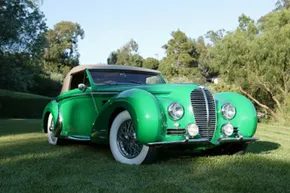
Companies like Delahaye, Delage, Talbot-Lago, Voisin, and Bugatti existed to serve this niche. They crafted mechanical marvels. The average person could only stare from the sidewalk. But the steel chassis were only half the story. Coachbuilders like Chapron, Figoni et Falaschi, Gangloff, and Vanvooren draped those frames in breathtaking bodies. Their work remains inspiring today.
The aesthetic was distinct. Swooping fenders. Long, protruding hoods. Streamlined shapes that cut through the wind. These weren’t just vehicles. They were bold statements. High style. The trend eventually trickled down. Affordable American models like the Chrysler Airflow adopted these cues, proving the style had mass appeal.
We are going back. To a time when outrageous cars ruled the streets. We’ll dissect the movement. We’ll track the influence on automotive design. And we’ll find where these eye-catching relics rest today.
What is art deco?
To understand why these cars look the way they do, you have to look at the root. Art Deco emerged after World War I. It was a reaction against the ornate, flowing curves of Art Nouveau. Instead, it embraced geometry. It loved symmetry. It drew inspiration from modernity: machine parts, skyscrapers, and speed.
The style was defined by bold colors and high-quality materials. Brass. Chrome. Lacquer. Expensive woods. It was about showing off. Not just through cost, but through craftsmanship. When applied to automobiles, this translated into aggressive lines and a sense of motion, even when the car was stopped.
This design language extended beyond the chassis. It dictated the interior too. Leather. Velvet. Polished metal. Every surface was treated as a canvas. The result was a vehicle that felt less like a tool and more like a piece of high art. For the wealthy buyer of the 1930s, this was non-negotiable.

From Parisian Salons to Detroit Showrooms
Art Deco wasn’t just a trend. It was a total aesthetic overhaul. It swept through every visual medium. Paintings. Architecture. Even toasters. The style dominated the period between the two world wars. And it hung around for a few years after that.
The movement started in Paris. It grew out of Art Nouveau. That previous style was obsessed with organic chaos. Flowers. Vines. Wild curves. It was decorative to the point of exhaustion.
Art Deco slapped that excess down. It demanded geometry. Clean lines. Sharp angles. The colors were bright. The forms were streamlined. It looked expensive. It was expensive. This was luxury goods for a world recovering from the austerity of World War I. It matched the excess of the Roaring Twenties perfectly.
You saw it everywhere. The Empire State Building. Radio City Music Hall. The Chrysler Building. All in New York City. Los Angeles and Miami were covered in it too. It was the visual language of Old Hollywood.
Furniture followed suit. High-end pieces used rare woods. Polished metals. Expensive leather. The shapes were rounded but simple. Modern. Functional.
The style faded in the 1940s. War brought a different kind of austerity. But the influence remained. Revivals happened. The aesthetic still captivates today.
But how did this graphic, geometric luxury translate to steel and chrome on the highway? That is where things get interesting.
Defining Art Deco Cars
What exactly makes a car Art Deco?
It wasn’t just about slapping a sunburst pattern on the door. It was about the silhouette. The proportions. The philosophy of the machine.
Early 20th-century cars were basically horse carriages with engines. Boxy. Vertical. Ornate grilles that looked like jewelry boxes.
Art Deco cars changed that. They adopted the principles of streamlining. This wasn’t just aerodynamics. It was visual speed. Even when sitting still, these cars looked like they were moving forward.
Key elements of Art Deco car design include:
- Geometric Grilles: Vertical slats. Hexagonal patterns. Sunburst motifs. These replaced the chaotic floral designs of the past.
- Chromed Accents: Heavy use of chrome plating. Not just for shine. But for geometric definition. Brightwork traced the body lines.
- Fender Integration: Fenders became sculptural. They flowed into the body. They weren’t just bolt-on mudguards. They were part of the car’s bone structure.
- V-Shape Profiles: The “Vee” front end became iconic. Hood edges swept down. Fenders flared out. It created a sense of aggressive forward motion.
- Sunburst Details: A direct nod to ancient cultures. Wheels. Grilles. Dashboard instruments. All featured radiating lines.
These cars were luxury items. They were status symbols. The interwar period saw an explosion of urban growth. People wanted machines that reflected their new, modern lives.
Art Deco cars bridged the gap. They were mechanical. But they were also art objects. They reflected the optimism of the 1920s. The hope of the 1930s.
The decline of the style coincided with the end of the
Streamlined Steel and Chrome Luxury
The 1920s and 30s didn’t just give us flappers and jazz. They gave us Art Deco. It was a style that screamed simplicity wrapped in grandeur. Cars followed suit. They weren’t just tools for getting from point A to B. They were sexy. Exciting.
If you look at a car from this era, you know it immediately. Two-door coupes. Roadsters. Long hoods that stretched out like a predator. Small, rounded trunks that barely seemed to exist. The fenders were long and swooping, hugging the wheels. Headlights were round. Chrome was everywhere.
But the real secret sauce was streamlining. These cars looked fast even when parked. Smooth curves. Sleek lines. It was motion frozen in steel.
The Coachbuilder Era
How did they make them? Coachbuilding.
Big companies like Bugatti would build the naked chassis and engine. The foundation. Then, a different company would step in. They designed the body. They stitched the interior. You told them exactly what you wanted. They built it for you.
This created some of the most beautiful cars ever made. Mostly from France. The home of the movement. These weren’t just cars. They were land-going yachts for the ultra-rich.
Take the Hispano-Suiza J12 Cabriolet. It sat on a massive 9.0-liter 12-cylinder engine. Aircraft-based. You don’t need to tell a gearhead how loud that thing was.
Then there was the Delahaye 165 convertible. Also a V-12. Power wasn’t optional. It was mandatory.
And the Delage D8-120 Cabriolet. This thing cost $200,000 in the 1930s. Think about that. An average American home cost about $3,800. You could buy a house and still have change left over. Or you could buy a Delage and pray you didn’t break down on the way to the chateau.
Democratizing the Dream
Did everyone get to own an Art Deco car? No. Not at first.
But the style bled down. It started appearing on cheaper cars. The Chrysler Airflow was the prime example. It had that flowing shape. Rounded fenders. A curved “waterfall” grille. It was designed with Art Deco principles in mind.
Did it sell? Not really. Average buyers found it too exotic. Too ostentatious. It was ahead of its time. Or maybe just too weird for the Depression era.
Today, the Airflow is considered a design classic. A masterpiece that failed in the showroom but succeeded in history.
Where Are They Now?
You can still see them. In museums. In private collections. In places where money talks louder than noise.
Many of these classics survived. Not all. Some rusted. Some crashed. Some were scrapped for parts. But the ones that remain are treasures.
They sit in climate-controlled garages. Under bright lights. People walk past them and stare. They wonder how anyone drove them. How anyone could afford them.
The question isn’t really where they are. It’s why we still care. Why we look at a
The Vanishing Act of Art Deco Automotive Design
The glittering excess of the 1920s and 1930s eventually gave way to something far more restrained. Art Deco cars didn’t stick around. As the decades rolled on, the aesthetic shifted from gregarious glamour to conservative, utilitarian lines. The style just didn’t hold.
Survival was the real hurdle. Many manufacturers simply didn’t make it past World War II. Those that did produced cars in such limited numbers that finding one today is like finding a needle in a haystack. Bugattis and Delahayes are the prime examples—built for the ultra-wealthy, not for mass production.
High Stakes at the Auction Block
When a genuine piece of this era surfaces, the premiums are astronomical. Buyers aren’t just buying metal; they’re buying history in pristine condition. Confirmation is everything. Fake or poorly restored examples fetch scraps. Authentic, museum-grade survivors command fortunes.
Take the 1937 Bugatti 57SC. In 2008, it hammered down for nearly $8 million. That number still feels insane. It highlights how scarce these machines have become. Once ubiquitous symbols of luxury, they are now extinct relics.
Museums and Private Collections
Most of the surviving Art Deco cars never see a public road again. They live in climate-controlled museums. The Mullin Automotive Museum in Oxnard, California, is the premier destination for this specific niche. Its mission is singular: celebrate French cars from the 1930s.
Peter Mullin, a Los Angeles businessman, assembled this collection. It includes vehicles once owned by Otis Chandler, the former publisher of the Los Angeles Times and a noted auto enthusiast. The lineup reads like a who’s who of pre-war European engineering:
- A 1934 Voisin C27 Grand Sport Cabriolet that previously belonged to the Shah of Persia.
- A restored 1938 Delahaye 165 convertible.
- A burgundy 1938 Talbot-Lago T150C SS Speciale Teardrop Coupe that turns heads even today.
Modern Echoes and Lost Opulence
Does Art Deco survive in modern automotive design? In a way. Look at the Bugatti Veyron. Its curves echo the aerodynamic teardrop shapes of the 1930s. But here’s the catch: those shapes aren’t just for style. They are functional necessities. The Veyron needs that specific airflow to hit 200 miles per hour (321.9 kilometers per hour). Form follows function, not just fashion.
Then there are the throwbacks. The Chrysler PT Cruiser borrowed heavily from the past. Its rounded fenders and upright grille harken back to the Art Deco years. But let’s be real—it’s not nearly as extravagant as a Panhard or a Delahaye. It’s a homage. A cheap one, really.
The era of unbridled opulence is gone. The factories that churned out those one-off masterpieces closed their doors long ago. We can look at the Mullin’s collection and dream, but the era itself? It left us decades ago.