


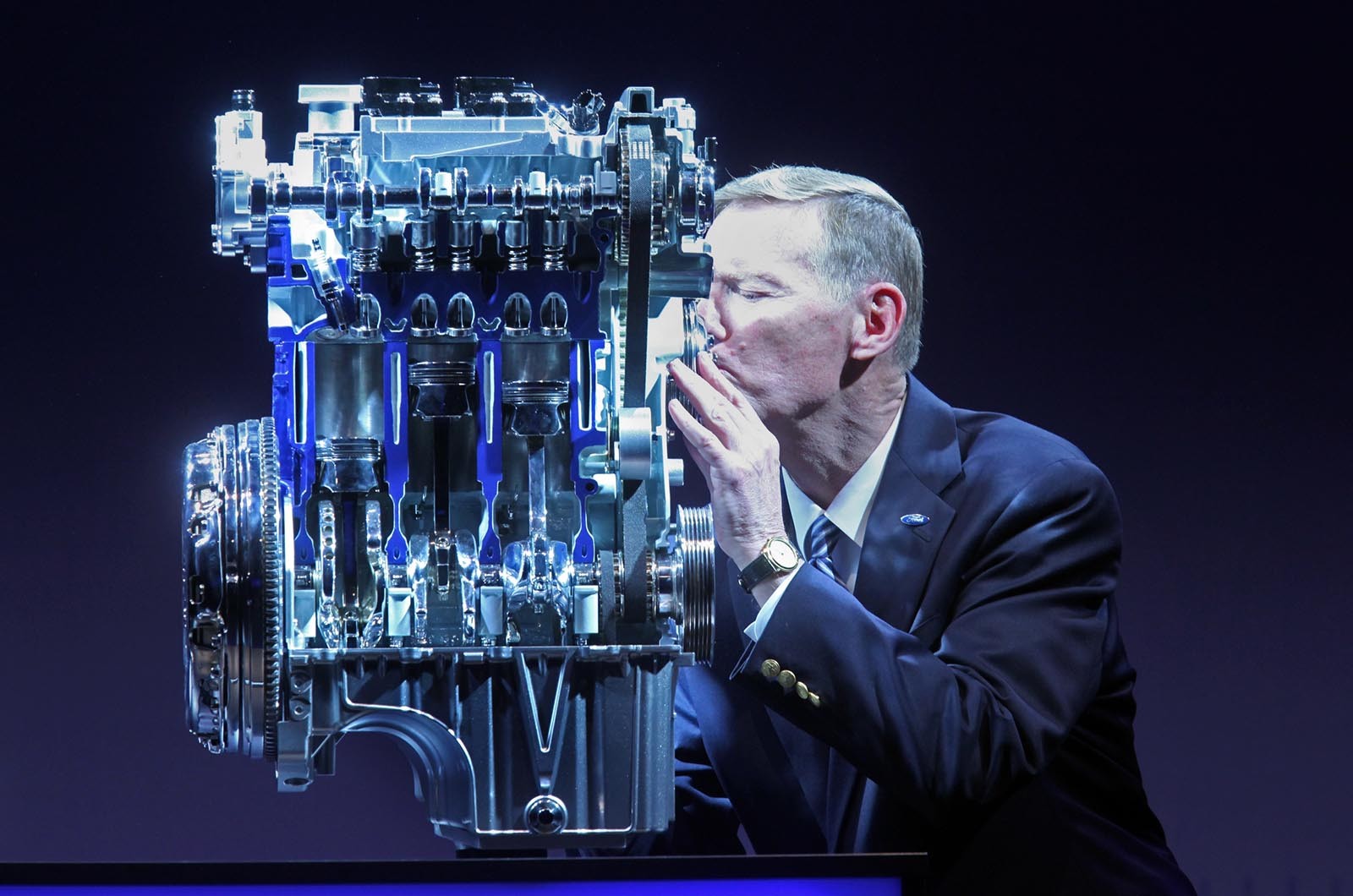
Start your engines.
Back in 2021, Autocar curated a list of 50 road-worthy powerplants. It included the Ford small-block V8 and Porsche’s air-cooled flat-six among other icons. The list felt arbitrary. We could have doubled the count. There was simply too much good machinery to ignore.
So here is a different approach. This is not about our favorites. It is about the actual winners of the annual International Engine of the Year awards. Specifically, the best of the past twenty years, as judged by the industry’s toughest critics.
Let’s look at the list.
Toyota 1.0-litre Mighty Atom
The Toyota 998cc unit, known as the “Mighty Atom,” didn’t just win the inaugural award. It dominated the ‘Sub 1.0-litre category too. Produced in 1999, the 67bhp Yaris motor was an anomaly. It offered 50mpg. It performed like a displacement class higher. One judge called it incredibly efficient despite that raw power. A 1.3-litre variant followed in October that same year. It was small. It was everywhere.
Honda 1.0-litre Ima
Then came 2000. Honda’s Insight 1.0-litre hybrid (IMA) beat out Ferrari’s 5.5-litreV12. It also outscored Alfa Romeo’s 2.5L V6, BMW’s 3.0L straight-six, and even a 4.0L V8 diesel.
Steve Cropley, one of the judges, called it an elegant solution ordinary people could actually afford. The 995cc three-cycler was light on fuel. On a light foot, it hit 100mpg.
“An elegant solution that ordinary people can afford.”
BMW 3.2-litre Straight-Six
Japan held a stranglehold on the top prize until 2001. Germany broke it.
BMW’s 3.2-litre inline-six took the crown. It was at home in the E46M3. The engine spun to 7900rpm for 343bhp. It spun up to 4900rpm for 296lb·ft of torque. Top speed was governed to 155mph, naturally. We described the sound as a grunty idle rumble turning into a serrated wail at redline. Quad exhausts helped the theatrics.
BMW 4.4-litreV8
BMW took the prize again in 2002. The N62 4.4-literV8 was an aluminum, naturally aspirated, 90-degree block. It featured Valvetronic variable valve lift. It was everywhere in BMW’s lineup.
The 745i. The X5 4.4iSport. The 545i. The 645Ci. Andrew Frankel called the X5 application’s performance “compelling.” It sounds boring on paper. It was not in practice. The N62 eventually grew to 4.8 liters. It powered Wiesmann GTs and Morgan Aero 8s.
Mazda 1.3-litreRenesis
The Mazda RX-8’s Renesis rotary engine was a gamble. High risk. High reward.
Our used car guide warned of maintenance costs. You would bleed oil if you looked at it wrong. Fuel economy was impressive until it wasn’t. But the judges in 2003 didn’t care about your wallet. They praised the sheer bravery of making the Wankel engine work. It was smooth. Strong. Clean. Compact.
“Sheer bravery in pursuing the Wankel format…”
Toyota 1.5-litre
The 2004 winner continued Toyota’s dominance.


