


AI is reshaping how cars are built, driven, and sold. It’s loud. It’s everywhere. Ford knows this better than most. So, on National AI Day, instead of rolling out new driver-assist software or hyping some clunky voice assistant, the brand did something unexpected. They looked back.
Ford used modern AI video tools to resurrect a ghost from the past: the 1964 Ford Aurora. This isn’t just nostalgia marketing. It’s a stark reminder that the company already knew exactly where automotive technology was headed decades ago.
The Aurora Was a Time Machine
The Aurora debuted at the New York World’s Fair in 1964. It was one of Ford’s “X-Cars”—concept vehicles designed solely to test wild ideas about style, tech, and aerodynamics. No one expected to buy one. The plan was simple: show it off, get people talking, then lock it away in a museum.
That wasn’t going to happen now. Ford created a period-accurate promotional film for the Aurora. They used archival photos, original design sketches, and press materials as training data for AI generation. The result looks like a spot from 1964 that never aired. The pacing is vintage. The slang is era-appropriate.
But the car itself? It feels uncomfortably current.
Take a closer look at the features Ford dreamed up in the mid-60s. Most of them exist in vehicles you can drive today. The gap between concept and production in 1964 was vast. With the Aurora, Ford closed that gap by accident—or perhaps by sheer intuition.
Navigation Before GPS Was a Dream
How did drivers find their way before Google Maps? The Aurora didn’t rely on intuition alone. Ford equipped the concept with a rudimentary navigation system long before the term “GPS” entered the lexicon.
Think about that. We are barely getting comfortable with heads-up displays in mainstream cars, yet this 60-year-old prototype already had a solution.
The Aurora also featured a glass roof. But not just any glass. This one switched from transparent to opaque with the press of a button. In 1964, that sounded like science fiction. Today, it’s called electrochromic glass. Cadillac uses it in the Celestiq. Other luxury brands offer variants across their lineups. Ford nailed the feature before they even had the battery tech to make it efficient.
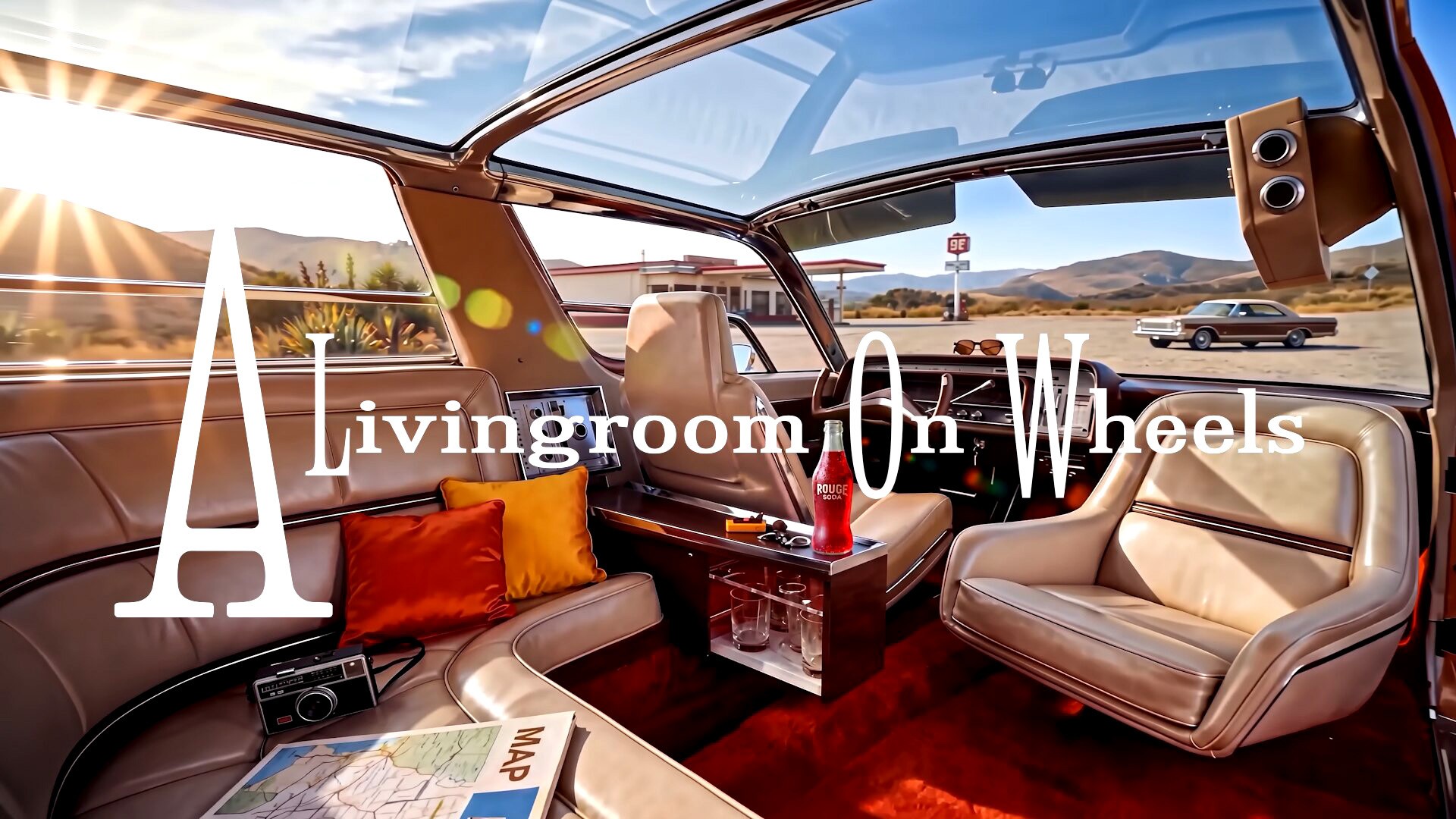
A Living Room on Wheels
Step inside, and the Aurora stops feeling like a station wagon. It feels like a lounge.
Ford envisioned a cabin with multiple climate-control zones. There was refrigerated storage for beverages. Rear-seat entertainment screens. Lounge-style seating that invited relaxation rather than just riding.
Does any modern SUV feel different? Try opening your average mid-size crossover today. You get the same vibe. Better tech, sure. More legroom maybe. But the fundamental philosophy remains the same: the car as a third living space.
The Aurora achieved this because it was massive.
We’re talking serious footprint. The concept stretched 227 inches long. The wheelbase? 131 inches. That’s bigger than today’s largest Ford SUV. The Ford Expedition MAX measures 221.7 inches with a 131.5-inch wheelbase. The Aurora was longer, wider in presence, and clearly designed with space as its primary currency.
Steering Yokes Before Tesla
Here is where it gets ironic.
The Aurora featured a steering yoke instead of a traditional round wheel. Ford highlighted that it offered a simple half-turn lock-to lock. It was practical. Minimalist.
Tesla later popularized this exact mechanism in the Cybertruck. Same half-turn logic. Same yoke shape. Ford documented it in 1964 and moved on. Tesla revived it sixty years later.
Was Ford copying themselves from the future? Or did they simply recognize that the wheel was no longer the only answer?
Predictions That Never Made It
Not every idea from the Aurora survived the trip to 1965, let alone the 2020s.
Ford imagined a dedicated children’s playroom. This space was separated from the rest of the cabin by power-operated glass partitions. It had its own radio. Its own climate control. Parents could lock the kids away while maintaining sightlines.
It also featured rotating seats and glowing electroluminescent body trim.
Did those make it? No. The playroom concept is still largely confined to high-end luxury minivans or aftermarket modifications. The glowing trim faded as LEDs became the standard. But the core idea—that interior spaces should be customizable zones—is now the industry norm.
Why Concepts Matter Now
Concept cars are often dismissed as fantasy. They are rarely ready for mass production. Too expensive. Too weird. Too radical.
But the Aurora proves they serve a different purpose. They aren’t forecasts. They’re experiments.
Ford’s engineers were decades ahead of their time with this project. They identified trends—navigation, electrochromic glass, yoke steering, modular interiors—without the infrastructure to build them.
Today, AI accelerates that process. We can simulate designs faster. We can generate visuals instantly. But the fundamental human desire hasn’t changed. We want cars that are smarter, quieter, and more spacious than the roads allow.
The 1964 Aurora wanted those things too. It just didn’t have the code to write them into reality. Now, thanks to a mix of archival footage and generative AI, we can finally see what Ford was thinking all along.
It’s scary how right they were.
And honestly? It makes you wonder what concepts from this year will look like in another sixty years. We might be the weird ones.


