


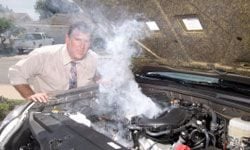
Stuck in gridlock with the A/C wheezing is bad. But the real danger is what’s happening under the hood. Heat is the enemy. It eats engines. If your temperature gauge climbs too high, you’re gambling with a total loss.
Your cooling system is your only defense. Neglect it, and you’re asking for a cracked block or a blown head gasket. But you don’t need a mechanic’s degree to prevent a meltdown. Just know what to look for.
Identify Models Prone to Overheating
Some trucks just cook themselves. It’s not magic. It’s engineering. A truck isn’t a car with bigger parts. It’s a different beast with different thermal limits. Big engines generate massive heat. If yours is neglected, it fails faster.
Don’t assume size equals durability. A massive V8 isn’t inherently tougher than a four-cylinder if the cooling system is undersized. Some manufacturers prioritized torque over thermal management. Result? Your truck boils over in traffic.
Check for known flaws. Did your model get recalls for bad head gaskets? Weak water pumps? Call the dealer. Ask about service bulletins. If there’s a fix, take it in. Don’t wait for the steam to hit the windshield.
If there’s no recall, you’re on your own. You still have to drive it. The next steps are about damage control. You’re managing a fragile equilibrium.
Watch Your Temperature Gauge
Your eyes are the best sensor. Most gauges are lazy. They sit in the normal zone for ninety percent of driving. Then they spike. Fast.
Don’t wait for the warning light. That’s too late. Watch the needle. If it creeps into the red, even slightly, pull over. Now.
Most trucks have a normal operating range between 190 and 220 degrees Fahrenheit. Once you hit 230, you’re in danger. At 240, you’re risking permanent damage. The metal expands. Seals fail. Coolant boils off. It’s a cascade.
Keep an eye on it. Especially in summer. Especially when towing. The gauge doesn’t lie.
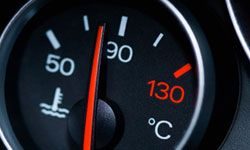

Most drivers treat the dashboard like a sports car display, obsessed with the fuel gauge and speedometer. Maybe they glance at the tach. But the engine temperature gauge? That’s the one people ignore until steam is pouring out of the hood. It’s elementary advice, sure, but it’s also the first line of defense. Your instrument cluster holds more data than you think. Alongside the temperature readout, you might find oil pressure, battery charge, or even boost and vacuum gauges if you’re running a turbo setup.
Find that temperature needle first. Get a feel for what “normal” looks like. Drive it a few times. Let the engine warm up. Watch where the needle settles. In a healthy cooling system, that reading stays stable. It hovers in a specific range. If it starts creeping upward, don’t shrug it off.
Ignoring a rising temperature gauge doesn’t make the problem disappear.
A rapid spike is a warning shot. Diagnose it now. Fix it now. The alternative is catastrophic engine failure. And let’s be clear: rebuilding an engine or dropping in a replacement isn’t cheap. It’s expensive. Glancing at that gauge could save you thousands.
But what if the gauge doesn’t have time to warn you? What if the leak is slow? That brings us to the next critical check.
How to Identify Coolant Leaks by Color and Location
An obvious sign of trouble is a puddle under your parked truck. But not all fluids look the same. How do you tell coolant from transmission fluid or brake fluid?
Color is your best friend here. In the past, it was simple. Green. Bright, sticky-sweet smelling green. Today, manufacturers use a spectrum. You might see red, orange, pink, or yellow. Different brands have different chemical standards. The specific hue doesn’t matter as much as the fact that you have a leak.
Your truck’s sealing systems—cooling, engine, transmission, brakes, transfer case—are closed loops. Fluids are meant to stay inside until a mechanic drains them for service. If you see a puddle, the seal is broken. Coolant is escaping. Low coolant leads to overheating. Overheating leads to warping, blowing gaskets, and cracked blocks. Fix the leak immediately. The repair bill for a blown head gasket is significantly higher than the cost of patching a hose or replacing a clamp.
Detecting Small Leaks That Don’t Puddle on the Ground
Kneeling down to identify a puddle is the bare minimum. It’s a good start, but it’s not enough. Not every leak makes a splash. Some are slow. Some evaporate before they hit the asphalt.
Check the coolant reservoir. If you pop the hood and the level is below the MIN line, something is wrong. Yes, a tiny bit of fluid boils off over time. That’s normal. But a significant drop? That’s a leak.
Don’t ignore it just because the ground is dry. When you’re under the hood, do a quick visual sweep. Look at the hoses. Look at the lines. Check for cracks, abrasions, or swelling. Ensure the clamps are tight. If a hose is dry and cracked, replace it. This is routine maintenance that you’re already halfway doing.
Refill the coolant to the correct level. Then check it again. And again. If the level drops, you have a breach. Even a small leak can raise operating temperatures over time. High temps damage engines. They don’t need to be catastrophic to be costly.
Why You Should Stop Blaming Your Hose
It’s time to stop getting hosed. Literally.
The term “getting hosed” usually implies being taken advantage of, but in the context of your cooling system, it’s a literal threat. Hoses are the arteries of your truck’s thermal management. They carry coolant under pressure. They flex with the engine’s movement. They endure heat cycles.
Rubber degrades. UV light eats it. Heat hardens it. A hose that looks fine on the surface might be crumbling internally. Or the clamps holding it might be loose. When a hose fails, coolant sprays. It doesn’t drip. It doesn’t pool. It sprays. And it does it fast.
You don’t need to be a mechanic to see the signs. Bulging. Soft spots. White crusty residue around the connections (that’s dried coolant). If a hose feels spongy when you squeeze it, it’s done. Replace it. Don’t wait for it to burst.
And while you’re up there, check the radiator cap. That’s a pressure valve. If it fails, the system can’t maintain the necessary pressure to raise the boiling point of the coolant. The coolant boils at a lower temperature. The engine overheats. Simple physics.
The cooling system is a balance. Pressure, flow, temperature. Ignore any part of it, and the whole thing fails. You’ve already saved money by checking the gauge. You’ve saved more by spotting the leak. Now, keep the hoses tight. Keep the levels full. And keep driving.
The road is long. Your engine doesn’t have to be.
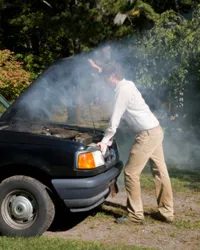

The Hidden Heat of Worn Belts
It’s routine maintenance. That’s what they call it. But checking hoses and belts gets skipped more often than oil changes, despite being brutally simple. It’s another engine-overheating culprit that doesn’t care if you’re driving a sedan or a heavy-duty hauler. Just because a truck is bigger, stronger, or marketed as “manlier” doesn’t mean its internal parts are invincible.
The components are still rubber.
They crack. They fray. They leak. They rot. Sure, the rubber parts on a truck are scaled up for a larger engine block, but the chemistry remains the same. When you pop the hood, don’t just look for puddles. Look at the edges of the belts.
Check for fraying. Check the tension.
If a belt is loose, the alternator has to work overtime. It spins faster, struggling to transfer power to the rest of the accessories. That wasted effort creates friction. Friction creates heat.
That heat sits in the engine bay. It raises the ambient temperature of the entire compartment. The engine gets hotter. The belt keeps slipping. The heat keeps building. It’s a feedback loop. Then, suddenly, the gauge spikes. The engine overheats.
Pressure builds in the cooling system as a result. That pressure pushes against the hoses, which are already old and tired. It’s a domino effect. Letting the alternator run inefficiently wears out other components too. You end up with a cascade of failures that could have been caught with a simple visual inspection.
If your engine temperature gauge is rising rapidly but there are no obvious leaks, check the belt tension.
If the AC is blowing warm air and the temp gauge is climbing, don’t ignore it. Let the truck cool down first. Obviously. Do not stick your hands into a scalding engine bay. But if you’re towing a load and the needle is in the red, a twenty-five-dollar belt might be the difference between getting home and being towed to a shop that charges hourly.
Optimizing the Coolant-to-Water Ratio for Engine Protection
Your cooling system isn’t a pure chemistry experiment, but it relies on one. It doesn’t run on straight coolant. It doesn’t run on straight water. It needs a mixture. Skew the ratio, and you risk serious engine damage.
The balance between boiling over and freezing solid hinges entirely on that specific mix.
Take a 60% water / 40% coolant blend. This gives you boil-over protection up to 259°F (126°C) and freeze protection down to -10°F (-23°C). Change that to 70% coolant and 30% water, and the numbers shift. You get boil-over protection up to 270°F (132°C), but your freeze protection plummets to -62°F (-52°C).
Most drivers should aim for a 50/50 mix. It’s the standard for most driving conditions. It offers a balanced defense against both extremes. But don’t guess. Check your owner’s manual. The manufacturer knows what the specific engine block needs.
Why Overloading Your Truck Destroys Cooling Systems
You might think adding weight only affects your fuel economy and suspension. It doesn’t. Overloading your truck puts immense stress on the drivetrain and the cooling system simultaneously. When you overload your truck, the engine works harder to move the mass. More work equals more heat.
If the cooling system isn’t equipped to handle that thermal load, you’re looking at a quick trip to the roadside.

It feels like a basic rule, right? Don’t overload the vehicle. Yet, walk into any big-box hardware store and watch the parking lot. People are stacking lumber in the beds of half-ton pickups like they’re trying to break physics. Or maybe they’re dumping five yards of topsoil into a bed that isn’t rated for it. The rear bumper is practically kissing the asphalt.
This isn’t just a safety hazard or a ticket waiting to happen. It’s a recipe for engine overheating due to overloading.
When you exceed your truck’s payload capacity, the powertrain doesn’t just struggle. It works significantly harder. The engine has to generate enough torque to get that extra mass rolling, and then enough power to keep it moving against inertia and friction. That extra work translates directly into heat. If your cooling system is standard and unmodified, it simply can’t dissipate that thermal load fast enough. The result? Severe internal damage.
So, how do you avoid this? Stop guessing. Look at the numbers. Every manufacturer provides specific weight limits for your exact vehicle. These figures aren’t suggestions; they’re engineering boundaries. You’ll find them in the owner’s manual, but the quickest way to check is the door jamb sticker. It lists the gross vehicle weight rating (GVWR) and the payload capacity. If your cargo plus the truck’s own weight exceeds that number, you are cooking your engine.
Towing Limits Are Not Suggestions
Most people buy a truck for utility. They need to move stuff. That’s fine. But there’s a massive misconception about towing that leads to catastrophic thermal failure.
Just because your truck has a factory tow package doesn’t mean you can tow up to that limit and still carry a full payload. This is where people get clever. They load a trailer to the maximum tow capacity, feel proud of their efficiency, and then stuff the truck bed and cab with additional gear.
Here is the hard truth: Towing capacity does not increase your total weight burden.
Your truck has a single, finite limit for how much weight it can safely handle. That limit applies to the sum of the trailer tongue weight, the trailer itself, plus everything in the bed and cab. When you ignore the total load, the engine fights against a resistance it wasn’t designed to overcome at that specific mass.
“You can’t load up a trailer to the tow limit… and then totally disregard the weight of a bunch more stuff that you’ve dumped in the bed.”
This problem is compounded if you have an aftermarket tow kit installed by a third party. The manufacturer didn’t engineer the cooling system or chassis for that specific towing scenario when they published the original specs. If you frequently haul heavy loads with an aftermarket setup, consider upgrading your cooling components. A high-performance radiator, a robust water pump, and reinforced coolant lines can help dissipate the extra heat generated by the strain. But don’t mistake better cooling for an infinite license to overload. You’re still pushing the engine beyond its design parameters.
The Silent Killer: Dragging Brake Calipers
If you’ve ruled out the usual suspects—low coolant, broken fan, clogged radiator—and your temperature gauge is still climbing, look away from the engine bay. Look at the wheels.
It sounds absurd. Brakes and engine cooling are separate systems. They are physically distant. Yet, a stuck brake caliper is one of the most common causes of unexplained overheating.
Brake components are high-pressure, abrasive, and subjected to constant friction. They wear down. They corrode. They get dirty. Eventually, a caliper piston can seize. Or the slide pins can bind. When this happens, the brake pad presses continuously against the rotor. The car is essentially braking itself while you’re trying to drive it.
The engine senses this resistance. It revs higher or shifts gears to maintain speed against the artificial drag. This creates immense friction heat in the powertrain and drastically reduces fuel economy. You might not feel the drag initially. You might not hear a screech. But the temperature gauge will tell you the story.
If you suspect dragging brakes:
* Drive cautiously to a safe location before the engine blows a head gasket.
* Let the brakes cool completely before inspecting them. Hot brake fluid boils; hot rotors warp.
* If you aren’t mechanically inclined, don’t poke around. A seized caliper is a serious safety issue.
Routine Maintenance is Non-Negotiable
The final piece of the puzzle is maintenance. You can’t drive an overheated truck and expect it to survive long-term damage. But more importantly, you can’t prevent overheating if you ignore basic service intervals.
This includes checking your coolant levels regularly. Inspecting hoses for cracks or brittleness. Flushing the radiator according to the manufacturer’s schedule. A clogged radiator or a failing thermostat can cause overheating even if the truck is perfectly loaded and the brakes are free.
The engine is a heat engine. Its job is to burn fuel and manage the waste heat. If you overload it, drag it down with bad brakes, or starve it of proper cooling fluid, you’re asking it to do the impossible. And eventually, it will quit. Check your door jamb sticker. Inspect your wheels. Change your fluids. Keep it simple. Keep it cool.
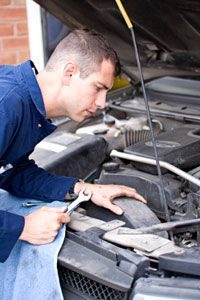

Keeping your truck running cool isn’t just about dumping more coolant into the reservoir. It’s about ensuring the entire system functions without hiccups. You already know that proper maintenance prevents engine heat issues, but which specific components demand your attention?
If you ignore the signs, you’re playing roulette with your tow capacity.
The Usual Suspects
Start with the basics. Watch for sudden spikes in the temperature gauge. That’s your first warning shot. Look for wet spots. Leaks are obvious if you’re standing over the truck, but minor weeps hide in the shadows of the engine bay.
Inspect your coolant hoses. Look for cracks. Bulges are bad too. Check the clamps. They hold the hoses to the radiator and the engine block. If those clamps are loose or corroded, you’re losing pressure. Pressure is what keeps liquid from boiling away.
Look under the hood at the big picture. The belts drive the water pump. If they’re frayed or loose, the pump spins slower. Slower pump means slower cooling. The radiator itself needs to be clean. Debris packs into the fins. Air can’t flow. Heat stays trapped.
Check the cap. It’s not just a lid. It’s a pressure valve. A weak cap drops the boiling point of your coolant. You’ll see steam instead of heat warnings. The overflow tank should have the right mix. Not just water. Ethylene glycol or propylene glycol. Mix it right. The cooling fan matters too. Electric or mechanical, it pulls air through the stack when you’re stopped at a light or crawling up a grade. The thermostat? It opens and closes to regulate flow. If it sticks closed, you blow a head gasket before you even make it out of the driveway.
Why Efficiency Matters
Think about it. Any loss of efficiency stresses the engine. A dirty air filter? The engine works harder to breathe. Poor combustion creates excess heat. Misfires dump raw fuel into the exhaust, heating up the catalytic converter and dumping more heat back into the block.
When your truck loses performance, the engine compensates. It runs hotter. It runs richer. It runs harder. And eventually, it fails.
You don’t want to be standing on the shoulder of I-95 with a trailer full of gear, watching your truck cook itself into oblivion while you wait for a tow truck that’s three hours out. That’s a nightmare scenario. One that’s entirely preventable.
Preventative Steps
- Check hoses weekly. Squeeze them. They should be firm. Not spongy.
- Inspect clamps. Tighten them if needed. Replace rusted ones.
- Flush coolant. Old fluid loses its anti-corrosive properties. Sludge builds up.
- Test the pressure cap. Use a tester. They’re cheap. Your radiator isn’t.
- Monitor the belt. Cracks mean replacement. Slippage means adjustment.
- Verify fan operation. Turn the AC on high. The fan should kick in within seconds.
- Check the thermostat. If the gauge reads high too quickly after startup, it might be stuck.
Small habits compound. You catch a small leak early. You replace a worn belt before it snaps. You keep the radiator fins


