Tesla faced a bizarre hurdle in early 2024. It wasn’t a chip shortage. It wasn’t a supply chain collapse. It was too many cars.
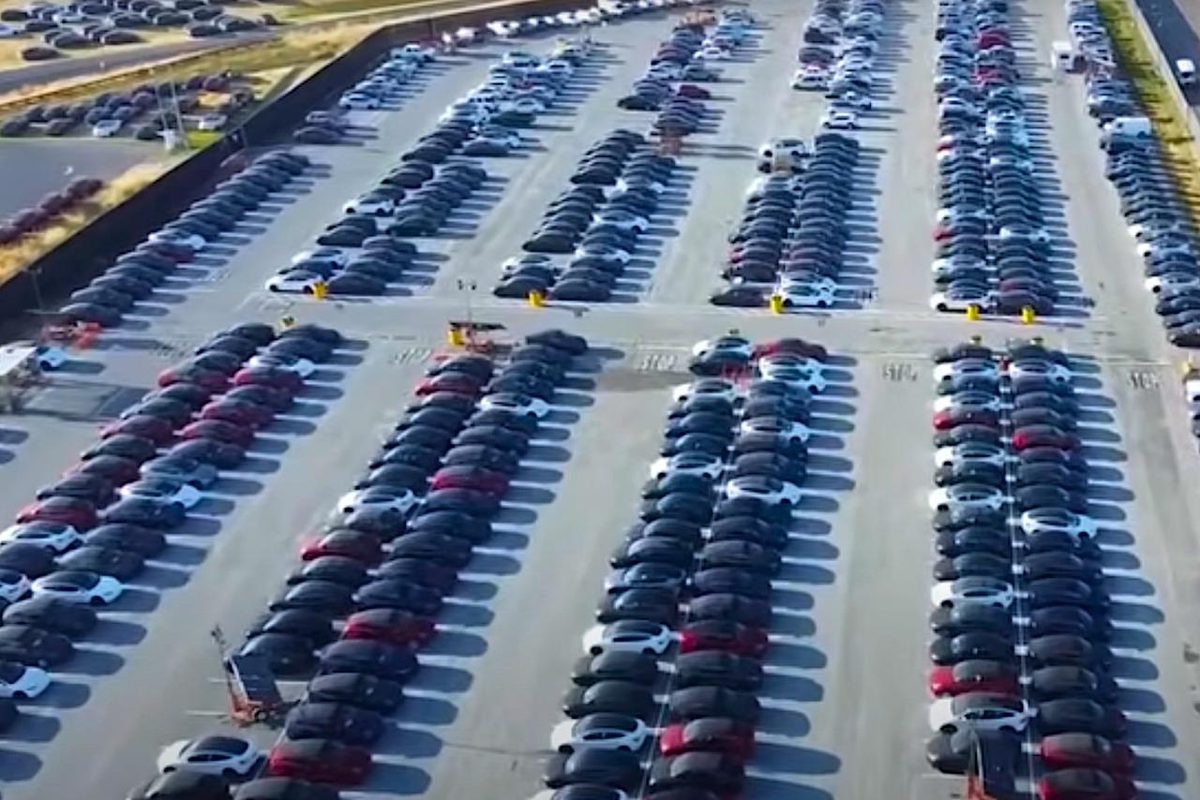
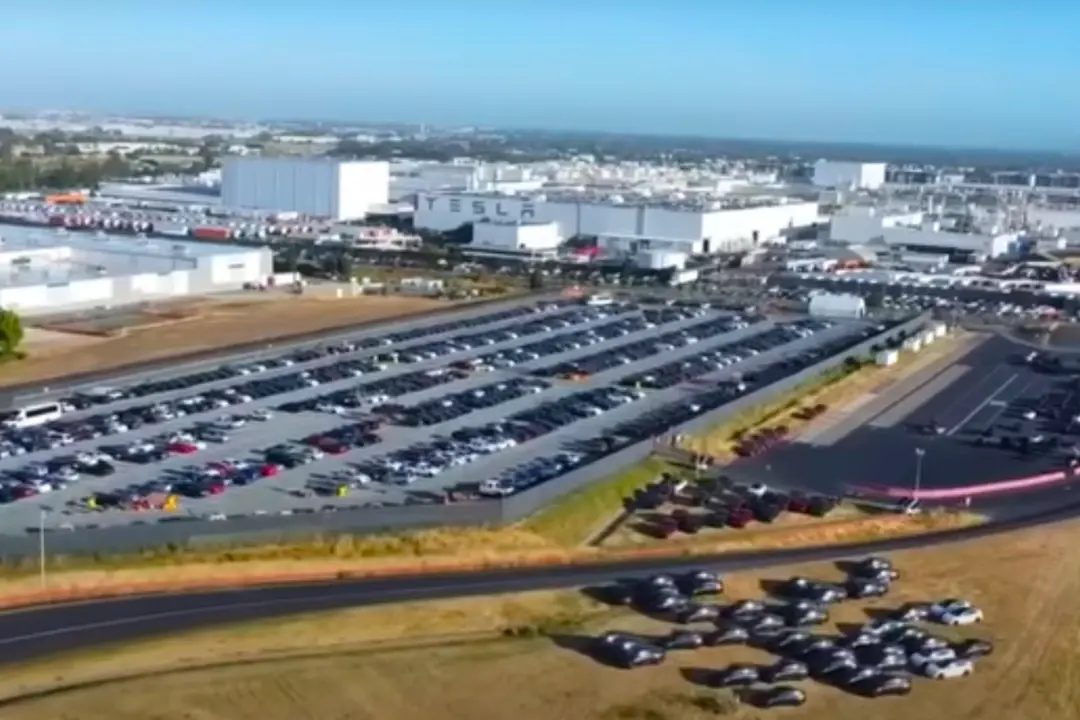
The numbers were staggering. Satellite imagery captured the scale of the issue. Thousands of brand-new Teslas sat idle. They lined parking lots and abandoned industrial sites. The problem was visible from space.
The Austin Overflow
The heart of the matter is the Gigafactory in Austin, Texas. It became the epicenter of this inventory glut. Vehicles piled up beyond capacity. They overflowed from delivery centers to nearby fields.
This wasn’t an isolated incident. The buildup reflects a broader struggle with production pacing versus demand.
Berlin’s Improvised Storage
The issue crossed the Atlantic. In Germany, near Berlin, the situation mirrored Texas. An old airfield in Neuhardenberg served as an impromptu storage site.
By July 2024, German publication Bild estimated around 5,000 vehicles were stored there. The volume was so high that local traffic suffered. Convoys of trucks loaded with Teslas moved constantly.
The sheer volume created a spectacle. Empty zones turned into seas of metal and glass. Media outlets took notice. Industry observers watched closely.
Why It Matters
This visibility into overproduction raises questions. How is inventory managed? What does it signal for the EV market? The images provide a raw look at the challenges facing the manufacturer.
The data points to a mismatch between output and current sales velocity. It highlights the pressures of scaling production rapidly.
Tesla’s EV surplus: Why overproduction happened in 2024
It feels like a glitch in the matrix for a company that once struggled to keep up with demand. Tesla, the poster child for electric vehicle (EV) scarcity, is suddenly drowning in inventory. How did we get here? It isn’t just one thing. It’s a perfect storm of market saturation, economic headwinds, and stubborn production targets.
For years, the EV market grew exponentially. Now? It’s slowing down.
Consumers aren’t buying at the same frenzied pace they were during the pandemic boom. High inflation and general economic uncertainty have made people hit the brakes on big purchases. You’d think Tesla’s aggressive price cuts would solve this. They did… a little. But not enough to move the needle significantly. The demand simply wasn’t there to match the output.
The numbers don’t lie: Q1 2024 production vs sales
Tesla kept the factories running at full tilt. This is where the math gets ugly.
In the first quarter of 2024, Tesla manufactured 433,371 vehicles. They only sold 386,810. That leaves a surplus of nearly 50,000 units sitting on lots, in transit, or floating in space. 🛰️
Why keep producing when sales dip? Because in manufacturing, stopping is expensive. Restarting is harder. But maintaining that high cadence despite clear signs of market cooling is what created this massive pile of unsold cars. It’s a gamble on future demand that didn’t pay off in the short term.
What this means for the auto industry
This isn’t just a Tesla problem. It’s a wake-up call for the entire automotive sector. Even the most innovative companies aren’t immune to market realities. The image of thousands of cars waiting for buyers is a brutal reminder: production must align with actual demand, not just capacity.
For the broader industry, this highlights a harsh truth. Electrification is the future, sure. But it doesn’t guarantee infinite growth. Automakers need to become better at anticipating market fluctuations. You can’t just build it and hope they come. You have to know when to slow down.
The logistical lesson
This surplus, famously visible from space due to ships and lots full of inventory, marks a turning point. It underscores the critical importance of logistics and stock management. These aren’t just backend concerns; they are survival skills in a volatile market.
The industry as a whole is watching. It’s a lesson in humility for the giants. Mass production is powerful, but it’s fragile when demand shifts unpredictably. Tesla’s situation shows that even with a dominant brand, you can’t force the market to buy what you can’t sell.
We’ll see how long this inventory pile lasts. And whether Tesla adjusts its rhythm, or keeps pushing until the wheels fall off. 🚗💨