We’ve all been there. Trying to haul a week’s worth of groceries in one trip. You juggle bags. You drop a carton of milk. You crush an apple. It’s frustrating. Human arms aren’t built for heavy loads. We spill. We strain.
Cars have the same limits.
Slamming too much weight into a vehicle strains the engine. The transmission works harder. Suspension components wear out faster. But the real danger isn’t mechanical failure. It’s safety. An overloaded vehicle is unstable. It’s unpredictable. You risk losing control. You risk hurting yourself and others on the road.
Knowing your vehicle’s payload capacity isn’t just about efficiency. It’s about staying alive.
Payload is the total weight a vehicle can carry. This includes passengers, cargo, fuel, and accessories. It’s not just what you throw in the back seat. People count toward that limit. Your dog counts. The spare tire counts. Everything inside the vehicle adds up.
Figure out how much your tow vehicle or daily driver can handle. Do it before you pack the trunk.
Calculating Payload Capacity
Most drivers guess. They estimate. This is a mistake.
Manufacturers provide exact numbers. You don’t need to be an engineer to understand them. You just need to look at two labels.
The first is the Gross Vehicle Weight Rating (GVWR). This is found on the driver’s side door jamb sticker. It tells you the maximum total weight the vehicle can safely support. This includes the empty car, all passengers, all cargo, and all fluids.
The second is the Curb Weight. This is the weight of the vehicle itself. It includes standard equipment and necessary operating fluids (like oil and coolant). It usually includes a full tank of fuel, though some manufacturers calculate it with half a tank. Check your owner’s manual for specifics.
To find your available payload capacity, use this simple math:
Payload Capacity = GVWR – Curb Weight
This number is your hard limit. Do not exceed it.
If your GVWR is 6,000 pounds and your curb weight is 4,500 pounds, you have 1,500 pounds of payload capacity.
That 1,500 pounds is shared.
Your weight. Your passengers’ weight. The fuel in the tank. The gear in the back.
Many people forget the fuel weight. A full tank of gas can add 150 to 200 pounds. That’s significant. If you’re hauling a heavy kayak, that fuel weight eats into your cargo allowance.
Passengers are variable. An adult male might weigh 200 pounds. A child might weigh 60. A large golden retriever might weigh 75. Add them all up. Then add your cargo. If the sum exceeds your payload capacity, you’re overloading.
Why Payload Matters More Than Tow Rating
Drivers often confuse payload with towing capacity. They’re related but distinct.
Towing capacity is how much weight you can pull behind you. Payload capacity is how much weight you can carry inside or on the vehicle itself.
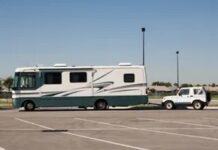
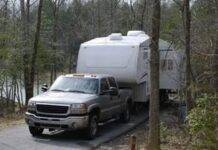
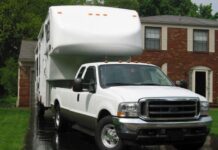
When you tow, the tongue weight of the trailer sits directly on your vehicle’s rear axle. This tongue weight counts toward your payload. A
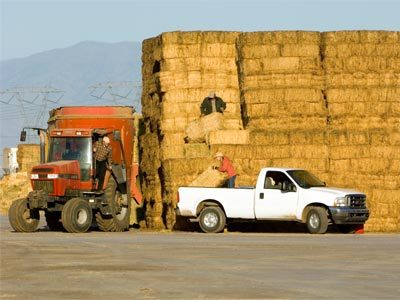
Figure out how much weight your rig can actually haul. The math is brutal in its simplicity. You only need two numbers. Grab your owner’s manual or look at the sticker on the driver’s side door jamb. You are looking for the Gross Vehicle Weight Rating (GVWR). Then you need the curb weight. Subtract one from the other. That’s your payload capacity.
Understanding the Numbers
Most people confuse curb weight with something less significant. It’s not. Curb weight includes everything that keeps the car on the road. Oil. Coolant. A full tank of gas. It’s the weight of the machine standing alone on four tires.
GVWR is the hard limit. The manufacturer drew a line in the sand. Go over that number and you’re playing Russian roulette with your suspension, brakes, and frame. It includes the vehicle. The fluids. Every passenger. Every bag of groceries. Every ton of tools in the bed.
“Payload capacity is just a matter of subtraction.”
If your GVWR is 5,000 pounds and your curb weight is 4,000 pounds, you have 1,000 pounds to play with. That’s it. Once you fill the tank, that number shrinks slightly. Do the math before you load up.
Truck Payload
This is where things get tricky. Trucks are not just bigger cars. They are designed for work. A pickup truck’s payload capacity varies wildly based on the cab size and bed length. A half-ton truck might handle 1,500 pounds. A heavy-duty dually? Maybe 7,000 pounds or more.
The key is the hitch weight. If you’re towing, that’s a separate calculation entirely. But for payload, think about what goes into the cabin and the bed. Passengers count. Cargo counts. A heavy-duty aftermarket bumper counts. Don’t ignore aftermarket additions. They add weight. They eat into your payload.
Check the sticker on the door again. It lists the front and rear axle limits. If you exceed the rear axle limit, your ride height drops. Your handling changes. You might not notice until you’re rounding a curve at highway speeds.
Car vs. SUV vs. Truck
Does the body style matter? Yes. Cars have lower GVWRs. SUVs sit somewhere in the middle. Trucks are built for it. But a loaded SUV can match a light truck’s payload if you don’t have passengers. A loaded car? Not so much.
When you buy a new vehicle, the window sticker has a line for “Max Payload.” Use it. If you’re buying used, dig up the original specs. Don’t guess. Guessing gets you stuck on the side of the highway with a blown leaf spring.
Where to Find the Data
Look for the yellow or white sticker on the B-pillar. It’s right there when you open the driver’s door. It lists:
- Gross Vehicle Weight Rating (GVWR)
- Front Axle Weight Limit
- Rear Axle Weight Limit
- Tire Pressure
- Recommended Occupants and Cargo
Don’t look in the glove box alone. The door jamb is more reliable. Factory manuals can be updated. The sticker on the car is static. It doesn’t change.
Why It Matters
Overloading isn
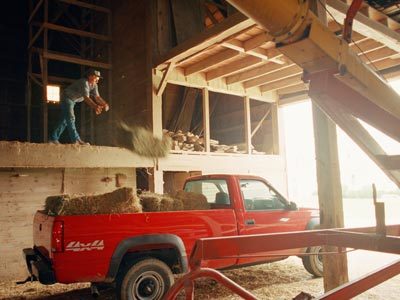
Payload isn’t a one-size-fits-all metric. What you throw into the bed of a pickup truck looks nothing like what you squeeze into a crossover. You wouldn’t haul 12-foot sheets of drywall in a compact wagon. And frankly, you don’t need a Class 8 rig to haul a week’s worth of groceries.
Trucks in the US are sorted by Gross Vehicle Weight Rating (GVWR). The government splits this into eight distinct weight classes. It’s not just about how heavy the truck is. It’s about the limit.
| Weight Class | GVWR |
|---|---|
| Class 1 | 6,000 lbs (2,722 kg) |
| Class 2 | 10,000 lbs (4,536 kg) |
| Class 3 | 14,000 lbs (6,350 kg) |
| Class 4 | 16,000 lbs (7,258 kg) |
| Class 5 | 19,500 lbs (8,845 kg) |
| Class 6 | 26,000 lbs (11,793 kg) |
| Class 7 | 33,000 lbs (14,969 kg) |
| Class 8 | >33,000 lbs |
The Department of Transportation takes this data and groups them into three buckets. Classes one and two are light-duty. Three through five are medium-duty. Six and up? Heavy-duty. Knowing where your rig sits in this hierarchy tells you exactly how much payload you can afford to carry without blowing a gasket or voiding a warranty.
“Knowing where your truck falls within these categories will make it easier for you to determine how much payload you can afford to carry during your trips.”
Car Payload
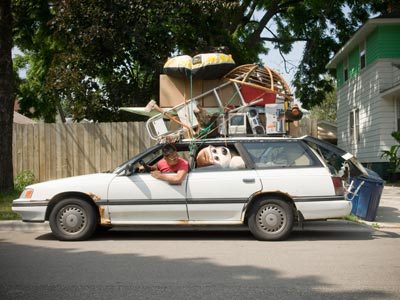
We rarely stress about payload in a sedan. It feels irrelevant. A family loading up for a road trip isn’t calculating the pounds per square inch of the trunk space. They’re checking for sunscreen. Compared to a pickup truck, a passenger car’s payload capacity is inherently lower. The physics are simple. If you pack something heavy enough to actually exceed your car’s limits, it probably won’t fit in the backseat anyway. The container dictates the load.
But that doesn’t mean you can just throw anything in there. There are hard limits. And ignoring them affects handling. It affects safety. It affects the ease of the trip when you’re halfway up a mountain pass.
Passengers count as payload. This is where most people get tripped up. They see empty seats and think “free space.” They don’t.
Car manufacturers factor in 150 pounds (68 kilograms) per person for every seating position. This is a standard rule of thumb in the industry. It’s not a suggestion. It’s a baseline for structural integrity and suspension tuning.
So, if your back seat is designed for three people but is currently empty, you effectively have 450 pounds (204 kilograms) of load capacity available for cargo. That’s before you start thinking about fuel weight, which drops as you drive, or the weight of the dog in the crate. Once you fill that 450-pound gap with luggage, the car is at its limit. Add a passenger? You’ve now exceeded the design parameters. Things get shaky.
“Most car manufacturers factor in 150 pounds (68 kilograms) per person per seating position.”
This number is critical. It explains why a fully loaded compact car feels different than one with just the driver. The suspension compresses. The rear end sags. The front tires lose grip.
An SUV can carry far more weight than a standard car. The platform is different. The frame is stronger. But the math remains the same.
On the next page we’ll see how SUV payload works for these vehicles.
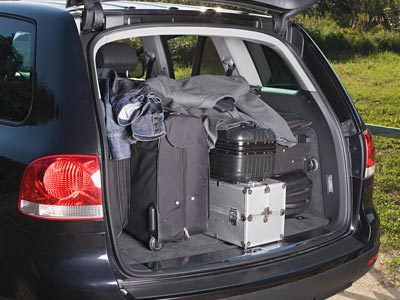
People love to romanticize SUVs. They imagine a perfect hybrid: the hauling power of a work truck wrapped in the comfort of a luxury sedan. You get the cargo volume. You get the three rows. You get to haul lumber without getting it wet. But this “best of both worlds” logic collapses the moment you start loading up.
An SUV’s payload sits in a strange middle ground. It exceeds what a passenger car can handle, yet it lacks the raw utility of a pickup. Folding down the rear seats does create a cavernous space for oversized gear. That’s convenient for camping trips or moving day. It isn’t a license to treat your crossover like a freight train.
The roof exists for a reason. Unlike a flatbed truck, an SUV traps heat, air, and weight inside a confined box. But stacking height isn’t the real problem. The problem is the center of gravity.
SUVs sit higher. They lean harder. When you overload an SUV, you push that center of gravity up and out. The result is rollover risk. It’s simple physics. The perception of invincibility is dangerous. Manufacturers know this. They’ve spent years trying to mitigate the dangers of high-profile vehicles.
Safety Tech and Federal Mandates
Consumer fear drives innovation. To combat the rollover stigma, automakers integrated electronic stability control. This tech keeps the vehicle upright when it wants to tip. It’s not perfect. It doesn’t defy physics. It just fights it harder.
Legislation followed the technology. The National Highway Traffic Safety Administration (NHTSA) stepped in. They didn’t just ask nicely. They mandated labels.
Since September 2004, every vehicle with a Gross Vehicle Weight Rating (GVWR) under 10,000 pounds must display a certification label on the doorjamb. This sticker is non-negotiable. It states the maximum combined weight of all occupants and cargo. It is the legal limit. Ignoring it isn’t just bad practice. It’s a liability.
Can You Increase Payload Capacity?
You might look at that doorjamb sticker and feel constrained. You have a heavy duty job. You have heavy equipment. You need to move it. The sticker says no.
Can you bypass it? Can you engineer a solution?
On the next page, we’ll dig into the mechanics of upgrading your vehicle’s load limits and whether aftermarket modifications actually help or just void your warranty.
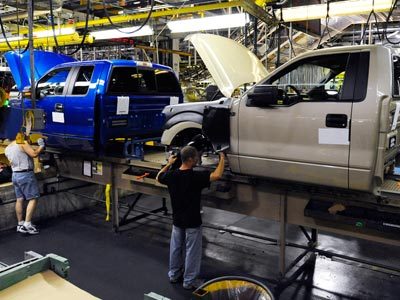
You know the numbers. You’ve checked the sticker. But what happens when your gear exceeds the limit? Maybe you’re carrying a heavy load for a job site, or perhaps you’re planning a trip with a massive trailer. The stock payload capacity often feels like a suggestion rather than a rule. Can you push it?
Manufacturers know drivers have needs that go beyond the base model specs. That’s why they offer towing packages. These aren’t just badges on the bumper. They are engineered solutions to increase performance and provide the necessary hardware for heavy loads.
What’s inside a package varies by brand. Ford might include a trailering app and integrated brake controller. Chevy might offer a heavy-duty cooling system and upgraded suspension. Regardless of the maker, these packages usually add critical components. You’ll often find a heavy-duty hitch receiver, safety chains, and a dedicated trailer wiring harness.
“Overloading a vehicle is dangerous. It harms you, your passengers, and other drivers on the road.”
But here is the catch. A towing package improves towing, not necessarily payload. Payload is what you carry inside the cab and bed. Towing is what you pull behind. They are linked, but they are not the same. If you overload your truck, you risk catastrophic failure. You might blow a tire. You could lose control on a downhill grade. And if a state trooper clocks you over the limit, you’re looking at tickets for unsafe loading. Nobody wants that hassle.
If you are strictly looking to maximize your payload capacity, you need to look at the specific make and model. The data below breaks down the maximum payload for various models from 2006 to 2009. Note that many luxury sedans and crossovers have minimal payload due to their weight distributions.
Payload List
For a full range of vehicles, you can browse by make:
– Acura
– Audi
– BMW
– Buick
– Cadillac
– Chevrolet
– Chrysler
– Dodge
– Ford
– GMC
– Honda
– HUMMER
– Hyundai
– Infiniti
– Isuzu
– Jaguar
– Jeep
– Kia
– Land Rover
– Lexus
– Lincoln
– Mazda
– Mercedes-Benz
– Mercury
– MINI
– Mitsubishi
– Nissan
– Pontiac
– Porsche
– Saab
– Saturn
– Scion
– smart
– Subaru
– Suzuki
– Toyota
– Volkswagen
– Volvo
Acura Payload
| Year | Model | Max Payload (lbs) |
|---|---|---|
| 2006 | MDX | – |
| 2006 | RL | – |
| 2006 | RSX | – |
| 2006 | TL | – |
| 2006 | TSX | – |
| 2007 | MDX | 1158 |
| 2007 | RL | – |
| 2007 | RDX | 870 |
| 2007 | TL | – |
| 2007 | TSX | 850 |
| 2008 | MDX | 1158 |
| 2008 | RL | – |
| 2008 | RSX | 870 |
| 2008 | TL | – |
| 2008 | TSX | 850 |
| 2009 | MDX | 1158 |
| 2009 | RL | – |
| 2009 | RSX | 870 |
| 2009 | TSX | 850 |
More Acura Specs:
– Acura GVWR
– Acura GAWR
– Acura GCWR
– Acura Cargo Carrying Capacity
– Acura Curb Weight
– Acura Towing Capacity
Audi Payload
| Year | Model | Max Payload (lbs) |
|---|---|---|
| 2006 | A3 | – |
| 2006 | A4 | – |
| 2006 | A6 | – |
| 2006 | A8 | 1213 |
| 2006 | S4 | – |
| 2006 | TT | 728 |
| 2007 | A3 | – |
| 2007 | A4 | – |
| 2007 | A6 | – |
| 2007 | A8 | – |
| 2007 | Q7 | – |
| 2007 | RS4 | – |
| 2007 | S4 | – |
| 2007 | S6 | – |
| 2007 | S8 | 1213 |
| 2008 | A3 | – |
| 2008 | A4 | – |
| 2008 | A5 | – |
| 2008 | A6 | – |
| 2008 | A8 | – |
| 2008 | Q7 | – |
| 2008 | R8 | – |
| 2008 | RS4 | – |
| 2008 | S4 | – |
| 2008 | S5 | – |
| 2008 | S6 | – |
| 2008 | S8 | – |
| 2008 | TT | – |
| 2009 | A3 | – |
| 2009 | A4 | – |
| 2009 | A5 | – |
| 2009 | A8 | – |
| 2009 | Q7 | – |
| 2009 | R8 | – |
| 2009 | S4 | – |
| 2009 | S5 | – |
| 2009 | S8 | – |
| 2009 | TT | – |
More Audi Specs:
– Audi GVWR
– Audi GAWR
– Audi GCWR
– Audi Cargo Carrying Capacity
– Audi Curb Weight
– Audi Towing Capacity
BMW Payload
| Year | Model | Max Payload (lbs) |
|---|---|---|
| 2006 | 325 | 1058 |
| 2006 | 330 | 1058 |
| 2 |
Chevrolet Payload Capacities
Chevy’s payload numbers tell a story of heavy-duty engineering. The Silverado 3500 HD leads the pack. It can handle 5,169 lbs in 2006. That capacity stayed strong until 2009. By then, it settled at 3,873 lbs. The 2500 HD models hover around 3,600 lbs. The 1500s are lighter. They max out near 1,913 lbs in 2006.
The Avalanche tracks closely with the Silverado 1500. It starts at 1,387 lbs in 2006. Drops to 1,258 lbs in 2007. Climbs back to 1,444 lbs in 2008. Then settles at 1,333 lbs in 2009.
Suburbans carry more than Tahoes. The 2500-series Suburban hits 2,828 lbs in 2006. It dips to 2,561 lbs by 2008. The Tahoe follows a similar path. It starts at 1,522 lbs. Jumps to 1,835 lbs in 2007. Stays there through 2009.
The Express vans are workhorses. The 1500 model holds 2,306 lbs across all four years. The 2500 model jumps to 3,262 lbs in 2009. The 3500 model peaks at 4,147 lbs in 2009.
Compact cars like the Aveo and Cobalt have no listed payload capacity. The HHR Panel and HHR coupe hold steady at 900 lbs from 2006 to 2009. The Colorado varies between 1,250 lbs and 1,532 lbs.
Chrysler Payload Capacities
Chrysler’s payload data is sparse. Many models show a dash. The 300 and 300C don’t have listed limits in this dataset. The Town & Country minivan is one of the few with consistent numbers. It sits at 1,200 lbs in 2007 and 2008. The PT Cruiser starts high at 1,907 lbs in 2007. Drops to 889 lbs in 2008. Disappears by 2009.
The Aspen SUV holds steady at 1,600 lbs from 2007 to 2009. The hybrid version drops slightly to 1,500 lbs. The Pacifica minivan ranges from 865 lbs to 889 lbs.
Dodge Payload Capacities
Dodge offers a wide range of payload options. The Ram 3500 is the beast. It reaches 4,870 lbs in 2008. The Sprinter Wagon 2500 hits 4,824 lbs in 2006. The Sprinter Van 3500 holds 4,530 lbs in 2008 and 2009.
The Ram 1500 sees significant changes. It starts at 1,750 lbs in 2006 and 2007. Increases to 1,810 lbs in 2008. Then drops sharply to 1,490 lbs in 2009. The Ram 2500 stays around 3,100 lbs to 3,260 lbs.
The Durango and Dakota are mid-pack. The Durango holds 1,750 lbs in 2006 and 2007. Climbs to 1,780 lbs in 2008 and 2009. The Dakota starts at 1,750 lbs. Drops to 1,630 lbs in 2008 and 2009. The Nitro stays constant at 1,150 lbs from 2007 to 2009.
The Magnum and Charger hold 1,270 lbs across all years. The Grand Caravan drops out of the list by 2008.
Ford Payload Capacities
Ford’s E-Series vans are heavy lifters. The E 350 Super Duty starts at 4,165 lbs in 2006. Holds 4,200 lbs in 2007. Drops to 4,110 lbs in 2008. Ends at 4,060 lbs in 2009. The F 450 picks up where the E 350 leaves off. It lists 6,120 lbs in 2008. Then 3,900 lbs in 2009.
The F 150 starts at 1,640 lbs in 2006. Climbs to 1,650 lbs in 2007 and 2008. Then jumps to 3,030 lbs in 2009. That’s a massive increase. The F 250 stays around 3,100 lbs in 2006 and 2007. Drops to 3,030 lbs in 2008.
The Explorer and Escape Hybrid maintain consistent payload numbers. The Explorer holds 1,414 lbs in 2006. Climbs to 1,520 lbs in 2007 and 2008. The Escape Hybrid stays at 1,040 lbs throughout. The Ranger also stays constant at 1,260 lbs.
GMC Payload Capacities
GMC mirrors Chevrolet but with its own quirks. The Sierra 3500 hits 4,658 lbs in 2006. Then disappears until 2009. It reappears at 4,812 lbs. The Sierra 2500 holds around 3,892 lbs to 4,058 lbs.
The Sierra 1500 starts at 1,889 lbs in 2006. Climbs to 1,952 lbs in 2007. Drops to 1,947 lbs in 2008. Ends at 1,842 lbs in 2009. The Canyon starts at 1,547 lbs. Drops to 1,422 lbs in 2009.
The Yukon Hybrid matches the Yukon’s payload. It holds 1,830 lbs in 2008 and 2009. The Yukon XL ranges from 1,592 lbs to 1,731 lbs. The Savana vans mirror the Express. The 3500 model holds 4,147 lbs across all years.
Payload vs. Towing
Payload is what you put in the truck. Towing is what you pull behind it. They are not the same. A truck can tow 10,000 lbs but only carry 1,500 lbs. Don’t confuse the two.
The numbers above reflect maximum cargo capacity. They include passengers, fuel, and any trailer tongue weight. If you exceed these limits, you risk suspension damage. You also void warranties.
Check the door jamb sticker. Factory data varies by trim. The numbers here are general maximums. They assume specific engine and wheelbase configurations. Your actual capacity will differ.
Honda Payload
Honda’s lineup in the late 2000s tells a story of two different engineering philosophies. The Ridgeline stood out with its truck-oriented payload, while the Odyssey and Pilot offered practical, high-capacity utility. Most passenger cars just didn’t list specific figures, likely because their intended use was strictly commuting rather than hauling.
In 2006, the Insight was the only sedan with a listed capacity at 400 lbs. If you needed to move gear, the Odyssey (1349 lbs) and Ridgeline (1549 lbs) were the go-to choices. The Pilot data is missing for this year.
By 2007, the Fit joined the party, but its payload isn’t listed. The Civic picked up a specific number of 385 lbs. The Pilot finally showed up with 1322 lbs, sitting just short of the Odyssey’s 1349 lbs. The Ridgeline held steady at 1549 lbs.
2008 didn’t bring major shifts. The Civic stayed at 385 lbs. The Element and Ridgeline maintained their 675 lbs and 1549 lbs ratings respectively. The Odyssey and Pilot continued their high-capacity streak.
2009 saw the Pilot and Odyssey remain locked at 1322 lbs and 1349 lbs. The Civic and Fit dropped out of the data set, leaving the Pilot and Odyssey as the heavy lifters in the Honda stable.
“If you’re looking for max payload Honda models from this era, the Ridgeline is the clear king at 1549 lbs.”
For deeper specs, check the Honda GVWR and Honda Towing Capacity links.
HUMMER Payload
HUMMER didn’t play small. Even in the final years before GM pulled the plug on the badge for passenger vehicles, the H2 and H3 were built to carry weight. The H2’s payload jumped significantly in 2008, while the H3 maintained a solid base that improved slightly by 2009.
The 2006 H1 Alpha was a beast, boasting 3087 lbs of payload. The H3 started at 1150 lbs. The H2 data is absent for this year, likely due to trim variations or testing protocols of the time.
2007 kept the H3 at 1150 lbs. The H2 remains unlisted, which is odd given its size, but the H3T debuted in 2009 with a modest 1090 lbs.
The big jump happened in 2008. The H2 payload surged to 2200 lbs. The H3 held at 1150 lbs.
In 2009, the H3 gained a bit of strength, moving to 1312 lbs. The H2 stayed robust at 2200 lbs. The H3T, essentially a pick-up version of the H3, carried 1090 lbs.
“The 2008 HUMMER H2 payload of 2200 lbs is one of the highest figures in the mid-size SUV category of that era.”
See HUMMER GVWR and HUMMER Curb Weight for more technical details.
Hyundai Payload
Hyundai’s early 2000s data is sparse for passenger cars. Most sedans like the Elantra, Sonata, and Azera have no listed payload in these records. The focus was clearly on the SUVs and minivans for hauling duties.
The 2006-2008 lineup for the Accent, Azera, Elantra, Santa Fe, Sonata, Tiburon, and Tucson shows no data. The Veracruz and Entourage also lack figures.
2009 introduced the Genesis, but again, no payload is listed. It seems Hyundai simply didn’t publish these numbers for their passenger vehicles during this period, leaving enthusiasts to calculate based on GVWR minus curb weight if they really needed to know.
“Why is Hyundai payload data missing for sedans? Likely because the margin between curb weight and GVWR was tight, leaving little room for cargo in their compact designs.”
Check Hyundai GCWR and Hyundai Cargo Carrying Capacity for more info.
Infiniti Payload
Infiniti’s luxury offerings had varying payload capacities, often constrained by the complexity of their luxury features and larger engine bays. The FX series and QX56 were the workhorses. The M and G series were lighter loaders.
In 2006, the QX56 led with 1440 lbs. The FX35 and FX45 offered 1183 lbs and 1091 lbs respectively. The G35 was limited to 886 lbs, and the Q45 sat at 979 lbs. The M-series data is missing.
2007 kept the FX35 and FX45 steady at 1183 lbs and 1091 lbs. The QX56 data is absent. The G35 dropped out of the list.
2008 brought the EX35 and G37. The FX35 stayed at 1183 lbs. The G35 wasn’t listed. The M35 and M45 appeared with 996 lbs and 1010 lbs respectively. The QX56 jumped to 1553 lbs.
2009 saw the FX35 increase slightly to 1213 lbs. The FX50 joined with 1185 lbs. The QX56 maintained its high rating of 1553 lbs.
“The 2009 Infiniti QX56 payload of 1553 lbs makes it one of the better luxury haulers in its class.”
For more, look at Infiniti GAWR and Infiniti Towing Capacity.
Isuzu Payload
Isuzu was sticking to its guns with the Ascender and i-series trucks. The Ascender was consistent, while the i-series saw some fluctuation in payload as models evolved.
2006: The Ascender carried 1133 lbs. The i-280 was the heavy lifter at 1532 lbs. The i-350 sat at 1190 lbs.
2007: The Ascender held at 1133 lbs. The i-290 maintained its 1532 lbs rating. The i-370 improved slightly to 1516 lbs.
2008: The Ascender stayed at 1133 lbs. The i-290 dropped a bit to 1512 lbs. The i-370 took a hit, falling to 1260 lbs.
No 2009 data is listed for Isuzu, coinciding with the brand’s reduced presence in the US passenger market.
“Is the Isuzu i-280 payload still relevant today? Its 1532 lbs rating was competitive for a mid-size truck in 2006.”
Check Isuzu GVWR and Isuzu GCWR.
Jaguar Payload
Jaguar’s luxury sedans and coupes had surprisingly low payload ratings, often under 1000 lbs. This reflects their focus on ride comfort and heavy chassis construction rather than utility. The X-Type was an outlier with a higher capacity.
2006: The X-Type led with 1058 lbs. The S-Type, XJ8, XJR, XK8, and XKR had no data.
2007: The X-Type held at 1058 lbs. The XK and XKR data is missing.
2008: The X-Type remained at 1058 lbs. The XK showed up with 815 lbs. The XKR dropped to 772 lbs.
2009: The XF data is absent. The XKR stayed at 772 lbs. The XK Coupe improved slightly to 815 lbs.
“Why is the Jaguar XK8 payload so low? Luxury sports cars prioritize weight distribution and materials, leaving less margin for cargo.”
See Jaguar Curb Weight and Jaguar Towing Capacity.
Jeep Payload
Jeep’s trucks and SUVs were designed for utility, and the payload numbers reflect that. The Commander and Grand Cherokee offered substantial capacity, while the Wrangler, despite its off-road prowess, had more modest ratings.
2006: The Commander led with 1620 lbs. The Liberty had 1150 lbs. The Grand Cherokee sat at 1100 lbs. The Wrangler was at 800 lbs.
2007: The Commander dropped to 1310 lbs. The Compass appeared with 925 lbs. The Grand Cherokee improved to 1050 lbs. The Liberty held at 1150 lbs. The Wrangler increased to 1000 lbs. The Patriot data is missing.
2008: The Commander settled at 1300 lbs. The Compass stayed at 925 lbs. The Grand Cherokee jumped
Payload isn’t just a number in a spec sheet. It’s the difference between hauling a full load of gravel and blowing a rear shock. It’s the weight of you, your passengers, and your gear inside the vehicle. Get it wrong, and you’re not just overloading; you’re compromising handling, braking, and suspension life. The data below covers 2006-2009 max payload capacity for a wide range of makes and models, from economy sedans to heavy-duty trucks.
Mazda Payload
Mazda kept their truck lineup consistent for a few years. The B-Series pickups were workhorses, but don’t expect luxury. The B3000 could handle more weight than its B2300 and B4000 siblings. If you were driving a MazdaSpeed6, you knew performance came at the cost of cargo space.
2006
– B2300: 1260 lbs
– B3000: 1680 lbs
– B4000: 1260 lbs
– Mazda5: 1239 lbs
– Mazda6: 1319 lbs
– MazdaSpeed6: 963 lbs
– MPV: 1506 lbs
– MX-5: 637 lbs
– RX-8: 779 lbs
– Tribute: 988 lbs
2007
– B2300: 1260 lbs
– B3000: 1680 lbs
– B4000: 1260 lbs
– CX-9: 1493 lbs
– Mazda5: 1239 lbs
– Mazda6: 1080 lbs
– MazdaSpeed6: 963 lbs
– MX-5: 637 lbs
– RX-8: 765 lbs
2008
– B2300: 1260 lbs
– B4000: 1260 lbs
– Mazda5: 1191 lbs
– Mazda6: 1087 lbs
– MX-5: 633 lbs
– RX-8: 765 lbs
– Tribute: 1057 lbs
– Tribute Hybrid: 1083 lbs
2009
– B2300: 1200 lbs
– B4000: 1260 lbs
– Mazda5: 1191 lbs
– Mazda6: 1082 lbs
– RX-8: 754 lbs
Note: Several Mazda models like the Mazda3 and CX-7 had no listed payload data in the source records for these years.
Mercedes-Benz Payload
German engineering usually means precision, but in the mid-2000s, payload varied wildly. The R-Class was a people-mover that could actually carry people and gear. The SLR McLaren? Not so much. It was a supercar, not a hauler. The ML-series SUVs were the bread and butter for families who needed space.
2006
– ML350: 1616 lbs
– ML500: 1496 lbs
– R-Class: 2000 lbs
2007
– E-Class: 1157 lbs
– G500: 1289 lbs
– GL320: 1086 lbs
– GL450: 1620 lbs
– ML350: 1635 lbs
– ML320: 1422 lbs
– ML500: 1620 lbs
– ML63 AMG: 1257 lbs
– R-Class: 1635 lbs
– SLR McLaren: 626 lbs
2008
– E-Class: 1157 lbs
– G500: 1764 lbs
– G55: 1433 lbs
– GL450: 1620 lbs
– GL550: 1620 lbs
– ML320: 1422 lbs
– ML350: 1635 lbs
– ML550: 1620 lbs
– SLR McLaren: 342 lbs
2009
– E-Class: 1157 lbs
– GL450: 1620 lbs
– GL550: 1620 lbs
– ML350: 1635 lbs
– ML320: 1422 lbs
– ML550: 1620 lbs
– ML63 AMG: 1300 lbs
– R-Class: 1365 lbs
Mercury Payload
Mercury was essentially Ford with a different badge. The Mountaineer shared its bones with the Ford Explorer. The Mariner was a compact SUV that traded some payload for efficiency. By 2008, the lineup was shrinking. The Sable and Milan didn’t show up in the payload lists, likely due to low demand or data gaps.
2006
– Mariner: 1075 lbs
– Mariner Hybrid: 920 lbs
– Monterey: 1320 lbs
– Mountaineer: 1549 lbs
2007
– Mariner: 1075 lbs
– Mariner Hybrid: 920 lbs
– Monterey: 1320 lbs
– Mountaineer: 1443 lbs
2008
– Mariner: 1059 lbs
– Mariner Hybrid: 920 lbs
– Mountaineer: 1443 lbs
2009
– Mariner: 1059 lbs
– Mariner Hybrid: 920 lbs
– Mountaineer: 1443 lbs
MINI Payload
MINI was all about style over substance in the mid-2000s. Payload numbers were tight. You weren’t hauling groceries and three adults in a Cooper Convertible and expecting a smooth ride. The John Cooper Works variants had the same payload limits as their standard counterparts, but you probably shouldn’t test the suspension on those.
2006
– Cooper Convertible: 771 lbs
– Cooper Hardtop: 816 lbs
2007
– Cooper Convertible: 771 lbs
– Cooper Hardtop: 816 lbs
2008
– Cooper Clubman: 816 lbs
– Cooper Convertible: 771 lbs
– Cooper Hardtop: 816 lbs
2009
– John Cooper Works Hardtop: 816 lbs
– John Cooper Works Clubman: 816 lbs
Mitsubishi Payload
Mitsubishi had a solid run with the Outlander and Raider. The Raider, a rebadged Dodge Dakota, was the king of payload in this list. If you needed to move stuff, you bought a Raider. The Eclipse was a sports coupe; payload was an afterthought.
2006
– Eclipse: 794 lbs
– Endeavor: 1055 lbs
– Galant: 969 lbs
– Lancer: 981 lbs
– Montero: 1165 lbs
– Outlander: 904 lbs
– Raider: 1590 lbs
2007
– Eclipse: 794 lbs
– Endeavor: 1055 lbs
– Galant: 937 lbs
– Outlander: 1538 lbs
– Raider: 1580 lbs
2008
– Eclipse: 794 lbs
– Endeavor: 1055 lbs
– Galant: 937 lbs
– Lancer: 1157 lbs
– Outlander: 1169 lbs
– Raider: 1580 lbs
2009
– Eclipse: 827 lbs
– Galant: 981 lbs
– Lancer: 1157 lbs
Nissan Payload
Nissan had some heavy hitters. The Titan pickup was a beast, especially in 2008 and 2009 with over 2000 lbs of payload. The
Saturn Payload
Saturn’s final years were messy. The brand vanished in 2010, but the data for 2006-2009 still matters for anyone looking at used lots. The Saturn payload numbers are mostly modest, reflecting their unibody architecture.
In 2006, the Saturn Relay minivan led the pack with 1350 lbs. The VUE crossover handled 1331 lbs. The Ion sedan? Zero. It wasn’t built for haul.
2007 brought the Aura. The gas version carried 1009 lbs. The hybrid? Not listed, likely too heavy on batteries. The Outlook (basically a Buick Enclave) was the workhorse at 1678 lbs. The VUE Hybrid improved on the base model, hitting 1511 lbs.
2008 saw cuts. The VUE dropped to 1000 lbs. The hybrid dropped to 1111 lbs. The Astra hatchback managed 893 lbs. The Outlook held steady at 1678 lbs.
2009 was the end of the line. The Outlook squeezed out 1709 lbs. The VUE hybrids stayed flat at 1111 lbs. The base VUE sat at 1000 lbs. The Sky roadster had no payload listed. Why? Probably because putting a heavy load in a small roadster ruins the handling anyway.
“If you are hauling gear in a 2009 Outlook, you have the best chance of staying under the limit.”
Scion Payload
Scion didn’t just sell cars; they sold a lifestyle. The Scion payload capacity is generally low because these were small, light cars.
2006-2009 data is sparse. The tC coupe, xA hatch, xB boxy hatch, and xD subcompact all show zero payload in the standard tables. This doesn’t mean zero people. It means the cargo payload is negligible once you account for the driver and the dog.
The tC is a coupe. You aren’t putting furniture in the back. The xB is boxy. It looks like it could carry a fridge. It can’t. The curb weight eats up the allowance.
If you are buying a used Scion to haul boxes, you are fighting physics. The Scion payload for these models is effectively non-existent for heavy items. Keep it light.
smart Payload
The smart payload is tiny. That is the point. The smart fortwo is a city runabout.
In 2008, the fortwo allowed 463 lbs. That sounds like a lot until you realize one adult male weighs 180 lbs. You have 283 lbs left for a passenger and cargo. Two people in a smart car? You are at 60% capacity just by sitting there.
The smart payload figures confirm what anyone who has ridden in one knows: this car is for one or two very light people with very small bags. Do not try to move house in a fortwo. You will break the suspension.
Subaru Payload
Subaru built for weather, not hauling. The Subaru payload varies wildly by model.
The B9 Tribeca was a luxury crossover. In 2006 and 2007, it handled 1560 lbs. By 2008, the Tribeca crashed to 660 lbs. Why? Maybe the weight increased for safety features. Or maybe the engine got heavier. The drop is drastic.
The Baja pickup truck (2006) had 1070 lbs. Small truck bed. Small payload.
The Outback is the king here. 2006: 1245 lbs. 2007: 995 lbs. 2008: 1085 lbs. 2009: 1078 lbs. The Legacy wagon is similar. 2006: 1300 lbs. 2007: 1290 lbs. 2008-2009: ~1055 lbs.
The Forester improved in 2009. 2006: 1060 lbs. 2007: 1010 lbs. 2008: 1010 lbs. 2009: 1230 lbs. A jump of over 200 lbs. Subaru fixed something.
The WRX and STI are performance cars. 2006 Impreza WRX STI: 794 lbs. 2008: 1080 lbs. The 2008 numbers seem high for a race-bred car, but perhaps the 2006 figure included more heavy interior trim that was stripped in the later model.
“Check your specific trim. A loaded Touring Outback has less payload than a base Legacy.”
Suzuki Payload
Suzuki was weird. They made small cars and big SUVs. The Suzuki payload reflects that split.
The XL7 was the big kid. 2006: 1168 lbs. 2007: 1626 lbs. 2008: 1626 lbs. The jump in 2007 is massive. Did they lose weight? Or was the 2006 number conservative? The 2008 number holds steady.
The Grand Vitara is consistent. 2006: 1175 lbs. 2008: 1178 lbs. 2009: Not listed. The Forenza and Reno are small. ~926-981 lbs.
The SX4 is small too. 2008: 893 lbs. 2009: 893 lbs.
The Equator (2009) had no payload listed. It was a rebadged Ford Escape. You’d think it would have better specs. Instead, silence.
Toyota Payload
Toyota is reliable. The Toyota payload numbers reflect robust frames.
The Tundra truck is the beast. 2006: 1835 lbs. 2007: 1470 lbs. 2008: 1470 lbs. 2009: 1540 for the Tacoma, but the Tundra data stops at 2008 in this table. Wait, 2009 Tacoma is 1540. The Tundra drop from 2006 to 2007 is suspicious. 1835 to 1470. Did the curb weight increase significantly with safety features?
The 4Runner is steady. 1285 lbs from 2006 to 2009. Solid.
The Highlander is a hauler. 2006: 1840 lbs. 2007: 1844 lbs. 2008: 1821 lbs. 2009: 1821 lbs. The hybrid version of the Highlander drops to 1605 lbs (2006-2007) and 1427 lbs (2008-2009). Battery weight kills payload.
The Land Cruiser is heavy but strong. 2006: 1500 lbs. 2008: 1585 lbs. 2009: 1585 lbs. It got stronger.
The Camry is a sedan. 2006: 1059 lbs. 2009: 1113 lbs. Slight improvements.
The RAV4 is consistent. 1130 lbs across 2006, 2007, 2008, 2009.
The Prius is light. 2006: 1085 lbs. 2007: 863 lbs. 2008: 863 lbs. 2009: Not listed. The drop in 2007 is huge. The 2007 Prius had a redesigned body. Maybe the new structure added weight that ate into the payload allowance.
“If you need to carry heavy gear, avoid the Prius. The Highlander Hybrid is better, but the gas Highlander is