


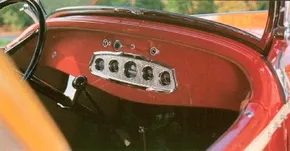
Walter P. Chrysler didn’t just invent the modern corporation. He stole the playbook. Before he had his own badge on a grille, he was fixing broken companies at General Motors. Charles Nash? He started his own make in 1917. Chrysler took the long road. He bailed out Willys-Overland and Maxwell. It wasn’t until 1924 that the Chrysler name finally hit the pavement.
He knew one make was a trap.
Success with the luxury Chrysler line was real. But scale demanded more. He needed volume. So he built an empire. DeSoto filled the medium-price slot. Plymouth took the bottom rung. Dodge entered the fold later, completing a four-pronged assault on the market. Confusion about who sat where in the hierarchy happened. It didn’t matter for Plymouth.
The mission was clear from day one. July 7, 1928. That’s when the make launched. Joseph W. Frazer named it. He later ran postwar Kaiser-Frazer, but back then he was just sales manager. He picked Plymouth Rock in Massachusetts. It sounded patriotic. Solid.
Frazer didn’t stop there. He warned the boss. Every farmer in America knew Plymouth Binder Twine. The name worked on two fronts. History and agriculture. It stuck.
Why the PB Model Matters
Fast forward to 1932. The economy is wrecked. People aren’t buying new cars. They are holding onto old ones. But there’s a segment that still wants style. The PB Sport Roadster emerges. It isn’t for the plow puller. It’s for the driver who refuses to look like everyone else.
Designing the 1932 Plymouth PB Sport Roadster
The PB series replaced the earlier PJ. It had a shorter wheelbase. This mattered. Shorter wheelbase means sharper handling. The Sport Roadster version took that chassis and stripped away the excess. No hard top. No heavy curtains. Just open-air driving.
The bodywork was distinct. Flared fenders. A raked windshield. It looked faster than it probably was. But speed is a feeling. Not just a number. The engine was likely the flathead six. Reliable. Simple. Easy to tune.
Performance and Handling Characteristics
Specs from the era are tricky. Data wasn’t logged like it is now. We know the PB used a three-speed manual transmission. No synchros. You had to double-clutch. Or learn to heel-and-toe. The Sport Roadster weight was lower than the sedan. Less mass to move.
Brakes were mechanical. Drum brakes on all four wheels. Not much stopping power by modern standards. But enough for the roads of 1932. The tires were narrow. Bias ply. They offered grip when the road was dry. Slippery when it rained. That was the trade-off.
Where to Find and Restore a 1932 Plymouth PB
You won’t find these in driveways anymore. You hunt them. Online auctions. Swap meets. Abandoned farms. The best examples have numbers-matching engines. But most don’t. Parts are scarce. Reproduction panels exist. Hard to find original trim.
Restoration isn’t easy. It
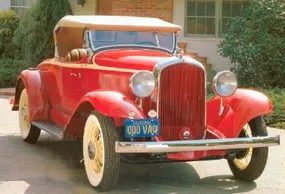

The Plymouth PB: 1932’s Bold Step Up
Plymouth wasn’t trying to be the cheapest car on the lot. Born from the four-cylinder Chrysler Model 52, it sat just above Ford and Chevrolet in the price hierarchy. But you got more for your money. Hydraulic brakes came standard right out of the gate. So did full-pressure lubrication. Aluminum alloy pistons. An independent hand brake. It was better trimmed. Smoother.
By 1931, Plymouth had solved the vibration problem that plagued early four-cylinders. They introduced “Floating Power.” Heavy rubber mounts separated the engine block from the chassis. The engine literally floated. Vibration stayed out of the cabin. Plymouth claimed it now offered “the smoothness of an eight and the economy of a four.” It was a clever marketing line. And it worked.
Then came the 1932 Model PB.
It arrived late. April 3, 1932. Production lasted only eight months. That’s a short run. But the changes were significant. Plymouth ditched the old fender style for one-piece front fenders. They were rounded. Cleaner. Headlights broke free from the body, standing on their own.
The wheelbase stretched by three inches. 112 inches total. Longer cars looked more important. More substantial.
Performance jumped too. Horsepower went from 56 to 65. The car weighed 100 pounds more. But that extra punch compensated. It felt snappier. More responsive. The PB didn’t just compete. It held its own.
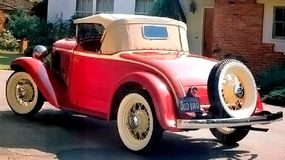

The Budget-Friendly Convertible Options
The lineup stretched across ten models. Price tags started at $495 and climbed to $785. But the real draw? The open-air options. You got five distinct body styles that let the wind in.
There was the four-door phaeton. Then a convertible coupe and sedan combo. A two-seater Business Roadster for practicality. And the star of the show: the Sport Roadster.
This specific car features a rumble seat. It looks rakish. It’s a 1920s Sport Roadster that demands attention. Owners Harry and Virginia DeMenge know their history. They live in Chula Vista, California. They confirm the original sticker price was $595. Production numbers were tight. Only 2,163 were built.
No Chop Needed
Modern enthusiasts love chopping tops. It’s a custom craft. You cut the roofline to make a sedan look like a hardtop. But this car didn’t need that surgery.
Look at the windshield. It sits just 6 1/2 inches high at the center. That’s low. It’s so low it was essentially a convertible from the factory.
Why modify what’s already perfect? The design did the work for you.
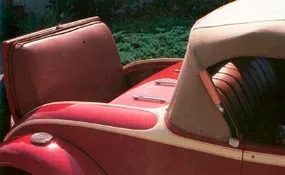

Plymouth went all-in on the youth demographic with the “Collegiate Special” Sport Roadster. They’d paint it in your school’s colors for an extra $40. This specific example is decked out in the blue and gold of Mankato State University in Minnesota. That was the college Virginia ended up attending.
But the real story is under the hood. The 1932 model marked the end of the line for Plymouth’s four-cylinder engine. It was the last one produced until modern times rolled around. And honestly? It was the best of the batch.
For more information on cars, see:
– Classic Cars
– Muscle Cars
– Sports Cars
– Consumer Guide New Car Search
– Consumer Guide Used Car Search


